

Cortisol & Belly Fat Risk Calculator
Enter your current routine to estimate if your cardio regimen might be contributing to stubborn belly fat via chronic cortisol elevation.
Your Risk Score:
----
Recommendations
You’re hitting the treadmill five days a week. You’re sweating through your shirt on the elliptical. You’re counting calories like it’s a full-time job. Yet, that stubborn layer of fat around your midsection refuses to budge. In fact, for some people, it seems to get worse the more they run. It sounds counterintuitive, doesn’t it? We’ve been told cardio is the golden ticket to burning fat. So why does your waistline seem to expand while you’re shrinking everywhere else?
The answer often lies not in how much you move, but in how your body reacts to the stress of that movement. This isn’t about laziness or lack of discipline. It’s biology. Specifically, it’s about chronic cardio, which refers to prolonged, moderate-intensity aerobic exercise performed frequently without adequate recovery. When you push this too hard, your body flips a switch. Instead of burning fuel efficiently, it starts hoarding energy. And where does it store that energy? Often, right in your belly.
The Stress Hormone Trap: How Cortisol Works
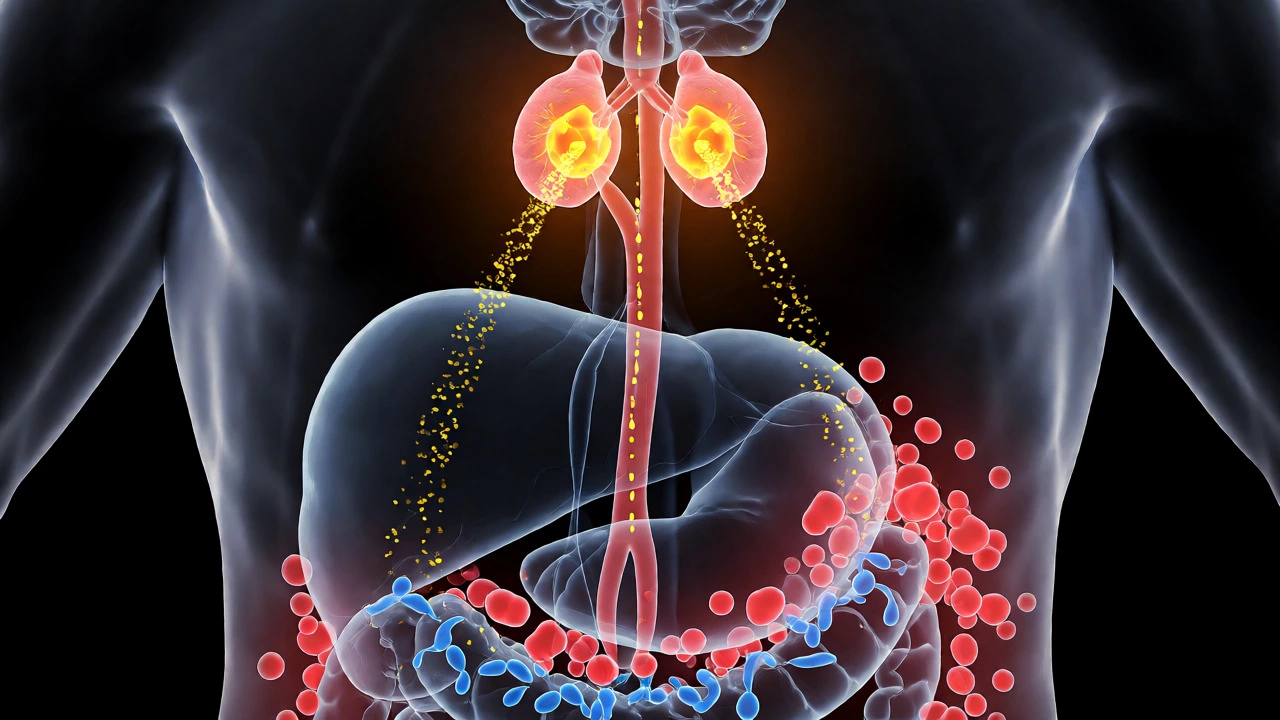
To understand why cardio might be adding inches to your waist, you need to meet cortisol. This is a steroid hormone produced by your adrenal glands, primarily released in response to stress and low blood-glucose concentration. Think of cortisol as your body’s emergency manager. When you face a threat-like a tiger chasing you or a looming deadline-cortisol spikes. It tells your liver to release glucose into the bloodstream so your muscles have immediate energy. It also signals your body to store fat, just in case the emergency lasts longer than expected.
Here is the catch: your body doesn’t distinguish between physical stress (running 10 miles) and psychological stress (work pressure, poor sleep). If you are already stressed from life, adding hours of intense cardio adds fuel to the fire. Chronically elevated cortisol levels lead to a specific type of fat storage called visceral adiposity. Unlike subcutaneous fat (the pinchable stuff under your skin), visceral fat wraps around your internal organs. It is metabolically active and strongly linked to insulin resistance.
| Exercise Type | Cortisol Response | Fat Storage Tendency | Recovery Needs |
|---|---|---|---|
| Low-Intensity Steady State (LISS) | Minimal spike; stays within baseline | Low; encourages fat oxidation | Low; can be done daily |
| Moderate Chronic Cardio | Moderate elevation during activity | Mixed; depends on total volume | Moderate; needs rest days |
| High-Volume High-Intensity | Significant spike if overdone | High; promotes visceral fat if chronic | High; requires significant sleep/nutrition |
| Short Burst HIIT | Sharp spike followed by rapid drop | Low; boosts metabolism post-workout | Moderate; limited frequency recommended |
Why Your Body Hoards Energy During Excessive Cardio
Evolution didn’t design us to run marathons before breakfast. Our ancestors moved for survival, not for aesthetics. When you engage in excessive cardio, especially in a caloric deficit, your body perceives an energy crisis. It lowers your basal metabolic rate (BMR) to conserve energy. This adaptation is known as adaptive thermogenesis. Essentially, your body becomes more efficient at using less energy to do the same amount of work.
This efficiency is great for survival but terrible for weight loss. You end up burning fewer calories at rest because your metabolism has slowed down. Meanwhile, the high cortisol levels keep your appetite hormones out of whack. Ghrelin (the hunger hormone) goes up, and leptin (the satiety hormone) goes down. You feel hungrier after a long run than you did before it started. If you compensate by eating back those calories-or more-you neutralize any fat-burning benefits. Worse, if those calories come from processed carbs due to cravings, the insulin spike combined with high cortisol creates a perfect storm for belly fat accumulation.
Insulin Resistance: The Silent Partner to Belly Fat
Cortisol doesn’t work alone. It teams up with insulin, a hormone that regulates blood sugar levels. When cortisol is high, it triggers gluconeogenesis-the production of new glucose from non-carbohydrate sources. This raises blood sugar, prompting the pancreas to release more insulin to shuttle that glucose into cells.
When you chronically elevate these two hormones, your cells become resistant to insulin’s signal. Glucose stays in the bloodstream instead of entering muscle cells for energy. Where does it go? It gets converted to triglycerides and stored as fat. And guess where the body prefers to store this excess energy when insulin is high? The abdominal area. This creates a vicious cycle: high stress leads to high cortisol, which leads to high insulin, which leads to belly fat, which causes inflammation, which further stresses the body.
Is All Cardio Bad? No, But Context Matters
Don’t hang up your running shoes just yet. Cardio itself isn’t the enemy. The problem is the dosage and the intensity relative to your recovery capacity. Moderate amounts of aerobic exercise improve cardiovascular health, lower resting heart rate, and actually help regulate cortisol levels over time. Studies published in journals like Medicine & Science in Sports & Exercise show that regular, moderate exercise reduces overall anxiety and improves sleep quality, both of which help manage weight.
The issue arises when "moderate" turns into "excessive." For many people, this means doing 60-90 minutes of jogging or cycling six days a week while sleeping only six hours a night and working a high-stress job. That combination is a recipe for hormonal chaos. On the other hand, short bursts of high-intensity interval training (HIIT) or walking can boost metabolism without triggering the same severe cortisol response, provided you allow time for recovery.
Signs You Might Be Overdoing Cardio
How do you know if your cardio routine is hurting rather than helping? Look for these red flags. They aren’t just feelings; they are physiological signals that your nervous system is overloaded.
- Persistent fatigue: You wake up tired even after eight hours of sleep. Your workouts feel harder than they used to, despite no change in intensity.
- Stalled or reversed progress: You’re losing strength, gaining water weight, or seeing the scale creep up despite strict dieting.
- Irritability and mood swings: You feel anxious, snappy, or unmotivated outside of the gym.
- Increased injury risk: Joint pain, shin splints, or tendonitis appear because your tissues don’t have time to repair.
- Libido drops: A decrease in sex drive is a classic sign of suppressed reproductive hormones due to high cortisol.
How to Fix It: Balancing Movement and Recovery
If you suspect your cardio habit is contributing to belly fat, you don’t need to stop moving. You need to change how you move. Here is a practical approach to rebalancing your routine.
- Reduce Duration, Increase Quality: Cut your steady-state cardio sessions in half. Instead of 60 minutes of jogging, try 30 minutes. Use the extra time for strength training or mobility work.
- Incorporate Strength Training: Building muscle increases your resting metabolic rate. Muscle tissue burns more calories at rest than fat tissue does. Aim for two to three resistance training sessions per week. This helps improve insulin sensitivity, making it easier for your body to use glucose rather than store it.
- Try Low-Intensity Steady State (LISS): Replace some high-impact cardio with brisk walking, swimming, or cycling at a conversational pace. These activities burn calories without spiking cortisol significantly. Walking 8,000-10,000 steps a day is often more effective for fat loss than intense running for stressed individuals.
- Prioritize Sleep: This is non-negotiable. Sleep is when your body clears cortisol and repairs tissue. Aim for seven to nine hours of quality sleep. If you’re training hard but sleeping poorly, you’re fighting an uphill battle.
- Manage Life Stress: Since cortisol responds to all stressors, address work and personal stress. Meditation, deep breathing exercises, or simply taking breaks can lower your baseline cortisol, allowing your body to respond better to exercise.

The Role of Nutrition in Managing Cortisol-Induced Fat
You cannot out-train a bad diet, especially when hormones are involved. If you’re doing lots of cardio, your nutrition needs to support recovery, not just calorie cutting. Focus on stabilizing your blood sugar to keep insulin levels in check.
Include protein with every meal. Protein has a high thermic effect, meaning your body burns more calories digesting it compared to fats or carbs. It also helps preserve muscle mass during weight loss. Don’t fear healthy fats; they are essential for hormone production. Avocados, nuts, seeds, and olive oil provide the building blocks your body needs to regulate hormones effectively. Finally, limit refined sugars and processed carbohydrates. These cause rapid spikes in blood sugar and insulin, exacerbating the problem of visceral fat storage.
Real-World Example: The Marathon Runner’s Paradox
Consider Sarah, a 35-year-old marketing manager in Auckland. She started running to lose weight. Initially, she saw results. But after six months of running 40 kilometers a week, her legs got thinner, but her stomach didn’t. She felt tired all the time and craved sugary snacks after runs. Her doctor checked her blood markers and found elevated fasting cortisol and signs of mild insulin resistance.
Sarah changed her approach. She reduced her running to twice a week, focusing on speed intervals rather than long distances. She added two days of weightlifting and started walking more on weekends. She also prioritized getting to bed by 10 PM. Within three months, her energy levels returned, her cravings stabilized, and the stubborn belly fat began to decrease. She wasn’t exercising less; she was exercising smarter.
Frequently Asked Questions
Does cardio specifically target belly fat?
No, spot reduction is a myth. Cardio burns calories from the whole body, not just one area. Genetics determine where you lose fat first. For many men and women, the abdomen is the last place fat leaves. If cortisol is high, the body may actively retain fat in the abdominal region regardless of total calorie expenditure.
How much cardio is considered 'too much'?
There is no universal number, but generally, exceeding 45-60 minutes of moderate-to-high intensity cardio more than four times a week can raise cortisol levels significantly in stressed individuals. Listen to your body. If you feel drained, irritable, or see stalled progress, you may be overtraining.
Should I stop cardio entirely if I have belly fat?
No. Cardio is vital for heart health and mental well-being. Instead of stopping, modify the type and duration. Shift towards shorter, higher-intensity sessions or lower-intensity activities like walking. Combine this with strength training to maximize metabolic impact without overstressing your system.
What foods help lower cortisol?
Foods rich in magnesium (leafy greens, almonds), omega-3 fatty acids (salmon, walnuts), and vitamin C (berries, citrus fruits) can help modulate cortisol responses. Avoid excessive caffeine and alcohol, as both can elevate cortisol levels and disrupt sleep, worsening the issue.
Is HIIT better than steady-state cardio for belly fat?
HIIT can be more effective for fat loss in less time because it boosts EPOC (Excess Post-exercise Oxygen Consumption), keeping your metabolism elevated after the workout. However, HIIT is also stressful. If you are already highly stressed, too much HIIT can backfire. Balance is key. Many find a mix of LISS and occasional HIIT works best.