
Yoga-Only Fitness Suitability Checker
Answer these questions to see if a "Yoga Only" routine is sufficient for your lifestyle.
Verdict
Description goes here.
Analysis...
Analysis...
Analysis...
Analysis...
Imagine waking up with no gym bag, no running shoes, and zero plans to sweat through a high-intensity interval class. Instead, you unroll your mat, breathe deeply, and move through a sequence of poses that leave you feeling grounded, flexible, and surprisingly strong. It sounds like a dream, doesn't it? But here’s the real question: can yoga be my only exercise?
The short answer is yes. The long answer depends entirely on what you want from your body. If your goal is stress relief, flexibility, and general wellness, yoga might be all you need. But if you’re aiming to build significant muscle mass, run a marathon, or optimize bone density for old age, relying solely on traditional yoga classes could leave gaps in your fitness puzzle.
What Does "Only Exercise" Actually Mean?
Before we judge whether yoga stands alone, we need to define what we mean by "exercise." Most health organizations break physical activity into four pillars:
- Aerobic capacity (cardiovascular endurance)
- Muscular strength (ability to exert force)
- Flexibility (range of motion in joints)
- Balance and stability (proprioception and core control)
Traditional weightlifting hits strength hard but often neglects flexibility. Running builds incredible cardio but does little for upper-body strength or joint mobility. Yoga, however, touches every single one of these pillars. The issue isn’t whether yoga covers them-it’s how deeply it penetrates each area depending on the style you practice.
The Case For Yoga as a Standalone Fitness Regimen
Let’s look at why so many people swear by yoga as their sole form of movement. First, consider the mental health component. In our hyper-connected world, cortisol levels are chronically elevated. Hatha yoga, with its slower pace and focus on breathwork (Pranayama), actively lowers heart rate and blood pressure. This isn't just relaxation; it's physiological repair.
Then there's the functional strength aspect. When you hold a Warrior II pose for several breaths, you aren't just stretching. You're engaging your quadriceps, glutes, and core stabilizers in an isometric contraction. Isometrics-the act of tensing muscles without moving-are crucial for tendon health and joint stability. Unlike repetitive lifting which can wear down joints over time, yoga teaches you to move through pain-free ranges of motion while building lean, functional muscle.
Furthermore, yoga improves posture in ways few other exercises do. We spend hours hunched over laptops and phones. Yoga opens the chest, strengthens the upper back, and aligns the spine. This postural correction reduces chronic pain in the lower back and neck, making daily life easier and more comfortable. For someone whose primary goal is pain-free living and mental clarity, yoga is arguably superior to any other single modality.
Where Yoga Might Fall Short
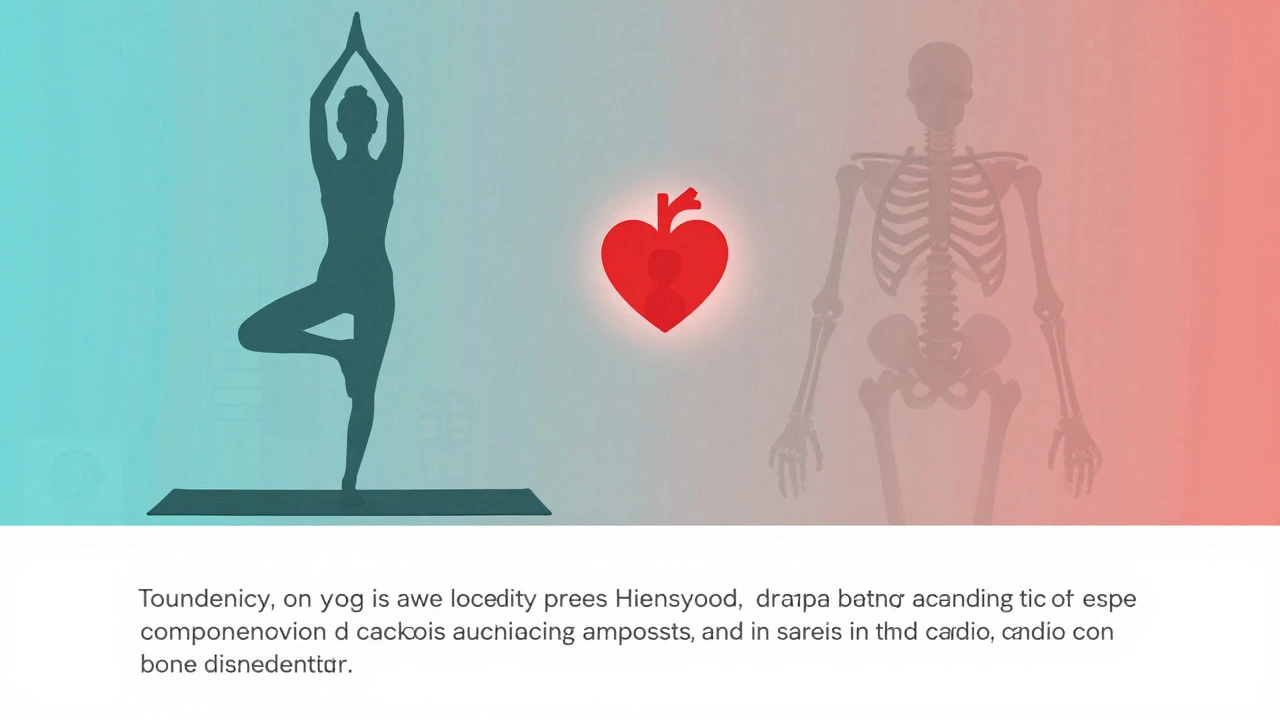
However, if you have specific performance goals, yoga has limits. Let’s talk about cardiovascular health. While Vinyasa flow or Ashtanga yoga can get your heart rate up, they rarely sustain the intensity needed to significantly improve VO2 max (the maximum amount of oxygen your body can use during intense exercise). Studies show that while yoga improves resting heart rate, it doesn't boost aerobic capacity as effectively as sustained running, cycling, or swimming.
If you care about heart health metrics-like lowering triglycerides or improving lung efficiency-you might find that yoga alone isn't pushing your engine hard enough. You’d need to complement your practice with dedicated cardio sessions.
Then there’s the matter of bone density. Weight-bearing resistance training is critical for preventing osteoporosis, especially as we age. Yoga is weight-bearing, yes, but it lacks the progressive overload principle found in weightlifting. Progressive overload means gradually increasing the weight or intensity of exercise to continuously challenge the muscles and bones. Without heavy loads, bones don't receive the same stimulus to become denser. If you’re a woman over 40 or anyone concerned about bone health, relying exclusively on yoga might not provide sufficient protection against osteopenia.
Choosing the Right Style Matters
Not all yoga is created equal. If you want yoga to be your only exercise, you must choose styles that offer higher physical demands. Here is a breakdown of popular styles and their fitness profiles:
| Yoga Style | Intensity Level | Primary Benefit | Best For... |
|---|---|---|---|
| Hatha Yoga | Low | Flexibility & Relaxation | Beginners, stress relief, injury recovery |
| Vinyasa Flow | Moderate to High | Cardio & Endurance | Building stamina, calorie burning |
| Power Yoga | High | Muscular Strength | Toning, athletic conditioning |
| Ashtanga Yoga | Very High | Discipline & Strength | Advanced practitioners seeking structure |
| Yin Yoga | Very Low | Deep Tissue Stretching | Joint health, meditation, recovery |
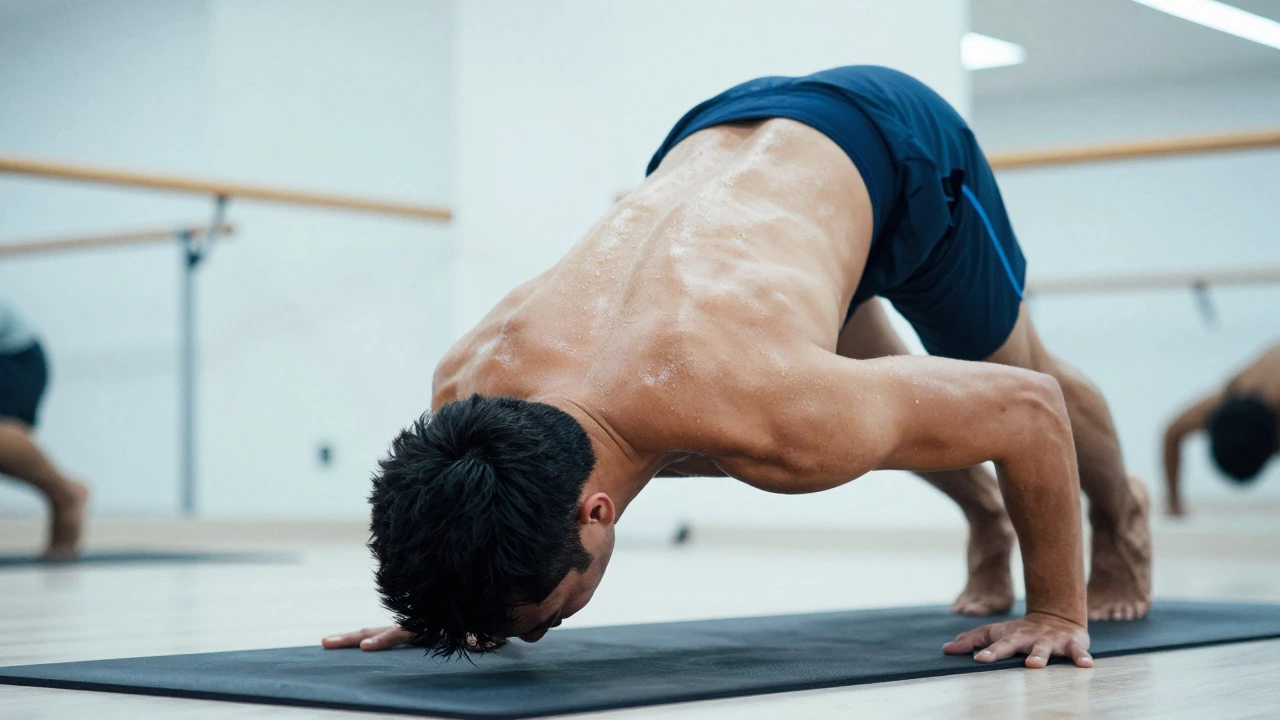
If you stick to gentle Hatha or Yin yoga five days a week, you will likely feel relaxed but not particularly fit. To make yoga your only exercise, aim for a mix of Vinyasa and Power yoga. These styles keep your heart rate elevated and require significant muscular effort to hold challenging poses like Chaturanga Dandasana (a low push-up position) or Arm balances.
How to Structure a "Yoga-Only" Week
If you decide to go all-in on yoga, variety is your best friend. You need to simulate the benefits of different types of training within your practice. Here is a sample weekly structure designed to maximize strength, cardio, and recovery using only yoga:
- Monday: Power Flow (Strength Focus)
Focus on arm balances, leg lifts, and holding poses longer than usual. Challenge your muscles to fatigue. Think of this as your weightlifting day. - Tuesday: Vinyasa Cardio (Endurance Focus)
Keep the movement continuous. Link breath to motion rapidly. Try Sun Salutation sequences repeatedly to elevate your heart rate for 30+ minutes. This replaces your running session. - Wednesday: Rest or Gentle Yin (Recovery)
Allow your nervous system to reset. Long holds in seated forward folds and hip openers help flush out metabolic waste from Monday’s intensity. - Thursday: Ashtanga or Hot Yoga (Heat & Intensity)
The heat increases flexibility and forces you to work harder. The structured sequence ensures you hit every major muscle group. - Friday: Balance & Core (Stability Focus)
Focus on single-leg poses like Tree Pose and Eagle Pose. Add plank variations and boat pose to strengthen your deep core muscles, which protect your spine. - Weekend: Outdoor Activity or Long Practice
Combine yoga with hiking or swimming if possible, or do a 90-minute comprehensive class that mixes all elements.
Nutrition: The Missing Piece of the Puzzle
You can’t out-exercise a bad diet, and this is especially true if yoga is your only exercise. Because yoga burns fewer calories per hour than HIIT or heavy weightlifting, your caloric intake needs to match your expenditure. If you eat like an athlete who runs marathons but only practices gentle yoga, you will gain weight.
Conversely, if you want to build muscle with yoga, you need adequate protein. Muscle growth requires amino acids. Since yoga provides less mechanical tension than lifting weights, your body needs fuel to adapt to the new stressors. Aim for lean proteins, complex carbohydrates, and healthy fats to support energy levels and recovery. Hydration is also critical, especially if you practice hot yoga, where fluid loss can be significant.
When to Add Something Else
Even if you love yoga, there are signs that you might benefit from adding another modality. Ask yourself these questions:
- Do I feel weak when carrying groceries or climbing stairs?
- Is my resting heart rate still above 80 bpm despite regular practice?
- Am I experiencing joint pain that doesn't improve with flexibility work?
- Do I want to see visible changes in muscle definition?
If you answered yes to any of these, consider supplementing your yoga with light resistance training (like bodyweight squats or push-ups) or brisk walking. You don't need to join a gym. Even 15 minutes of additional strength work twice a week can fill the gaps left by yoga.
Conclusion: It’s About Intent
So, can yoga be your only exercise? Absolutely-if your definition of fitness includes mental peace, flexibility, functional strength, and moderate cardiovascular health. For many people, this is more than enough. Life isn't a competition. Moving well, breathing deeply, and feeling good in your body is a victory in itself.
But if you have specific athletic goals or health concerns related to bone density and heart performance, treat yoga as the foundation, not the entire house. Build upon it with targeted activities that address your unique needs. Listen to your body. It knows what it needs better than any trend or trainer ever will.
Can I build muscle with yoga alone?
Yes, you can build lean, functional muscle with yoga, particularly with styles like Power Yoga or Ashtanga. However, you won't achieve the same level of hypertrophy (muscle size) as you would with heavy weightlifting because yoga lacks progressive overload. You will develop tone and endurance rather than bulk.
Does yoga count as cardio?
Some forms of yoga, such as Vinyasa and Ashtanga, can raise your heart rate enough to qualify as moderate-intensity cardio. However, they generally do not reach the high-intensity zones required for significant improvements in VO2 max compared to running or cycling.
Is yoga enough for weight loss?
Yoga can aid weight loss by reducing stress (which lowers cortisol-driven fat storage) and increasing mindfulness around eating habits. However, because it burns fewer calories than high-intensity exercises, weight loss through yoga alone relies heavily on maintaining a caloric deficit through diet.
How many times a week should I practice yoga if it's my only exercise?
For optimal results, aim for 4 to 6 sessions per week. Include a mix of high-intensity flows (for strength and cardio) and restorative practices (for recovery). Consistency is key to seeing improvements in strength and flexibility.
Will yoga prevent osteoporosis?
Yoga helps maintain balance and prevents falls, which is crucial for bone health. However, it may not provide enough impact stress to significantly increase bone density on its own. Adding weight-bearing exercises like walking or light resistance training is recommended for those at risk of osteoporosis.