
Home vs. Gym Savings Calculator
Your Current Setup
Projected Annual Benefits
Initial Home Equipment Cost: $150
Hourly Wage Value: $25/hr (Optional factor)
Why this matters: By eliminating friction (commuting) and overhead costs, home workouts allow you to reinvest both capital and hours into other areas of your life, increasing consistency and overall well-being.
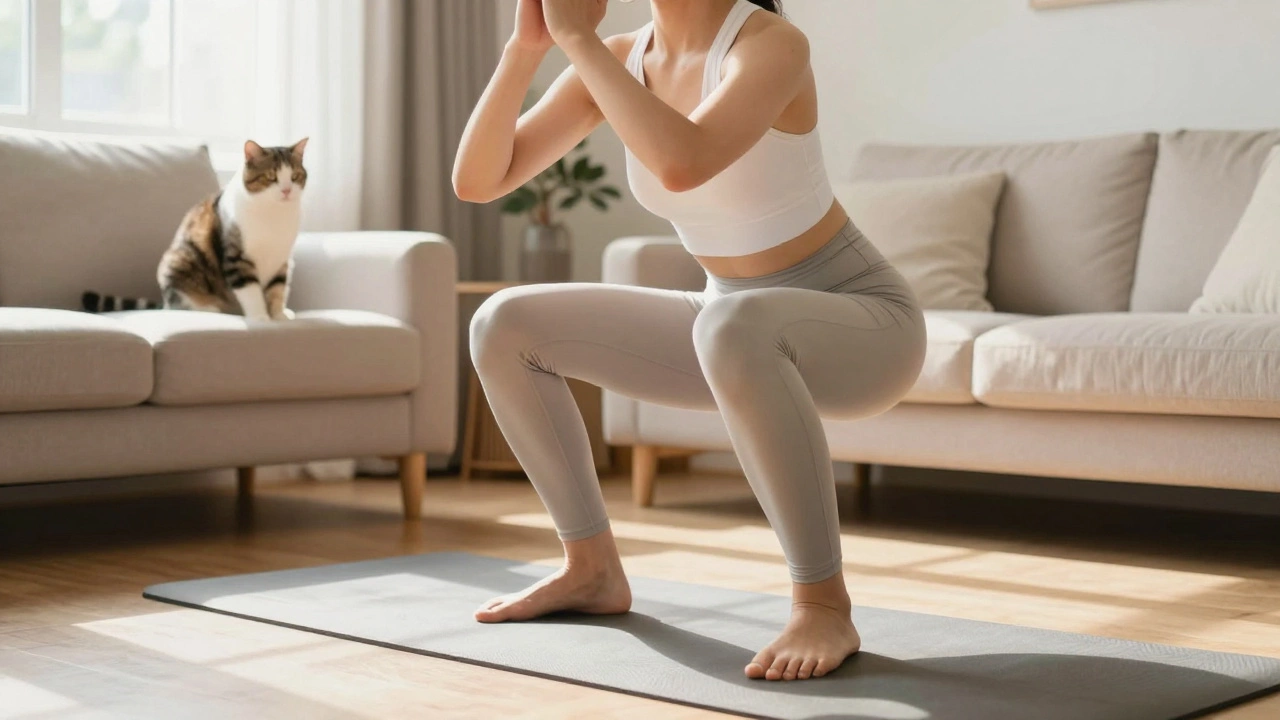
It’s easy to feel like a fraud when you’re doing squats in your living room while the cat judges you from the sofa. You scroll through Instagram and see people lifting heavy iron plates in sleek, air-conditioned gyms. Then you look at your yoga mat on the carpet and wonder: is this actually enough? Does sweating in your pajamas count?
The short answer is yes. Home workouts work. But they don’t work by magic. They work because of physics and biology, not because of the location. If you lift weight, your muscles tear and rebuild stronger. If you run, your heart adapts. It doesn’t matter if that happens in a basement or a boutique studio.
However, there is a catch. Home workouts fail for most people not because they are ineffective, but because they are too easy to skip. Let’s break down why they work, where they fall short, and how to make them beat the gym experience.
The Biology Doesn't Care About Your Zip Code
Your body is a biological machine. It responds to stress. When you add resistance to a movement, muscle fibers micro-tear. When you elevate your heart rate for an extended period, your cardiovascular system becomes more efficient. These are universal laws of physiology.
Hypertrophy is the process of increasing muscle size through progressive overload. It can be achieved with dumbbells, resistance bands, or just your own body weight. The key isn't the equipment; it's the tension placed on the muscle over time.If you do push-ups until failure at home, your chest and triceps are under the same type of mechanical tension as they would be under a bench press barbell. The difference is the amount of weight you can add. A gym allows for linear progression (adding 5kg every week). At home, you have to get creative. You might move from standard push-ups to diamond push-ups, then to decline push-ups using a chair. This is called "progressive overload" via leverage and volume, not just weight.
Studies consistently show that for general health, fat loss, and even moderate muscle gain, home-based exercise programs yield similar results to facility-based ones, provided the intensity is matched. The American College of Sports Medicine has long stated that adherence is the biggest predictor of success. If you go to the gym three times a month but do home workouts four times a week, the home workout wins. Every single time.
The Consistency Advantage
The biggest enemy of fitness isn’t laziness; it’s friction. Friction is anything that stands between you and the action. For many people, the gym is high-friction. You have to shower, drive, park, find a locker, wait for equipment, and drive back. That’s a lot of steps before you’ve even done one rep.
Home workouts remove almost all of that friction. You wake up, roll out your mat, and start. This lowers the barrier to entry significantly. On days when you are tired, stressed, or the weather is terrible (like a rainy Tuesday in Auckland), going to the gym feels like a chore. Doing ten minutes of stretching or a quick circuit at home feels manageable.
- Time Efficiency: No commute means you save 30-60 minutes per session. You can fit a workout into a lunch break or right after waking up.
- Privacy: Many people suffer from "gymtimidation." Feeling judged by others stops them from trying new exercises. At home, you can grunt, struggle, and learn without an audience.
- Cost Savings: Gym memberships can cost $50-$100 AUD per month. Home equipment is a one-time purchase. Over a year, the savings are significant.
This convenience creates a habit loop. Because it is easier to start, you are more likely to finish. And because you finish more often, you see better results. It’s a virtuous cycle.
The Equipment Gap: What You Can and Can't Do
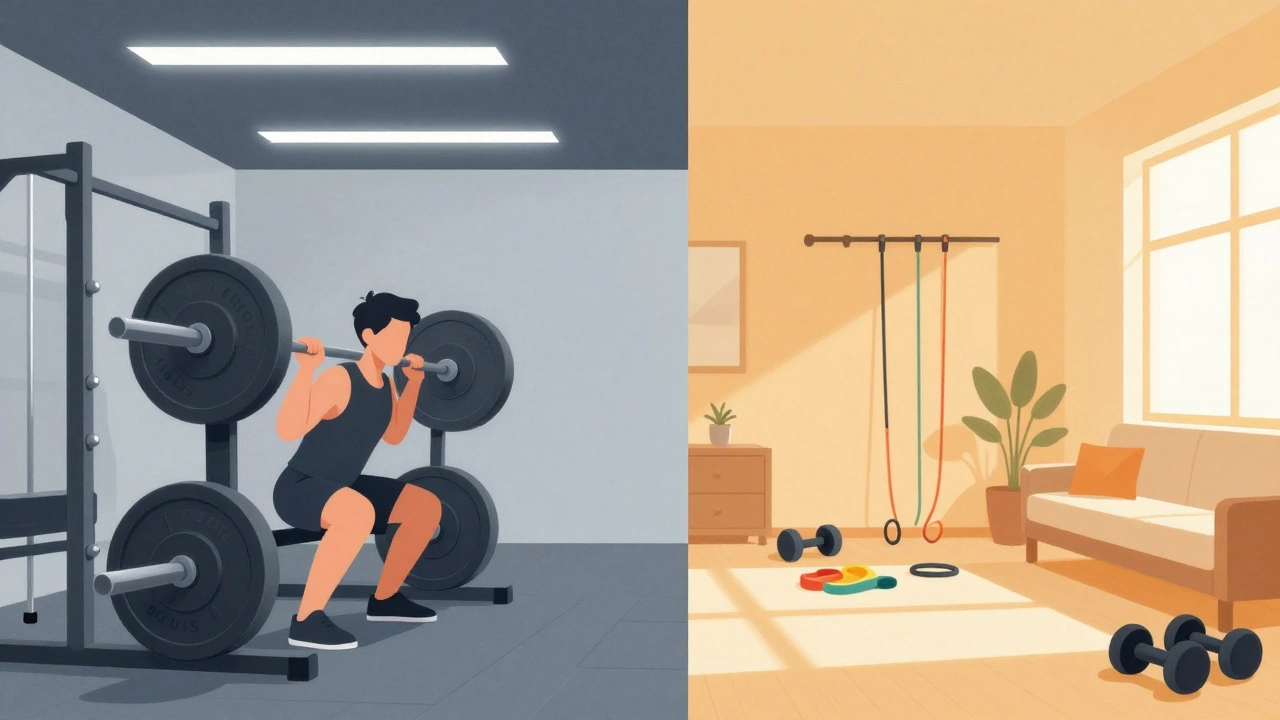
Let’s be honest about limitations. You cannot replicate a powerlifting setup in a small apartment easily. If your goal is to deadlift 200kg, you need a gym. Heavy compound lifts require space, safety racks, and heavy plates.
However, for 90% of people, the goal is not to compete in strongman contests. The goal is to look good, feel healthy, and reduce disease risk. For these goals, minimal equipment is sufficient.
| Goal | Home Workout Feasibility | Gym Advantage |
|---|---|---|
| Fat Loss | High (HIIT, Cardio) | More cardio machines (treadmills, rowers) |
| Muscle Tone | High (Bodyweight, Bands) | Heavier isolation weights |
| Strength (Absolute) | Medium (Limited by max weight) | Unlimited loading potential |
| Flexibility/Mobility | Very High | Minimal advantage |
| Social Motivation | Low (Unless online classes) | Group energy, trainer supervision |
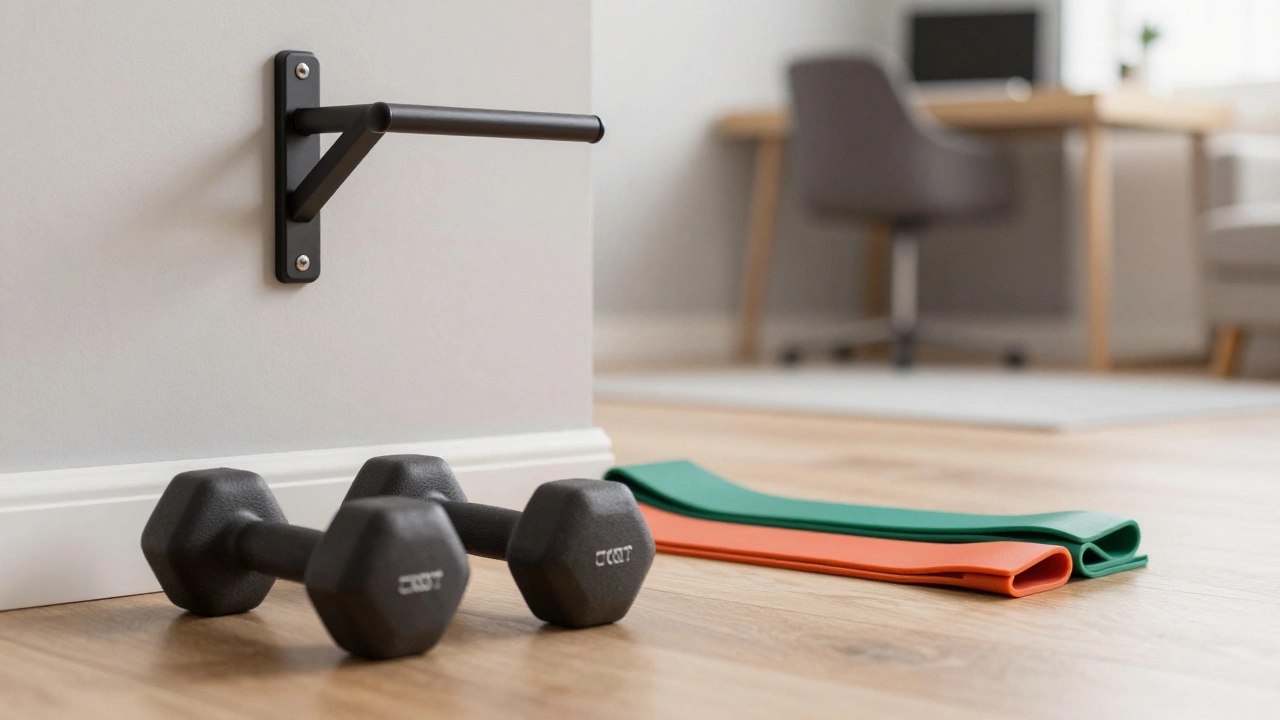
To bridge the gap at home, you need smart equipment. You don’t need a full rack. A set of adjustable dumbbells, a pull-up bar, and some resistance bands cover almost every major muscle group. Kettlebells are also excellent for dynamic movements like swings and cleans. The key is versatility. One piece of equipment should serve multiple purposes.
How to Structure a Home Workout That Works
Randomly doing exercises isn’t a plan. It’s a guess. To get results at home, you need structure. Here is a simple framework that works for beginners and intermediates.
- Warm-up (5 mins): Dynamic movements. Arm circles, leg swings, cat-cow stretches. Get blood flowing.
- Strength Block (20-30 mins): Focus on compound movements. Squats, lunges, push-ups, rows (with bands or dumbbells). Do 3 sets of 8-12 reps. Rest 60 seconds between sets.
- Cardio Finisher (5-10 mins): Jumping jacks, burpees, high knees, or mountain climbers. Keep the heart rate up.
- Cool Down (5 mins): Static stretching. Hold each stretch for 30 seconds.
Progression is critical. If you did 10 push-ups last week, aim for 11 this week. If that’s too easy, slow down the tempo. Take 3 seconds to lower yourself down. This increases "time under tension" and makes the exercise harder without adding weight. This is the secret sauce of home training: manipulating variables other than load.
Pitfalls to Avoid
Even with the best intentions, home workouts can fail. Here is what usually goes wrong.
Distractions: The TV is on. The phone is buzzing. Kids are running around. Designate a "workout zone" if possible. Put your phone in another room. Treat the time as sacred. If you treat it as optional, your brain will find reasons to skip it.
Lack of Feedback: In a gym, trainers or experienced lifters might correct your form. At home, you are alone. Use mirrors. Record yourself on your phone. Watch the video and compare it to tutorial videos. Poor form leads to injury, especially when you are pushing hard without supervision.
Boredom: Doing the same routine for months gets stale. Change the order of exercises. Try a new style, like yoga or Pilates. Follow along with YouTube videos or apps to keep things fresh. Variety keeps the mind engaged, which helps maintain consistency.
Is It Right for You?
Home workouts are ideal if you value flexibility, privacy, and efficiency. They are perfect for busy parents, shift workers, or anyone who finds gyms intimidating or inconvenient. They are less ideal if you are an advanced lifter needing maximal loads, or if you thrive on the social energy of group classes.
Ultimately, the best workout is the one you actually do. Don’t let perfection be the enemy of progress. Start where you are. Use what you have. Do something today. Your future self will thank you.
Can I build muscle without weights at home?
Yes. Bodyweight exercises like push-ups, pull-ups, and squats can build significant muscle, especially for beginners. As you get stronger, you must increase difficulty by changing leverage (e.g., pistol squats instead of regular squats) or slowing down the movement speed.
Do home workouts burn as much fat as gym workouts?
Fat loss depends on total calorie expenditure and diet. Home workouts can burn just as many calories if you include high-intensity interval training (HIIT) or sustained cardio. The key is intensity. A vigorous 20-minute home HIIT session can burn more calories than a lazy 45-minute gym walk.
What is the minimum equipment needed for effective home workouts?
A yoga mat, a set of resistance bands, and a pair of adjustable dumbbells are sufficient for a full-body routine. If you have space, a pull-up bar is highly recommended for upper back development.
How often should I work out at home?
Aim for 3-5 sessions per week. Allow at least one rest day between strength training sessions for the same muscle groups to recover. Consistency matters more than frequency. Four 20-minute sessions are better than one 2-hour marathon.
Are home workouts safe for beginners?
Yes, they are often safer because you can progress at your own pace without pressure. However, always prioritize form over speed. Use online resources to learn proper technique before attempting complex movements like burpees or handstand push-ups.