
Fitness Class Finder Quiz
Find Your Perfect Fitness Class
Take this 3-minute quiz to discover the fitness class that matches your goals, experience level, and personality.
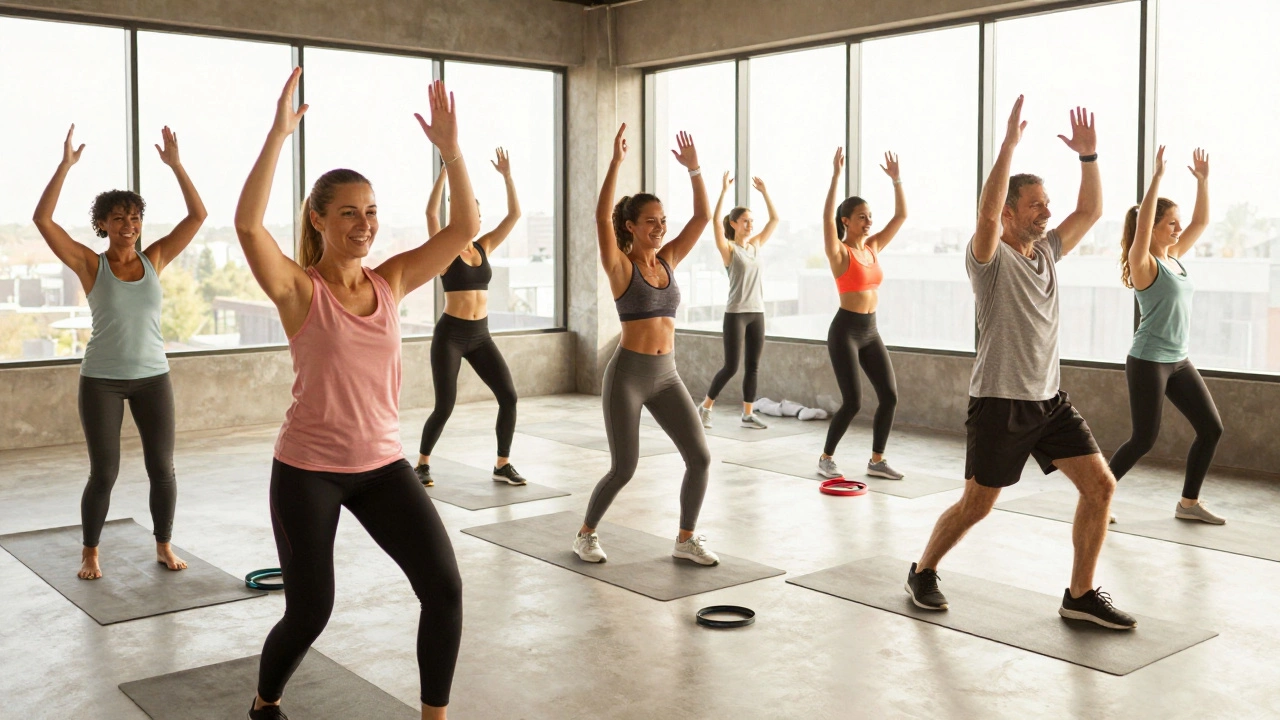
Ever walked past a gym and seen people laughing, sweating, and moving together to music? That’s a fitness class. It’s not just another workout - it’s a shared experience designed to push you, motivate you, and keep you coming back. Unlike working out alone, fitness classes turn exercise into a social event, a routine, and sometimes even a lifeline.
What Exactly Is a Fitness Class?
A fitness class is a structured group session led by a certified instructor. It usually lasts between 30 and 60 minutes and follows a clear format: warm-up, main workout, cool-down. These classes happen in gyms, studios, community centers, parks, or even online. The big difference from solo workouts? You’re not alone. There’s music, energy, and someone telling you exactly what to do next.
There’s no one-size-fits-all fitness class. Some are high-intensity. Others focus on control and breathing. You might be lifting weights, dancing, stretching, or doing bodyweight circuits. The common thread? Everyone in the room is working toward the same goal - getting stronger, more flexible, or just feeling better.
Types of Fitness Classes You’ll Find Today
There are dozens of options, but here are the most popular ones you’re likely to see in any major city - including Auckland:
- Spin or Cycling Classes - You ride stationary bikes to upbeat music. Instructors guide you through climbs, sprints, and recovery. Great for cardio and leg strength.
- HIIT (High-Intensity Interval Training) - Short bursts of intense movement (like burpees or jump squats) followed by brief rest. Usually 20-30 minutes. Burns calories fast and builds endurance.
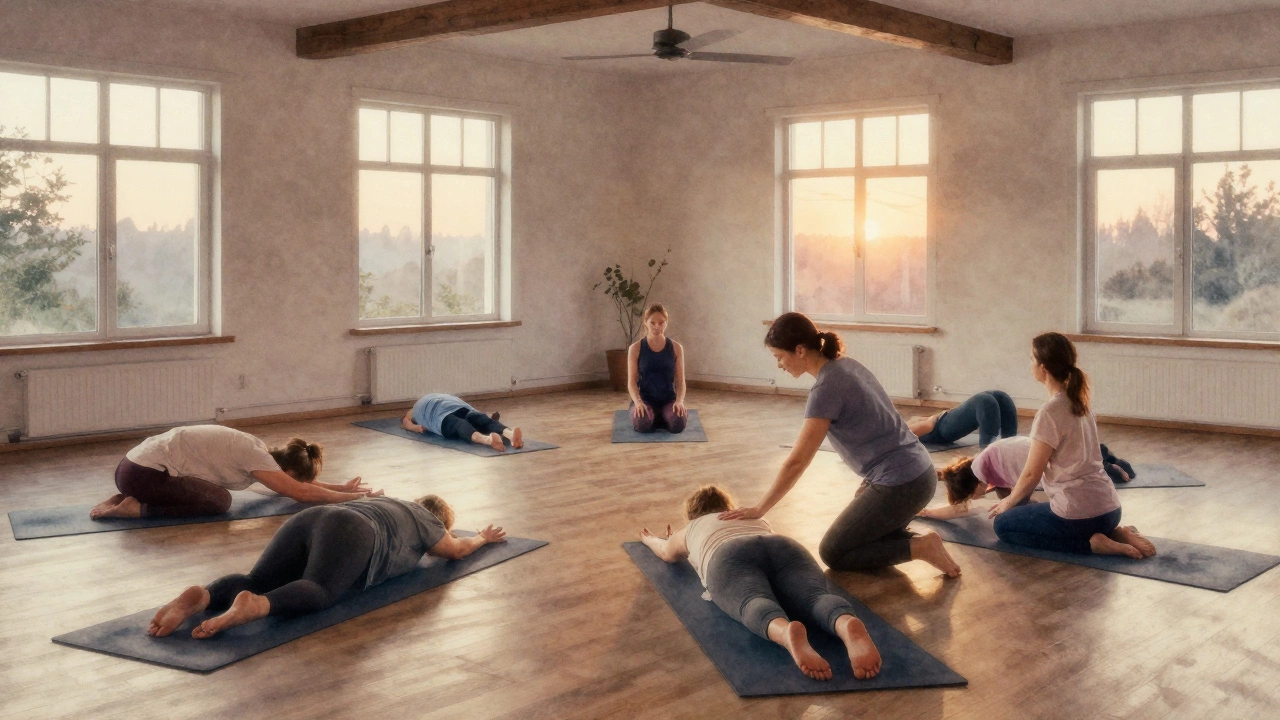
- Yoga - Focuses on flexibility, balance, and mindfulness. Styles vary: Vinyasa flows, Hatha for beginners, or Yin for deep stretching.
- Pilates - Low-impact, core-focused movements. Uses mats or machines like the Reformer. Helps with posture and injury prevention.
- Dance Fitness - Think Zumba, Hip-Hop HIIT, or Barre. You learn choreography while getting your heart rate up. No dance experience needed.
- Strength Training Circuits - Uses dumbbells, kettlebells, or resistance bands. Often includes timed stations. Builds muscle without needing a personal trainer.
- Boxing or Kickboxing - Punching bags, footwork drills, and conditioning. Great for stress relief and coordination.
- Water Fitness - Held in pools. Low-impact, great for joints. Includes water aerobics and aqua jogging.
Many studios now offer hybrid classes - like yoga fused with light weights, or Pilates with cardio bursts. The goal? To keep things fresh so you don’t get bored.
Why Do People Choose Fitness Classes Over Working Out Alone?
Here’s the truth: most people quit solo workouts within a few weeks. Why? Motivation fades. Discipline is hard. But fitness classes solve that.
First, there’s accountability. You show up because you paid for the class. Or because your friend is there. Or because you don’t want to let the instructor down. That social pressure? It works.
Second, you get structure. No guessing what to do. The instructor has planned every rep, every stretch, every transition. You just follow along. That removes decision fatigue - a real reason people avoid working out.
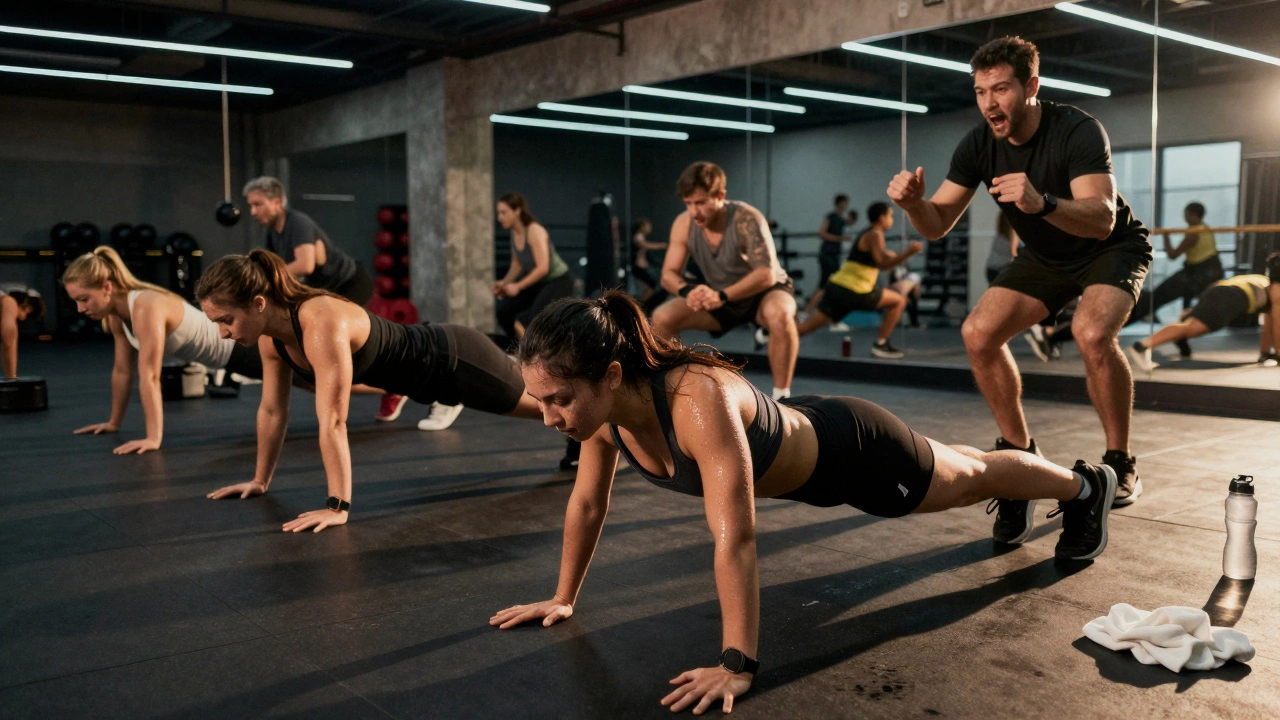
Third, the energy is contagious. When 20 people are all grunting through the same set of squats, you push harder than you would alone. Music, lighting, and group rhythm create a vibe you can’t replicate at home.
And let’s not forget: you learn. Instructors correct your form. They give modifications if you’re struggling. They celebrate your progress. That kind of feedback is priceless.
Who Are Fitness Classes For?
Anyone. Seriously.
You don’t need to be fit to join. You don’t need to know how to do a push-up. Most classes offer beginner versions of every move. Instructors are trained to spot people who look lost - and they’ll help.
Some classes are designed for specific groups:
- Prenatal classes - Safe movement for expecting moms.
- Senior-focused classes - Low-impact, balance-based, joint-friendly.
- Post-rehab classes - For people recovering from injury, often led by physiotherapists.
- Teen or kids’ classes - Fun, game-based movement to build habits early.
If you’re unsure, ask the studio. Most offer a free first class. Try it. If it doesn’t feel right, try another. There’s a class for every body, every mood, every schedule.
What to Expect on Your First Class
It’s normal to feel nervous. Here’s what actually happens:
- You arrive 5-10 minutes early. Most studios ask you to sign in or check in on a tablet.
- You’re greeted. No pressure. Just a smile and maybe a quick, “First time?”
- You pick a spot. Usually near the front if you’re new - easier to see the instructor.
- You get a quick intro. The instructor explains the class flow and offers modifications.
- You start moving. You’ll be told when to go hard, when to slow down, and when to rest.
- You finish. Everyone claps. You feel proud. You might even want to do it again tomorrow.
Wear comfortable clothes. Bring water. A towel if you sweat a lot. That’s it. You don’t need fancy gear. Most studios have mats, weights, and water on-site.
Costs and Commitments
Fitness classes vary in price. In Auckland, a single drop-in class might cost $20-$30. Monthly unlimited passes range from $80 to $180, depending on the studio. Some gyms include classes in your membership. Community centers often offer cheaper rates - sometimes under $10 per class.
You don’t need a long-term contract. Most places let you pay as you go. That’s perfect for testing out different styles before committing.
Some studios offer trial packs: 3 classes for $30. Take advantage. Try a spin class, then a yoga session, then a HIIT class. See what sticks.
How to Find the Right Class for You
Not all classes are created equal. Here’s how to pick:
- Match your goal - Want to lose weight? Try HIIT or dance. Want to relax? Go for yoga or Pilates.
- Check the instructor - Do they explain moves clearly? Do they care if you’re struggling? Good instructors make all the difference.
- Watch the vibe - Is it competitive? Supportive? Loud? Calm? Pick a culture that matches your personality.
- Try different times - Morning classes are quieter. Evening ones are more energetic. Find what fits your rhythm.
- Read reviews - Look for comments like “great for beginners” or “instructor really helps you improve.”
Don’t be afraid to switch. If a class makes you feel bad about yourself, leave. The right one should make you feel stronger - not smaller.
The Bigger Picture: Why Fitness Classes Stick
Studies show people who take group fitness classes stick with exercise 3x longer than those who work out alone. Why? It’s not just about the workout. It’s about the connection.
You start recognizing faces. You exchange smiles. You hear someone say, “I did 10 more squats than last week!” You feel part of something. That’s not just fitness. That’s community.
And that’s the secret. Fitness classes don’t just change your body. They change your routine, your mindset, and sometimes even your life.