
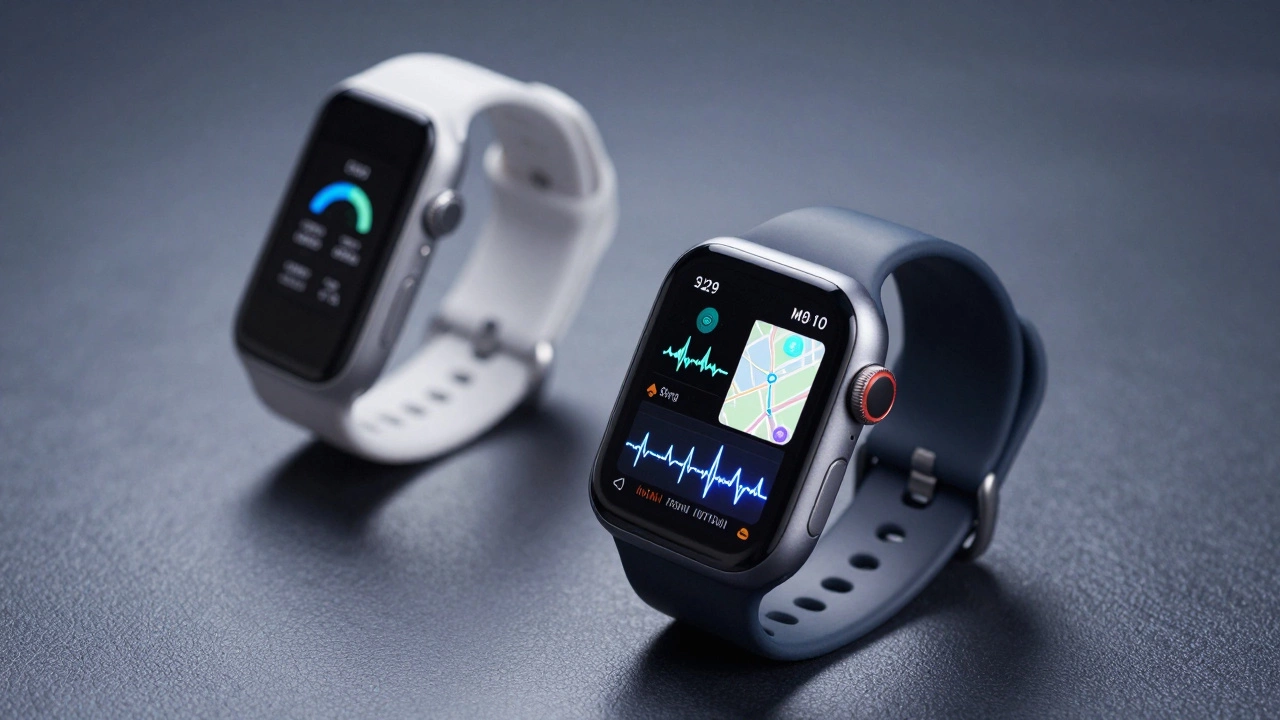
Smart Watch Recommendation Finder
What phone do you use?
iPhone
iOS device with Apple ecosystem
Android
Samsung, Pixel, or other Android phones
Why this watch?
For years, Fitbit was the default choice for casual fitness enthusiasts who wanted simple step counting and sleep tracking without the hassle of complex settings. But if you are asking what watch is better than a Fitbit in 2026, you likely want more than just basic metrics. You might be looking for deeper health insights, better battery life, or a device that actually looks good when you aren't working out.
The market has shifted dramatically. Wearable technology now offers specialized tools for every type of user, from marathon runners to busy parents. The "best" replacement depends entirely on your specific goals. Do you need medical-grade heart rate accuracy? Do you hate charging your watch every night? Or do you want a full smartphone experience on your wrist?
Quick Summary: Who Wins?
- Best Overall Upgrade: Garmin Forerunner 165 - Superior GPS, longer battery, and professional training metrics.
- Best for iPhone Users: Apple Watch Series 10 - Unmatched ecosystem integration and health sensors.
- Best for Battery Life: Samsung Galaxy Watch 7 - Android compatibility with multi-day battery performance.
- Best Budget Alternative: Amazfit Band 8 - Cheap, reliable, and surprisingly feature-rich.
Why Move Away From Fitbit?
Before picking a new device, it helps to understand why Fitbit feels limiting today. While Fitbit remains strong in community challenges and simple sleep staging, it lacks the raw data depth that serious athletes crave. If you run intervals, the heart rate lag on many Fitbit models can ruin your zone training. If you travel often, the proprietary subscription model for advanced insights can feel like a paywall for features you already paid for in hardware.
Furthermore, Fitbit’s software updates have slowed down since its acquisition by Google. Many users report that the interface feels dated compared to the fluid animations of newer competitors. Upgrading means breaking free from these constraints and accessing a wider range of third-party apps, more accurate GPS chips, and better build quality.
The Heavyweight Champion: Garmin
If you are serious about fitness, Garmin is the gold standard for dedicated sports watches that prioritize accuracy, durability, and battery efficiency over flashy screens. Unlike Fitbit, which treats fitness as a lifestyle accessory, Garmin treats it as science.
The Garmin Forerunner 165 (released in 2024) is the direct successor to the popular 255 series. It uses a bright AMOLED display but keeps the rugged design. Its standout feature is the Firstbeat Analytics engine, which provides real-time physiological metrics like VO2 Max trends, training load focus, and recovery advisor. These aren’t just numbers; they tell you exactly how hard to train today based on your body’s actual condition.
Battery life is where Garmin crushes Fitbit. While a Fitbit Charge might last 6-7 days, the Forerunner 165 lasts up to 13 days in smartwatch mode and 20 hours in GPS mode. For ultra-runners or hikers, this reliability is non-negotiable. You never have to worry about your watch dying mid-trail because you forgot to charge it overnight.

The Smartphone Extension: Apple Watch
If you use an iPhone, the question isn’t really "what is better," but "are you ready to upgrade." The Apple Watch Series 10 is the most integrated smartwatch on the market, offering seamless connectivity with iOS devices and advanced health monitoring capabilities.
Fitbit struggles with notifications. They are often delayed, truncated, or require opening the app to read. The Apple Watch delivers them instantly, with rich previews and quick replies. But beyond convenience, the health tech is superior. The blood oxygen sensor, ECG app, and fall detection are FDA-cleared features that provide peace of mind. The optical heart rate sensor is widely regarded as the most accurate consumer-grade sensor available, especially during high-intensity interval training (HIIT).
The downside? Battery life. You will charge it daily. If the idea of plugging in your watch every evening stresses you out, stick with Garmin or Samsung. But if you want a device that controls your music, unlocks your car, pays for coffee, and tracks your workout with precision, nothing beats the Apple Watch.
The Android Powerhouse: Samsung Galaxy Watch
For Android users, Samsung Galaxy Watch 7 is a premium smartwatch featuring Wear OS, offering extensive app support, biometric health tracking, and sleek design options. Samsung has improved its software, Wear OS, significantly. It no longer feels buggy, and the selection of apps rivals the Apple App Store.
The Galaxy Watch 7 introduces BioActive Sensor improvements, including faster body composition analysis. It measures skeletal muscle, body fat percentage, and water content directly from your wrist. While not as precise as a medical scale, it’s excellent for tracking trends over time. The watch also supports Bluetooth calling with clearer audio than previous generations.
Battery life has improved to roughly 40 hours with typical use, which is still less than Garmin but much better than older models. If you want a stylish watch that looks at home in a boardroom and handles a gym session equally well, Samsung is the top pick for Android owners.
Budget-Friendly Contenders: Amazfit and Coros
You don’t need to spend $400+ to get better than a Fitbit. Amazfit is a budget-friendly wearable brand known for offering long battery life and essential fitness tracking features at a fraction of the cost of major brands. The Amazfit Band 8 costs under $50 and offers sleep tracking, SpO2 monitoring, and 14-day battery life. It’s perfect if you just want step counts and sleep data without the subscription fees.
Another hidden gem is Coros PACE 3. This watch is designed for endurance athletes but costs significantly less than Garmin’s flagship models. It weighs only 30 grams, making it nearly invisible on your wrist. The button-based navigation is intuitive for runners wearing gloves, and the battery lasts up to 24 days. If you run marathons and hate carrying a charger, Coros is your best friend.
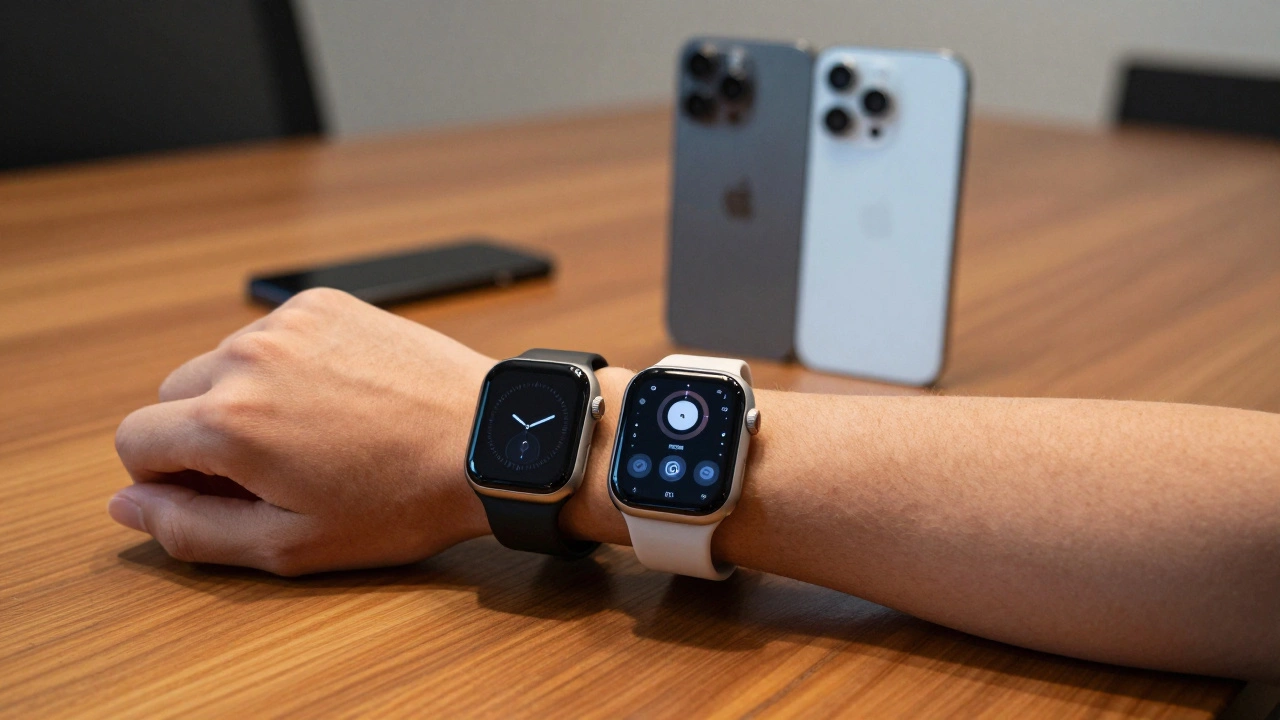
Comparison Table: Key Specs at a Glance
| Device | Battery Life | GPS Accuracy | Best For | Price Range |
|---|---|---|---|---|
| Garmin Forerunner 165 | Up to 13 days | Excellent (Multi-band) | Runners & Triathletes | $250 - $300 |
| Apple Watch Series 10 | 18-24 hours | Very Good | iPhone Users | $399+ |
| Samsung Galaxy Watch 7 | ~40 hours | Good | Android Users | $300 - $350 |
| Amazfit Band 8 | 14 days | N/A (No built-in GPS) | Budget Buyers | $50 |
| Coros PACE 3 | Up to 24 days | Excellent | Endurance Athletes | $200 |
Decision Guide: Which One Should You Pick?
Choosing the right watch comes down to three factors: your phone, your activity level, and your patience for charging.
- If you have an iPhone: Get the Apple Watch. The integration is too good to ignore. Unless you hike for days without power, it’s the best all-around experience.
- If you have Android: Choose between Samsung and Garmin. Samsung gives you a true smartwatch with apps and calls. Garmin gives you pure athletic performance and weeks of battery.
- If you are a runner/cyclist: Go with Garmin or Coros. Their GPS locks faster and holds signal better in dense urban areas or forests. The training metrics will help you improve your pace.
- If you are on a tight budget: Skip the Fitbit Charge and buy an Amazfit. You get 90% of the functionality for half the price.
Frequently Asked Questions
Is Garmin better than Fitbit for walking?
Yes, Garmin is generally better for walking due to more accurate step counting algorithms and better GPS mapping for outdoor walks. However, Fitbit has a more user-friendly interface for casual users who just want a simple daily step goal.
Can I use a Fitbit with an Android phone?
Yes, Fitbit works with Android, but the experience is limited compared to iPhone users. You cannot reply to messages directly from the watch, and some notification features are restricted. Samsung or Garmin offers a much better Android experience.
Does the Apple Watch track sleep as well as Fitbit?
The Apple Watch tracks sleep stages accurately, but Fitbit historically had a slight edge in detecting subtle movements during light sleep. However, the Apple Watch’s larger database and machine learning improvements in watchOS 10 have narrowed this gap significantly.
Are Garmin watches expensive?
Entry-level Garmin watches like the Vivosmart start around $150, while advanced models like the Fenix or Epix series can exceed $800. The Forerunner 165 sits in the mid-range at $250, offering great value for serious runners.
What is the best fitness tracker for heart rate accuracy?
The Apple Watch Series 10 and Garmin Forerunner 165 both offer top-tier heart rate accuracy. For high-intensity workouts, chest strap monitors are still the gold standard, but these two watches come closest among wrist-worn devices.