
Belly Fat Reduction Estimator
Enter your details below to estimate when you might start seeing visible changes in your midsection. Remember: Spot reduction is a myth, but consistent aerobic exercise combined with mindful nutrition works.
You lace up your shoes, hit the pavement, and start pounding out miles. Your goal is clear: get rid of that stubborn roll around your midsection. But does running actually target belly fat specifically? Here’s the frustrating truth: you can’t choose where your body burns fat from. However, running is one of the most effective tools for shrinking overall body fat, which inevitably includes your waistline.
The idea of spot reduction is a myth. When you run, your body draws energy from fat stores all over your system, not just the area you’re exercising. Think of it like withdrawing money from a bank account; you can’t ask the bank to only give you coins from your left pocket. You withdraw from the total balance. Similarly, aerobic exercise creates a calorie deficit that forces your body to tap into its global fat reserves. If you have excess fat on your belly, thighs, or arms, running helps reduce it across the board.
Understanding Visceral vs. Subcutaneous Fat
Not all belly fat is created equal. There are two main types hiding in your midsection, and they behave differently when you start moving.
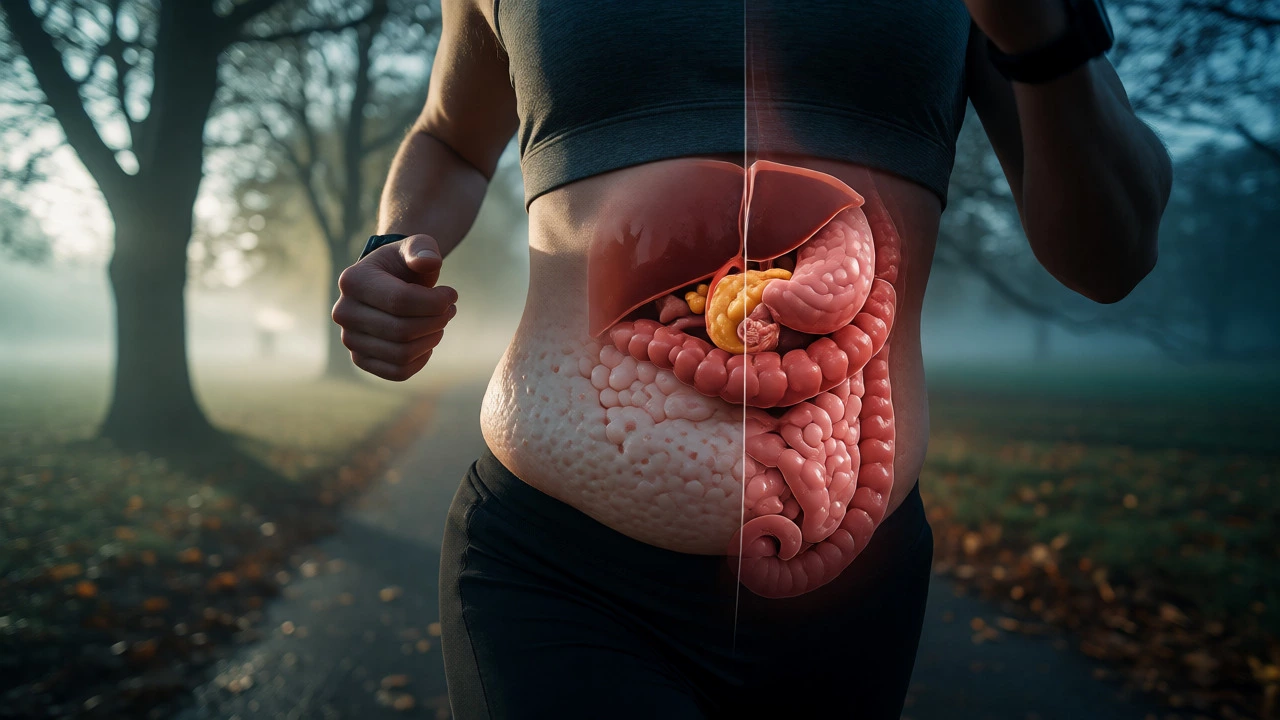
Subcutaneous fat is the soft, jiggly layer you can pinch with your fingers. It sits just under the skin. While annoying, it’s less dangerous to your health. Visceral fat, on the other hand, is the deep, hard fat that surrounds your internal organs like the liver and pancreas. This is the stuff linked to heart disease, type 2 diabetes, and inflammation.
Here’s the good news: research suggests that visceral fat responds more quickly to aerobic exercise than subcutaneous fat. A study published in the Journal of Applied Physiology found that moderate-to-high intensity aerobic training significantly reduced visceral adipose tissue even without major changes in diet. Why? Visceral fat is metabolically active. It has more blood flow and receptors that respond to adrenaline and noradrenaline released during running. So, while you might not see your abs pop immediately, your internal health improves fast.
Why Running Works (And Where It Fails)
Running is efficient. It burns calories at a high rate compared to many other exercises. For an average person weighing 70kg (154 lbs), running at a moderate pace of 8 km/h (5 mph) burns roughly 300-400 calories per hour. Over a week, that adds up to a significant deficit if you maintain consistency.
But here’s where people stumble. Running increases hunger hormones like ghrelin. Many runners fall into the "compensatory eating" trap. They burn 300 calories on a run, then eat a 600-calorie muffin because they feel they’ve earned it. Net result? No weight loss. To make running work for belly fat, you must pair it with mindful nutrition. You cannot outrun a bad diet.
Another pitfall is adaptation. Your body gets used to steady-state jogging. After a few months, your metabolism becomes efficient at that specific pace, meaning you burn fewer calories doing the same workout. To keep torching fat, you need to vary your stimulus.
Best Running Strategies for Fat Loss
If you want to maximize belly fat reduction, don’t just jog. Mix these three methods into your weekly plan.
- Steady-State Cardio: Long, slow runs at a conversational pace. These build endurance and teach your body to use fat as fuel. Aim for 45-60 minutes once or twice a week.
- High-Intensity Interval Training (HIIT): Short bursts of near-max effort followed by rest. For example, sprint for 30 seconds, walk for 90 seconds. Repeat 8 times. HIIT boosts your metabolic rate for hours after the run ends (the afterburn effect).
- Hill Repeats: Running uphill engages more muscle groups, particularly glutes and hamstrings. More muscle engagement equals higher calorie expenditure. Find a steep hill and do 6-8 repeats.
| Method | Calorie Burn (Est.) | Afterburn Effect | Best For |
|---|---|---|---|
| Steady-State Jog | Moderate | Low | Beginners, Endurance |
| HIIT Sprints | High | High | Time-Crunched, Metabolism Boost |
| Hill Repeats | Very High | Moderate-High | Muscle Tone, Power |

The Role of Cortisol and Stress
Belly fat isn’t just about calories in versus calories out. Hormones play a massive role. Chronic stress elevates cortisol, a hormone that encourages fat storage specifically in the abdominal area. Interestingly, excessive high-intensity running can temporarily spike cortisol. If you’re already stressed from work or life, hammering yourself with daily intense sprints might backfire, keeping those levels elevated.
Balance is key. Include recovery days. Sleep seven to nine hours a night. Studies show that sleep deprivation disrupts leptin and ghrelin, making you crave sugary, fatty foods the next day. If you’re running five days a week but sleeping five hours a night, your belly fat won’t budge. Prioritize rest as much as the run itself.
Nutrition: The Non-Negotiable Partner
Let’s be real: you can’t sweat away a pizza. Nutrition determines whether running reveals results or just makes you hungry. Focus on protein. It preserves muscle mass while you lose fat. Muscle tissue burns more calories at rest than fat tissue does. If you lose muscle along with fat, your metabolism slows down.
Aim for 1.6 to 2.2 grams of protein per kilogram of body weight daily. Fill half your plate with vegetables for volume and fiber, which keeps you full. Cut liquid calories-sodas, fancy coffees, juices. They add up fast without satisfying hunger. Track your intake for two weeks just to see where the hidden calories live. Most people underestimate their consumption by 20-30%.

How Long Until You See Results?
Patience is part of the process. Healthy fat loss is 0.5 to 1 kg (1-2 lbs) per week. Losing faster often means losing water or muscle. Visible changes in belly fat usually take 4-8 weeks of consistent effort. However, you’ll likely feel stronger and have better energy within two weeks.
Don’t rely solely on the scale. Muscle weighs more than fat by volume. You might look leaner and fit into old jeans while the scale stays the same. Take progress photos monthly and measure your waist circumference. These metrics tell a truer story than weight alone.
Troubleshooting Common Issues
Plateaus: If your weight stops dropping, change your routine. Add strength training. Two sessions of resistance work per week boost basal metabolic rate. Compound lifts like squats and deadlifts engage core muscles deeply, supporting your posture and appearance.
Injuries: Shin splints or knee pain? Check your form. Overstriding (landing with your foot far ahead of your hips) causes impact shock. Try increasing your cadence (steps per minute) by 5-10%. Consider getting fitted for proper running shoes at a specialty store. Old shoes lose cushioning after 500-800 km.
Lack of Time: Can’t run long? Do shorter, harder runs. Twenty minutes of intervals beats forty-five minutes of slow jogging for time efficiency. Consistency beats duration every time.
Can I lose belly fat by running only?
Yes, but it’s difficult without dietary control. Running creates a calorie deficit, but if you eat back all the calories burned, you won’t lose weight. Combining running with a slight caloric deficit yields the best results.
Is running better than walking for belly fat?
Running burns more calories per minute due to higher intensity. However, walking is lower impact and easier to sustain for longer durations. Both reduce visceral fat, but running is more time-efficient for calorie burning.
Does running make your stomach bigger?
No, running doesn’t increase stomach size. Some runners experience bloating due to hydration issues or digestive stress during exercise, but this is temporary. Proper fueling and hydration prevent this.
How many days a week should I run to lose belly fat?
Three to four days is a sustainable starting point. Include one long steady run, one interval session, and one easy recovery run. Rest days are crucial for hormone regulation and injury prevention.
Should I run on an empty stomach?
Some studies suggest fasted cardio may increase fat oxidation slightly, but total calorie balance matters most. If you feel dizzy or weak, eat a small snack before running. Listen to your body.