
Beginner Yoga Routine Builder
Select poses to build your custom routine. Follow the recommended order (Warm-up → Peak → Cool-down) for the safest experience.
Available Poses
No poses selected. Click a pose to start your practice!
Most people walk into their first yoga class feeling like they need to be a pretzel just to get through the door. You might think you're too stiff or that your balance is non-existent, but that's actually the whole point. You don't do yoga because you're flexible; you do it to become flexible. If you're staring at a mat wondering where to start, you don't need a complex sequence. You just need a few foundational movements that wake up your joints and quiet your mind without leaving you feeling exhausted or injured.
Key Takeaways:
- Focus on stability and breath before attempting advanced balance poses.
- Start with Hatha yoga for a slower, more structured pace.
- Use props like blocks or straps to bring the floor to you.
- Consistency beats intensity; five minutes a day is better than one hour a week.
The Foundation: Why We Start Here
Before we get into the actual movements, it's worth understanding that Hatha Yoga is a traditional style of yoga that emphasizes physical postures and breathing. For a beginner, this is the gold standard because it's slower than a Vinyasa flow. You have time to actually feel where your foot is on the mat and how your spine is aligning.
The goal for your first few weeks isn't to touch your toes. It's to build a "mind-body connection." This sounds like a buzzword, but it's practical. It means knowing the difference between a "good stretch" (that feels like a release) and "bad pain" (sharp, pinching sensations). If you feel the latter, back off immediately. Your ego is the biggest enemy in a yoga studio.
The Best Poses to Kickstart Your Journey
If you're looking for the absolute yoga poses for beginners, you want a mix of stretching, balance, and resting. Here are the heavy hitters that provide the most value with the least risk.
Mountain Pose (Tadasana)
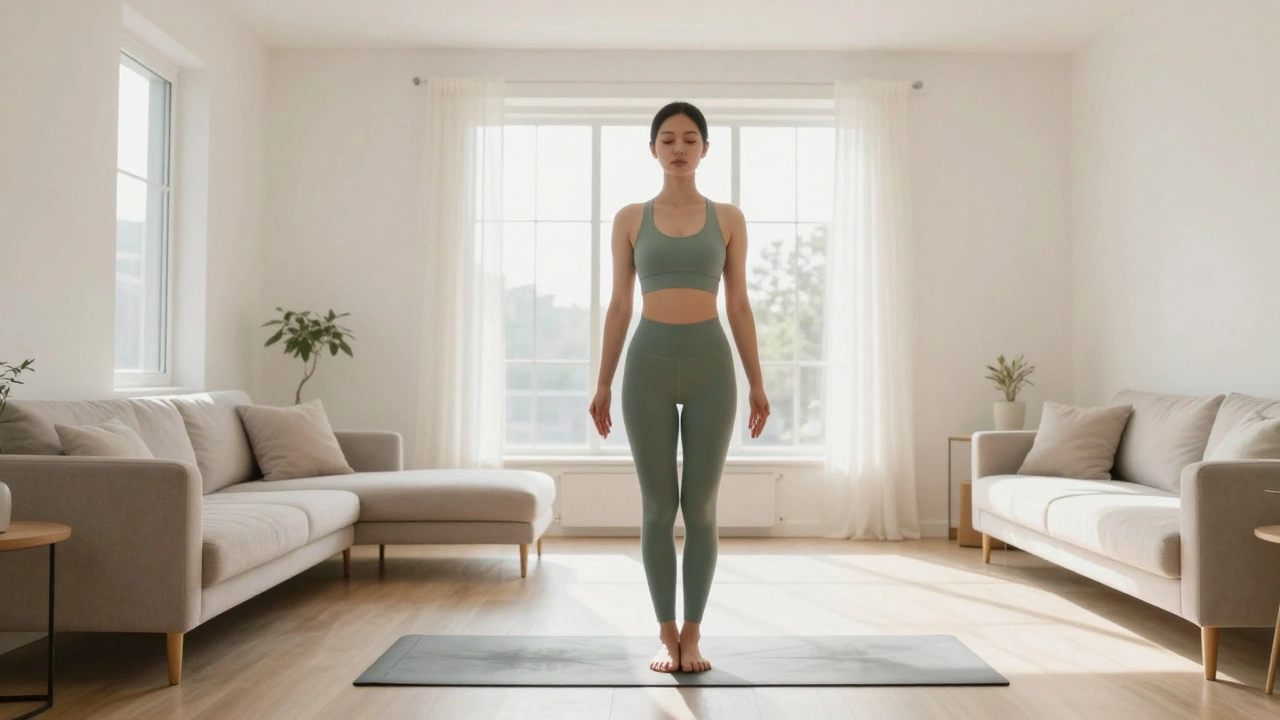
Mountain Pose is the blueprint for all other standing poses. It looks like you're just standing there, but it's actually an active engagement of your entire body. Stand with your feet hip-width apart, arms at your sides, and imagine a string pulling the crown of your head toward the ceiling. It teaches you how to distribute your weight evenly across your feet, which prevents ankle strain later on.
Downward-Facing Dog (Adho Mukha Svanasana)
You've seen this one in every yoga meme, and for good reason. Downward-Facing Dog is an inversion that stretches the hamstrings, calves, and shoulders while strengthening the arms. If your hamstrings are tight-which they probably are if you sit at a desk for eight hours a day-don't worry about getting your heels to the floor. Keep a slight bend in your knees. The goal is a long, straight spine, not flat feet.
Child's Pose (Balasana)
This is your "reset button." Child's Pose is a resting posture where you kneel and fold forward, resting your forehead on the mat. Whenever a pose feels too intense or your mind starts racing about your to-do list, just drop back into this. It gently stretches the lower back and helps lower your heart rate.
Cat-Cow Stretch (Marjaryasana-Bitilasana)
This isn't a static pose but a movement flow. On all fours, you inhale as you arch your back and look up (Cow), then exhale as you round your spine like a cat (Cat). It's the best way to lubricate the Spinal Column and wake up the nervous system. If you struggle with morning stiffness, doing this for two minutes before your coffee can change your entire day.
Tree Pose (Vrksasana)
Now for the balance. Tree Pose involves standing on one leg and placing the sole of the other foot on your calf or thigh. Pro tip: avoid placing your foot directly on your knee joint, as that puts dangerous lateral pressure on the ligament. If you're wobbling, keep your toes on the floor like a "kickstand" or lean your hand against a wall. Balance is a skill you train, not a talent you're born with.
| Pose Name | Primary Benefit | Difficulty | Common Mistake |
|---|---|---|---|
| Mountain Pose | Posture & Alignment | Very Low | Locking the knees |
| Downward Dog | Full Body Stretch | Low/Medium | Rounding the upper back |
| Child's Pose | Stress Relief | Very Low | Holding breath |
| Cat-Cow | Spine Mobility | Very Low | Moving too fast |
| Tree Pose | Balance & Focus | Medium | Foot on the knee joint |
How to Build Your First Routine
Don't just jump into a random pose. You want a logical flow that prepares your body. Think of it like a warm-up, a peak, and a cool-down. Start with Cat-Cow to wake up the spine, move into Mountain Pose to find your center, and then transition into Downward Dog to stretch the legs. Finish with Child's Pose to signal to your brain that the work is done.
One of the biggest hurdles for beginners is the equipment. You don't need a $100 designer mat. A non-slip surface is enough. However, I highly recommend Yoga Blocks. These are foam or cork rectangles that effectively "bring the floor closer to you." If you can't reach the ground in a pose, don't strain; put a block under your hand. It's not "cheating"; it's how you maintain proper alignment and avoid injury.
Common Pitfalls and How to Avoid Them
The most common mistake beginners make is trying to mimic the teacher's body. Remember, that teacher might have been practicing for twenty years. Your version of a pose will look different based on your bone structure and current flexibility. If your arms don't reach your shins in a fold, stop where you feel a stretch. Pushing past your limit is how muscles tear.
Another trap is ignoring the breath. In yoga, the breath (or Pranayama) is the engine. If you're holding your breath, your muscles tense up, and you lose the benefits of the stretch. Try to match your movement to your breath: inhale as you expand or reach, exhale as you fold or twist.
The Long-Term Game: What Happens Next?
Once these five poses feel natural, you can start exploring other styles. If you want something more athletic, try Vinyasa Yoga, which links breath to a continuous flow of movement. If you want something purely for relaxation and sleep, Yin Yoga focuses on holding poses for several minutes to target deep connective tissues.
The real magic happens around the three-week mark. That's usually when you notice that you can suddenly reach an inch further, or that the anxiety from your workday doesn't cling to you as tightly. Yoga isn't about the physical shape you make; it's about the mental space you create while making that shape.
How often should a beginner practice yoga?
Consistency is more important than duration. Starting with 15 to 20 minutes three times a week is plenty. Overdoing it in the first week often leads to burnout or soreness that makes you quit. Build the habit first, then increase the time.
Do I need to be flexible to start yoga?
Absolutely not. Flexibility is a result of yoga, not a prerequisite. If you are "stiff," you will actually notice the progress more quickly than someone who is already flexible. Use props like blocks or a strap to help you reach poses safely.
Can I do yoga every day?
Yes, but vary the intensity. You can do a gentle flow daily, but if you're doing a more strenuous class, give your muscles a day to recover. Listening to your body is a core part of the practice.
What is the difference between Hatha and Vinyasa?
Hatha is generally slower and focuses on holding individual poses, making it ideal for beginners. Vinyasa is a "flow" style where poses transition smoothly into one another, usually synced with the breath, which increases the heart rate and builds more heat.
What should I wear for my first session?
Wear something breathable and stretchy. Leggings or joggers are great, and a t-shirt that doesn't hang too loosely (so it doesn't fall over your face during inversions like Downward Dog) is best. You'll be practicing barefoot, so no need for shoes.
Next Steps for Your Practice
If you've mastered the basics, try adding a few more poses like Cobra or Warrior I to your routine. If you find yourself struggling with balance, spend more time in Mountain Pose to ground yourself. For those with chronic lower back pain, focus more on the Cat-Cow and Child's Pose variations. The goal is always to create a practice that serves your specific body and mental needs today.