

HIIT vs. Diet: The Weight Loss Reality Check
0
Calories Burned
Equivalent Food Items:
Enter your details to see how much you actually burn in 10 minutes of HIIT compared to what you might eat back.
You’ve heard the hype. Ten minutes. That’s all it takes. No gym membership, no hour-long treadmill slog, just ten minutes of sweat and you’re on your way to a leaner physique. It sounds like the perfect hack for our busy lives, doesn’t it? But here is the hard truth: HIIT (High-Intensity Interval Training) is powerful, but ten minutes a day is rarely enough to drive significant weight loss on its own.
If you are looking for a magic bullet, you might be disappointed. However, if you are looking for a highly efficient tool to add to your existing routine, ten minutes can make a difference. Let’s break down what actually happens in your body during those ten minutes, why calorie math matters more than exercise duration, and how to structure these short bursts so they actually work.
The Science Behind the Burn: EPOC Explained
To understand if ten minutes is enough, we first need to understand what HIIT does that a steady jog doesn’t. The main selling point of High-Intensity Interval Training is something called EPOC, or Excess Post-exercise Oxygen Consumption. In plain English, this is the "afterburn" effect. When you push your heart rate to near-maximum levels, your body goes into debt. It needs extra oxygen to restore itself to baseline-replenishing energy stores, clearing out lactate, and repairing muscle tissue.
This recovery process burns calories long after you’ve stopped moving. A study published in the Journal of Obesity found that participants who did HIIT burned significantly more fat over 24 hours compared to those who did moderate-intensity continuous training, even though the total time spent exercising was much lower. However, the magnitude of this effect depends heavily on intensity. If your ten-minute session isn’t truly high-intensity, the EPOC effect is minimal. You have to leave nothing in the tank. If you can hold a conversation during your intervals, you aren’t doing HIIT; you’re doing light cardio.
What is EPOC and does it really help with weight loss?
EPOC stands for Excess Post-exercise Oxygen Consumption. It refers to the period after intense exercise where your body continues to burn calories at an elevated rate to recover. While it contributes to total daily energy expenditure, it accounts for only a small percentage of total calories burned. It is a bonus, not the primary driver of weight loss.
The Calorie Math: Why Time Isn't Everything
Let’s look at the numbers. Weight loss fundamentally comes down to a calorie deficit: consuming fewer calories than you burn. Exercise is one lever you can pull to increase the "burn" side of that equation, but it is often overstated. A vigorous ten-minute HIIT session might burn between 100 and 150 calories for an average-sized person. That sounds good until you realize that a single cookie or a small glass of wine contains roughly the same amount of energy.
If you do ten minutes of HIIT every day, you might create a weekly deficit of about 700 to 1,000 calories from exercise alone. Since one pound of fat equals approximately 3,500 calories, that translates to losing maybe 0.2 to 0.3 pounds per week purely from the workout. Most people aiming for weight loss want to see results faster than that. This is why relying solely on ten minutes of movement is usually insufficient. The real magic happens when you combine that efficiency with dietary changes. You cannot outrun a bad diet, especially not in ten minutes.
Furthermore, there is a phenomenon known as compensatory eating. After a tough workout, many people feel hungrier. If you subconsciously eat back those 150 calories because you feel "earned," the net impact on your weight is zero. This is why tracking your nutrition is just as important as tracking your workout time.
Structuring Your 10-Minute Session for Maximum Impact
If you are committed to fitting fitness into a tight schedule, ten minutes is better than nothing. To get the most out of it, you need to structure it correctly. Randomly jumping around won’t cut it. You need a protocol that spikes your heart rate and keeps it there.
A popular and effective method is the Tabata protocol. It involves 20 seconds of all-out effort followed by 10 seconds of rest, repeated for four minutes. For a ten-minute session, you could do two rounds of Tabata with different exercises, separated by a brief active recovery. Here is a sample structure:
- Minutes 0-4: Tabata Round 1. Choose a compound movement like burpees or jump squats. Go 100% effort for 20 seconds, rest for 10 seconds. Repeat 8 times.
- Minute 4-5: Active recovery. Walk in place or shake out your legs.
- Minutes 5-9: Tabata Round 2. Switch to a different movement, like mountain climbers or high knees. Same 20/10 split.
- Minute 9-10: Cool down and deep breathing.
The key here is intensity. During the 20-second work intervals, you should be gasping for air. If you finish feeling like you could have done another round easily, you didn’t work hard enough. This level of exertion triggers the metabolic adaptations needed for fat loss.

Strength vs. Cardio: What Should You Prioritize?
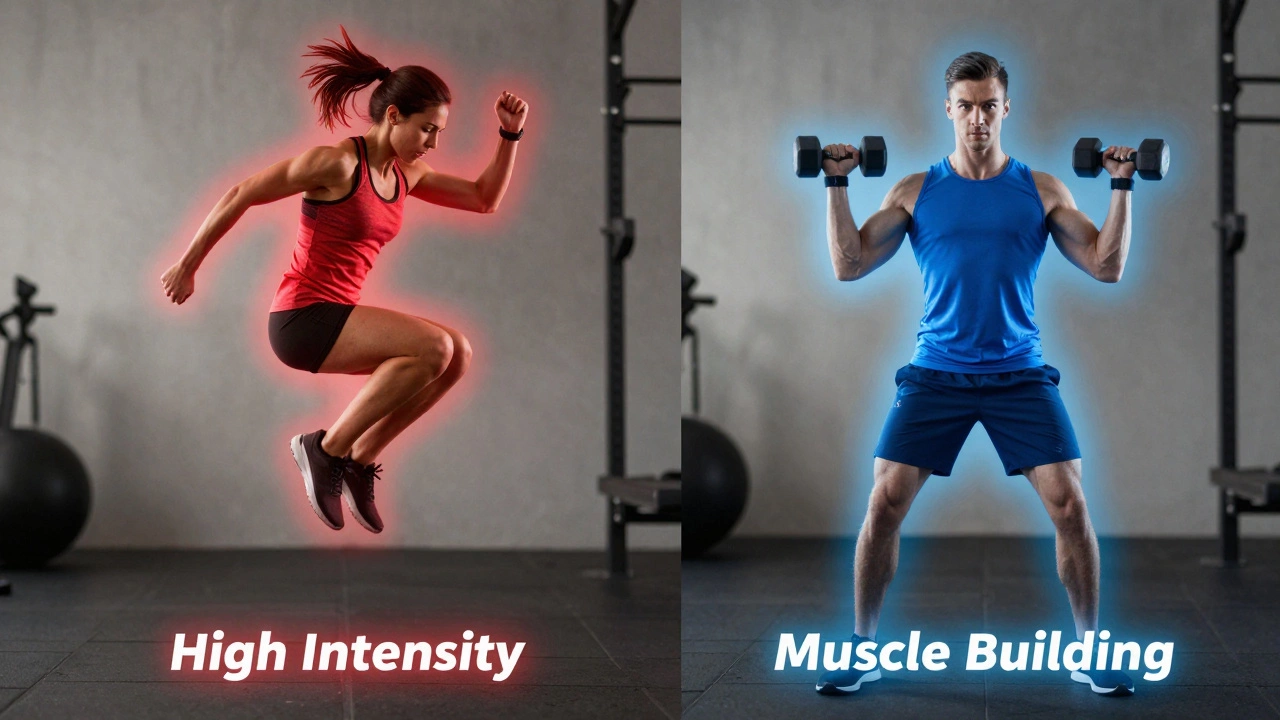
While HIIT is great for cardiovascular health and calorie burning, it has limitations when it comes to body composition. Muscle tissue is metabolically active, meaning it burns more calories at rest than fat tissue. Traditional strength training builds muscle, which raises your basal metabolic rate (BMR). Pure cardio-based HIIT does not build significant muscle mass; in fact, doing too much of it without resistance training can sometimes lead to muscle loss, which slows down your metabolism over time.
For optimal weight loss and body reshaping, consider mixing your ten-minute sessions. Instead of doing pure cardio HIIT every day, try "metabolic resistance training." Use dumbbells, kettlebells, or just your body weight to perform strength moves like push-ups, lunges, and rows in an interval format. This approach gives you the best of both worlds: the calorie burn of HIIT and the muscle-preserving benefits of strength training.
| Workout Type | Calories Burned (10 mins) | Muscle Building | Recovery Time Needed |
|---|---|---|---|
| Cardio HIIT | High (100-150 kcal) | Low | Medium-High |
| Strength HIIT | Medium-High (80-120 kcal) | High | High |
| Steady State Cardio | Low-Medium (60-90 kcal) | None | Low |
The Risk of Overtraining and Injury
Here is a critical point that many beginners miss: you should not do true HIIT every single day. High-intensity training places significant stress on your central nervous system and your joints. Recovery is when your body adapts and gets stronger. If you blast your body with maximum effort seven days a week, you risk burnout, injury, and stalled progress.
Most fitness experts recommend limiting true HIIT to 2-3 times per week. On the other days, you should focus on low-intensity steady-state (LISS) cardio, like walking or cycling, or active recovery movements like yoga and stretching. If you are trying to lose weight, consistency over months matters more than intensity over days. Injuring your knee because you tried to sprint every day will stop your weight loss journey dead in its tracks.
Listen to your body. If you feel persistently fatigued, your sleep quality drops, or your resting heart rate increases, you are likely overdoing it. Scale back the intensity or switch to a longer, slower workout. Sustainable habits beat short-term heroics.
Nutrition: The Real Driver of Results
We keep coming back to this because it is the elephant in the room. Ten minutes of HIIT is a fantastic addition to a healthy lifestyle, but it is not a license to eat poorly. To lose weight effectively, you need to prioritize protein intake, manage portion sizes, and reduce processed foods. Protein helps preserve muscle mass while you are in a calorie deficit, keeping your metabolism humming.
Think of your ten-minute workout as the spark that ignites the fire, but your diet is the fuel. Without the right fuel, the spark dies quickly. Focus on whole foods, vegetables, lean proteins, and complex carbohydrates. Hydration also plays a huge role; sometimes thirst masks itself as hunger, leading to unnecessary snacking.
Who Is This Routine For?
Ten minutes of daily HIIT is ideal for specific groups of people. First, it’s great for beginners who are intimidated by long gym sessions. It lowers the barrier to entry. Second, it works well for busy professionals or parents who genuinely cannot find more time. Third, it serves as an excellent "snack" workout for those who already train heavily but want to add extra volume without adding fatigue.
However, if you are new to exercise, start with five minutes. Build up your capacity gradually. Jumping straight into ten minutes of all-out effort can lead to nausea, dizziness, or worse. Progressively overload yourself. Add one minute each week until you hit your target.
Final Thoughts on Sustainability
Is ten minutes of HIIT a day enough to lose weight? Technically, yes, if paired with strict dietary control. Practically, it is a powerful tool, but not a standalone solution. Don’t fall into the trap of thinking that short workouts exempt you from the laws of thermodynamics. Use these ten minutes to boost your metabolism, improve your cardiovascular health, and build discipline. Then, spend the other 23 hours and 50 minutes making choices that support your goals.
Consistency is king. Doing ten minutes every day for six months will yield far better results than doing an hour once a month. Start small, stay consistent, and trust the process. Your body will change, not overnight, but surely.
Can I do HIIT every day?
It is generally not recommended to do high-intensity interval training every day due to the high stress it places on the central nervous system and joints. Aim for 2-3 sessions per week and fill the other days with low-intensity activity or rest to allow for proper recovery.
How many calories does 10 minutes of HIIT burn?
On average, 10 minutes of vigorous HIIT can burn between 100 and 150 calories, depending on your weight, age, and intensity level. However, the total calorie burn includes the afterburn effect (EPOC), which can add an additional 6-15% to your post-workout expenditure.
Is HIIT better than running for weight loss?
HIIT is more time-efficient than running for burning calories in a short period. However, running can be sustained for longer durations, potentially burning more total calories in a single session. HIIT offers greater metabolic benefits post-workout, while running is easier on the joints for some people. The best choice depends on your personal preference and physical condition.
Do I need equipment for 10-minute HIIT?
No, you do not need any equipment. Bodyweight exercises like burpees, squats, lunges, and push-ups are highly effective for HIIT. However, adding resistance bands or dumbbells can increase the intensity and help build muscle simultaneously.
How soon will I see results from 10-minute HIIT?
Results vary based on diet and starting fitness level. You may notice improved energy and endurance within two weeks. Visible changes in body composition typically take 4-8 weeks of consistent training combined with a caloric deficit. Patience and consistency are key.