

Beginner Running Zone Calculator
Your Details
Results & Recommendations
Enter your age and current pace to see your recommended training zones.
Understanding Intensity Levels
Zone 1 & 2
Easy / Light
You can hold a full conversation comfortably. Breathing is rhythmic and relaxed.
Zone 3
Moderate
Speaking becomes harder. You can say short phrases but not long sentences.
Zone 4 & 5
Hard / Maximum
Breathing is heavy. You can only say one or two words. Avoid this as a beginner.
You lace up your sneakers, step onto the pavement, and sprint like you’re late for a bus. Five minutes later, your lungs are burning, your legs feel heavy, and you’re questioning every life choice that led to this moment. Sound familiar? You aren’t alone. Most new runners make the same mistake: they run too fast, too soon.
Here is the hard truth about beginner running pace: it should be painfully slow. If you can’t hold a conversation while running, you are going too fast. This isn’t just advice; it’s physiology. Running at an easy pace builds the aerobic engine without breaking down your muscles or burning out your motivation. It is the secret weapon that separates those who quit after three weeks from those who finish their first 5K.
The "Talk Test" Is Your Best Coach
Forget expensive GPS watches or complex heart rate monitors for now. The most accurate tool you have is your mouth. This simple method, known as the Talk Test, determines if you are in the right intensity zone. Try speaking full sentences while you jog. If you can speak comfortably without gasping for air, you are in the sweet spot. If you can only manage one or two words before taking a breath, slow down immediately.
Why does this matter? When you run at a conversational pace, your body primarily uses fat for fuel rather than glycogen (stored carbohydrates). This teaches your mitochondria-the power plants inside your cells-to become more efficient. Over time, this efficiency allows you to run longer distances with less effort. If you run too fast, you deplete your glycogen stores quickly, leading to early fatigue and a higher risk of injury.
Can I use the Talk Test on hills?
Yes, but you may need to slow down significantly or switch to walking to maintain the ability to speak. Hills naturally increase intensity, so focus on keeping your breathing controlled rather than maintaining a specific speed.
Understanding Heart Rate Zones
If you prefer data over dialogue, heart rate monitoring is a reliable alternative. For beginners, the goal is to stay in Zone 2, which typically ranges from 60% to 70% of your maximum heart rate. To estimate your maximum heart rate, subtract your age from 220. For example, if you are 30 years old, your estimated max heart rate is 190 beats per minute (BPM). Your Zone 2 target would be between 114 and 133 BPM.
Staying in this low-intensity zone improves cardiovascular health by increasing stroke volume-the amount of blood your heart pumps with each beat. It also enhances capillary density, meaning more oxygen reaches your muscles. Many beginners ignore this zone because it feels too easy. However, research shows that spending 80% of your training time in low-intensity zones leads to better endurance gains than high-intensity interval training (HIIT) for novices.
| Zone | Intensity | % of Max HR | Feeling |
|---|---|---|---|
| Zone 1 | Very Light | 50-60% | Relaxed, easy breathing |
| Zone 2 | Light | 60-70% | Comfortable, conversational |
| Zone 3 | Moderate | 70-80% | Somewhat hard, harder to talk |
| Zone 4 | Hard | 80-90% | Difficult, short phrases only |
| Zone 5 | Maximum | 90-100% | Exhausting, cannot speak |
What Does "Easy" Actually Look Like?
For many beginners, "easy" means walking. And that is perfectly fine. A typical beginner might run at a pace of 10 to 12 minutes per kilometer (16 to 19 minutes per mile). That translates to roughly 5 to 6 kilometers per hour (3 to 4 miles per hour). Some people walk faster than this! Do not let ego dictate your speed. If you find yourself comparing your pace to others on the track or sidewalk, remember that everyone starts somewhere.
In Auckland, where I live, the terrain varies from flat beaches to steep hills. On flat ground, maintaining a steady 11-minute kilometer pace might feel effortless. But head up Mount Eden, and that same effort requires a much slower speed or even a walk. Focus on effort level, not numbers. Your watch is a servant, not a master.
Couch to 5K (C25K) is a popular training program designed to help non-runners build up to running 5 kilometers continuously. It was created in 1996 and has since helped millions of people worldwide. The program alternates between running and walking intervals, gradually increasing the running time over eight weeks. This structure ensures that beginners stay within their aerobic capacity while building consistency.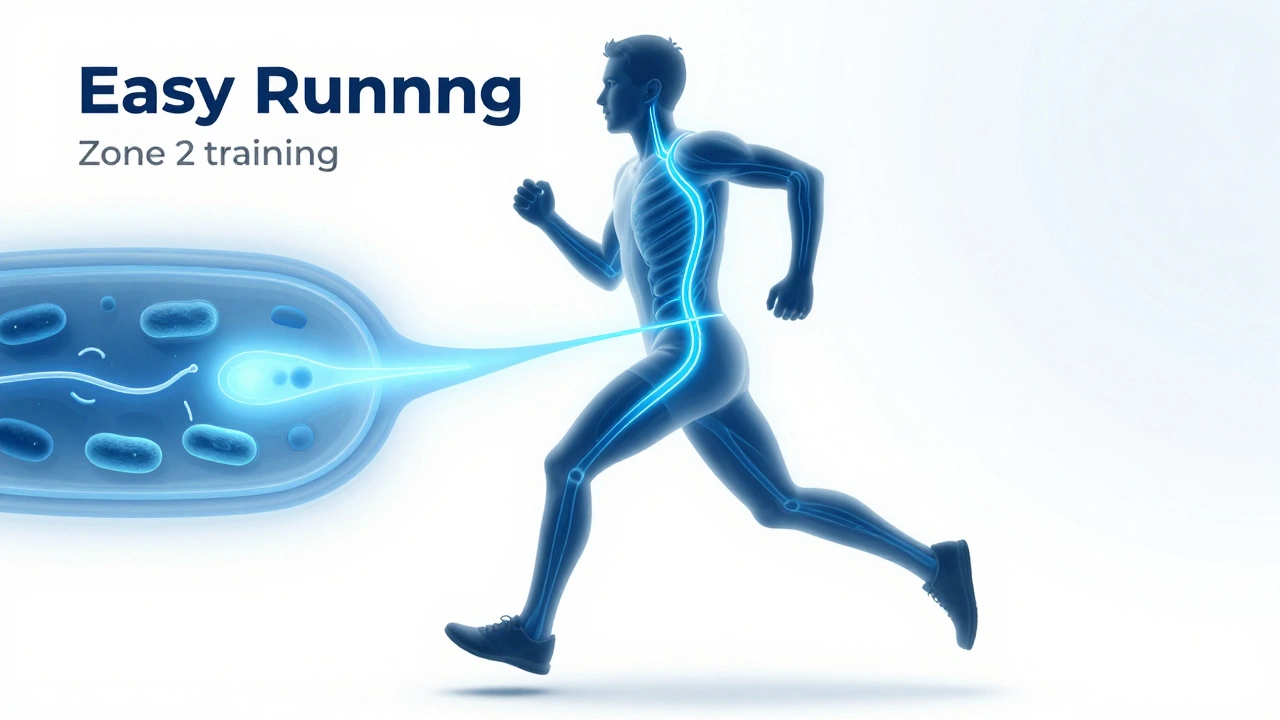
The Dangers of Running Too Fast
Pushing beyond your comfortable pace seems logical-you want results, right? But running too fast too soon leads to a cascade of problems. First, you increase the impact forces on your joints and muscles. Studies show that injury rates among novice runners can exceed 50% within their first year, largely due to poor pacing and lack of recovery. Common injuries include shin splints, runner’s knee, and Achilles tendinitis.
Second, running too fast creates mental burnout. If every run feels like a struggle, you will dread lacing up your shoes. Exercise adherence drops sharply when the activity becomes unpleasant. By keeping runs easy, you associate running with positive feelings-fresh air, endorphins, and accomplishment-rather than pain and exhaustion.
- Shin Splints: Pain along the inner edge of the shinbone, often caused by sudden increases in intensity or duration.
- Runner's Knee: Pain around or behind the kneecap, frequently resulting from weak hip muscles and poor form under fatigue.
- Achilles Tendinitis: Inflammation of the tendon connecting your calf muscle to your heel, aggravated by excessive strain.
How to Find Your Perfect Pace
Finding your ideal beginner pace takes experimentation. Start with a brisk walk for five minutes to warm up. Then, try jogging slowly. Pay attention to your breathing. If you feel winded after two minutes, slow down to a power walk. Gradually increase your speed until you reach a point where you can speak in full sentences but still feel like you are working. That is your baseline.
Keep a log of your runs. Note the distance, time, and how you felt. Over several weeks, you will notice patterns. Perhaps you run easier in the morning when temperatures are cooler. Maybe you need to slow down on hot days. Adjust accordingly. Consistency beats speed every time. Running four times a week at an easy pace yields better results than running once a week at a hard pace.

Integrating Walk Breaks
Walk breaks are not a sign of weakness; they are a strategic tool. Programs like Couch to 5K rely heavily on them. Walking allows your heart rate to drop slightly, giving your body a chance to recover while maintaining movement. It also reduces cumulative stress on your musculoskeletal system.
Try a 1:1 ratio initially: run for one minute, walk for one minute. Repeat this cycle for 20 to 30 minutes. As you get fitter, extend the running intervals to two minutes, then three, while keeping the walk breaks constant. Eventually, you will find that you can run for longer periods without needing to walk, but always return to walking if your form breaks down or your breathing becomes labored.
Listening to Your Body
Your body sends signals that you must learn to interpret. Sharp pain is a stop sign. Dull ache might mean you pushed a bit too hard. Fatigue is normal, but extreme tiredness suggests inadequate recovery. Rest days are just as important as run days. They allow your muscles to repair and grow stronger. Skipping rest days leads to overtraining syndrome, characterized by persistent fatigue, mood disturbances, and decreased performance.
Hydration and nutrition also play roles. Dehydration thickens your blood, making your heart work harder to pump oxygen. Low energy levels impair your ability to maintain proper form. Eat a balanced meal two to three hours before running, and sip water throughout the day. Small adjustments here support your pacing efforts significantly.
Should I run every day as a beginner?
No. Aim for three to four runs per week with rest days in between. Daily running increases injury risk and prevents adequate recovery. Cross-training activities like cycling or swimming can fill the off days.
Is it okay if my pace varies during a run?
Absolutely. Terrain, weather, and daily fitness levels affect pace. Focus on maintaining consistent effort rather than consistent speed. Slowing down on hills or hot days is smart pacing.
How long does it take to improve my pace?
Most beginners see noticeable improvements in stamina and ease within 4 to 8 weeks of consistent training. Speed improvements come later, usually after 3 to 6 months of building a solid aerobic base.
Do I need special shoes for easy running?
While any supportive shoe works initially, investing in proper running shoes helps prevent injuries. Visit a specialty store for a gait analysis to find shoes suited to your foot type and stride.
What if I feel bored running slowly?
Use the extra mental bandwidth to listen to podcasts, audiobooks, or music. Explore new routes. Slow running is meditative and allows you to enjoy your surroundings more fully.