
Baptiste Method Pose Explorer
Select a pose below to learn its Sanskrit name, primary muscle groups, and essential alignment cues for the Baptiste Method.
Chair Pose
UtkatasanaWarrior I
Virabhadrasana IHalf Moon
Ardha ChandrasanaPlank
PhalakasanaWarrior II
Virabhadrasana IISavasana
Corpse PoseSelect a Pose
Click on any pose above to view detailed information about alignment and benefits within the Baptiste Method framework.
You walk into a studio expecting a gentle stretch session, and suddenly you're sweating through your shirt in ten minutes flat. The instructor isn't just guiding you; they're commanding the room with high energy and strict alignment cues. This isn't your grandmother's yoga class. This is likely the Baptiste Method, a specific style of power yoga created by Baron Baptiste that focuses on strength, stamina, and internal heat generation. If you've ever wondered why some yoga classes feel like a workout while others feel like meditation, understanding this method explains the difference.
Baron Baptiste didn't invent yoga, but he did revolutionize how millions of people practice it in the West. He took traditional Ashtanga roots and stripped away the rigid sequencing, replacing it with a dynamic flow designed to build physical resilience and mental clarity simultaneously. It’s not about touching your toes; it’s about what you learn bending down. But before you roll out your mat, you need to know if this intense approach fits your body type and goals. Let's break down exactly what makes this method tick, who it’s for, and how you can start practicing it safely.
The Origins and Philosophy Behind the Practice
To understand the Baptiste Method, you have to look at its creator. Baron Baptiste began teaching in the early 1990s after studying under Sri K. Pattabhi Jois, the founder of Ashtanga Yoga. While he respected the tradition, Baptiste noticed many students felt intimidated by the strict rules and complex Sanskrit terminology. He wanted to make yoga accessible without diluting its power.
The core philosophy shifts the focus from external perfection to internal effort. In many yoga styles, the teacher adjusts your pose until it looks "correct." In the Baptiste Method, the emphasis is on tapas, or self-discipline. You generate your own heat. The idea is that by pushing your physical limits slightly beyond comfort, you create a fire that burns away stress and toxins. This isn't just metaphorical; the vigorous movement raises your core temperature, which practitioners believe aids in detoxification through sweat.
Baptiste also introduced the concept of "warrior spirit." Every pose, even the resting ones, carries an attitude of confidence and openness. It’s less about being flexible and more about showing up fully. This mindset shift has made the method popular among athletes, corporate executives, and anyone looking for a physical outlet that doubles as mental training.
Key Components: Heat, Strength, and Sequence
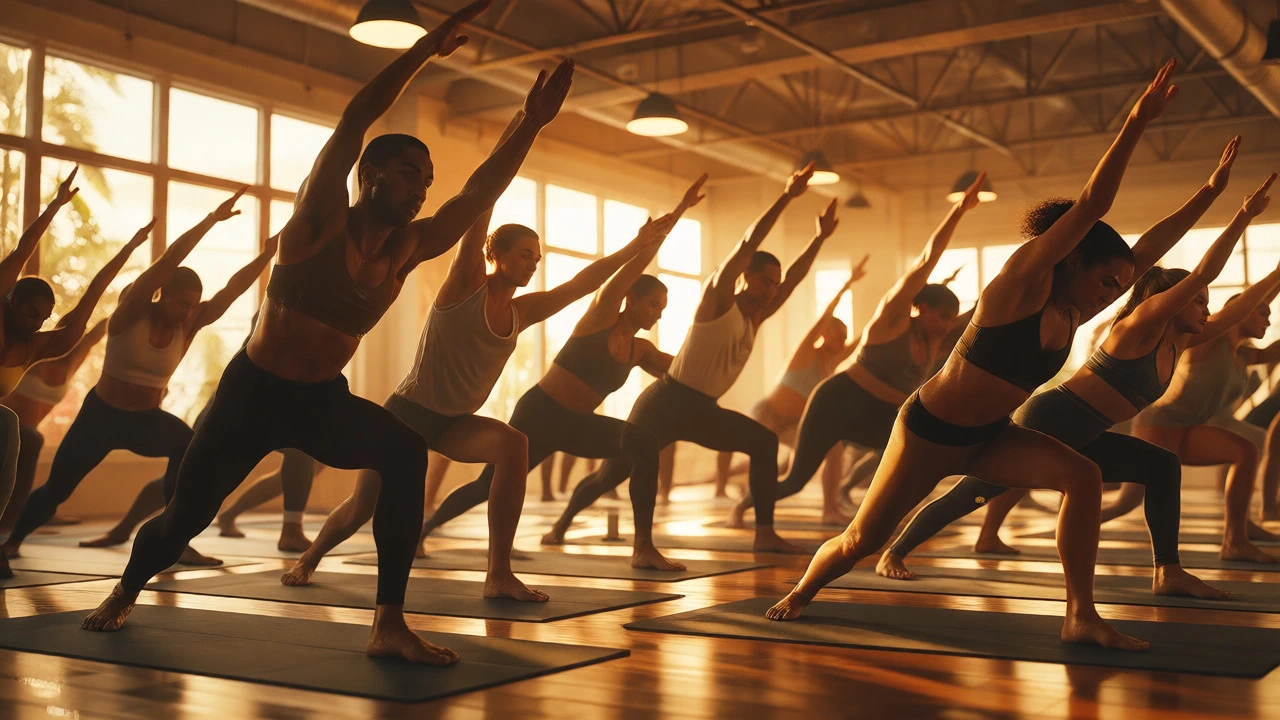
If you attend a Baptiste-style class, you will notice three distinct pillars immediately. First is the heat. Classes are often held in rooms warmed to around 85-90°F (29-32°C), though some studios keep them cooler. The warmth loosens muscles, allowing for deeper stretches, but the real heat comes from the constant movement. There are very few static holds. You move from one pose to another via vinyasa transitions, keeping your heart rate elevated throughout the hour.
Second is strength. Unlike Yin yoga, where you might hold a pose for five minutes, Baptiste sequences require muscular engagement. You’ll spend significant time in lunges, squats, and arm balances. Poses like Chair Pose (Utkatasana) and Warrior II (Virabhadrasana II) are held long enough to shake your quads. This builds lean muscle mass and improves bone density, making it a great cross-training option for runners or weightlifters.
Third is the sequence itself. While Baptiste encourages creativity, most classes follow a predictable structure to ensure safety and progression. A typical class starts with Sun Salutations to warm up, moves into standing poses to build leg strength, transitions to seated forward folds for hamstring release, and ends with inversions or backbends before Savasana. Knowing this roadmap helps you anticipate what’s coming next, reducing anxiety for beginners.
Essential Poses and Alignment Cues
You don’t need to master every advanced inversion to benefit from this method. However, certain foundational poses appear in almost every class. Understanding their proper alignment prevents injury and maximizes benefits.
| Pose Name | Sanskrit Name | Primary Muscle Groups | Key Alignment Cue |
|---|---|---|---|
| Chair Pose | Utkatasana | Quadriceps, Glutes, Core | Weight in heels, chest lifted |
| Warrior I | Virabhadrasana I | Hip Flexors, Shoulders, Legs | Front knee stacked over ankle |
| Half Moon | Ardha Chandrasana | Hamstrings, Obliques, Balance | Stack hips and shoulders vertically |
| Plank | Phalakasana | Core, Arms, Back | Ribs tucked, glutes engaged |
Take Chair Pose, for example. Beginners often let their knees cave inward or round their backs. Baptiste teachers will constantly cue you to "draw your navel to your spine" and "press your tailbone down." These micro-adjustments turn a simple squat into a powerful core-strengthening exercise. Similarly, in Warrior poses, the focus is on grounding through the outer edge of the back foot. This stabilizes the pelvis and protects the lower back.
Don’t worry if you can’t touch the floor in a forward fold. In this method, flexibility is a byproduct of strength and relaxation, not a prerequisite. Use blocks under your hands if needed. The goal is lengthening the spine, not collapsing into the hamstrings.
Benefits Beyond the Mat
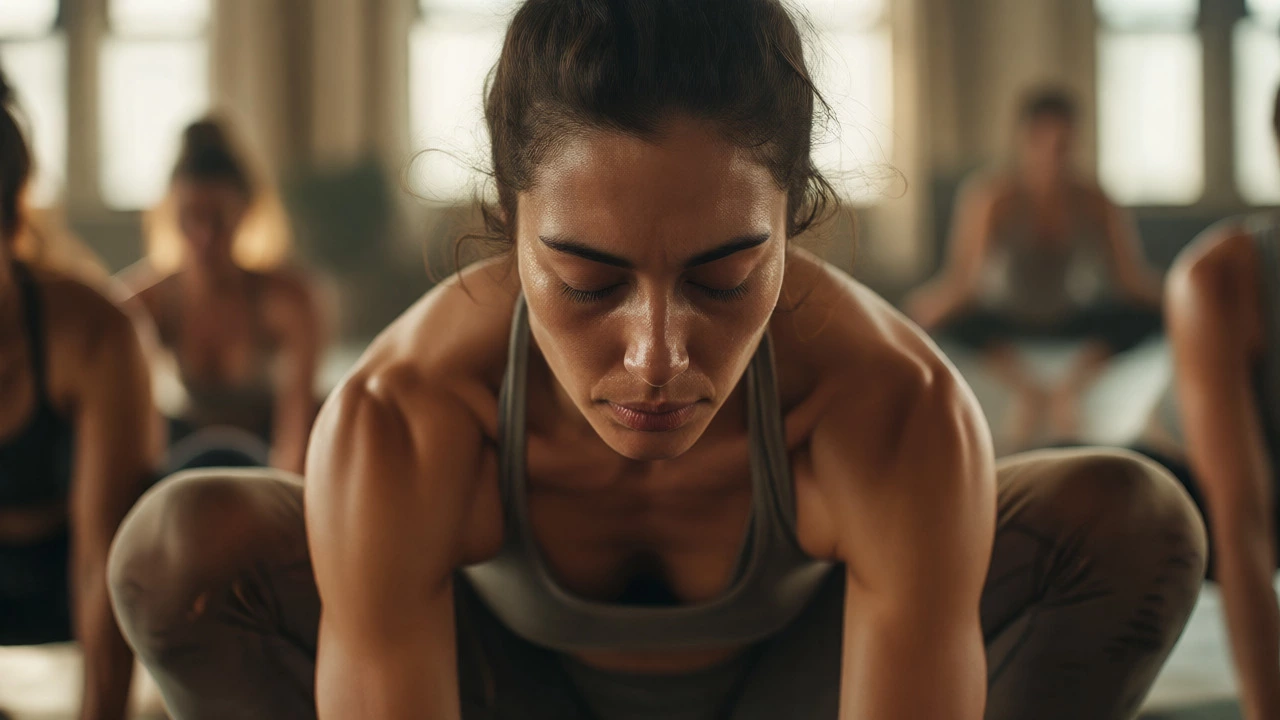
Why do people stick with this rigorous practice? The physical results are obvious-improved cardiovascular health, increased flexibility, and toned muscles. But the mental benefits are what keep practitioners coming back. The requirement to maintain focus during physically demanding poses acts as a form of moving meditation. When your legs are burning in Chair Pose, you can’t think about your email inbox. You’re forced into the present moment.
Many students report improved posture and reduced chronic pain. Because the method emphasizes core stability and spinal alignment, it counteracts the effects of sitting at a desk all day. Athletes find it particularly useful for injury prevention. By strengthening stabilizer muscles that are often ignored in traditional gym routines, you create a more balanced body capable of handling higher loads in sports like running or basketball.
There’s also a community aspect. Baptiste studios often foster a supportive, non-judgmental environment. Since everyone is working hard, there’s little room for ego. You’re all sweating together, shaking in the same poses. This shared vulnerability creates a sense of camaraderie that can be surprisingly uplifting.
How to Start Your First Class
Walking into your first Baptiste-style class can be daunting. Here’s how to prepare so you get the most out of it.
- Arrive Early: Get to the studio 10-15 minutes before class starts. Introduce yourself to the instructor and mention any injuries or limitations. They can offer modifications.
- Dress Appropriately: Wear fitted clothing. Loose shirts can fall into your face during inversions or downward dog. Moisture-wicking fabrics are best because you will sweat.
- Hydrate Beforehand: Drink water an hour before class. Dehydration hits harder when you’re generating internal heat.
- Bring Props: Most studios provide mats, blocks, and straps. If you have your own mat, bring it. A sticky surface helps prevent slipping when your hands get sweaty.
- Let Go of Ego: Don’t compare yourself to the person doing a handstand next to you. Focus on your own breath and effort. If you need to rest in Child’s Pose, do it without shame.
Expect to feel challenged. Your muscles will fatigue quickly. That’s normal. The key is consistency. One class won’t transform your body, but two or three sessions per week will yield noticeable changes in strength and endurance within a month.
Common Misconceptions About the Method
Some people avoid Baptiste yoga because they think it’s only for young, fit people. That’s false. While it is physically demanding, it’s scalable. Teachers offer variations for every pose. An older adult might use a chair for support in Warrior poses, while a younger athlete might add jumps between flows. The intensity is relative to your current fitness level.
Another myth is that you need to be flexible to start. Remember, flexibility is the result, not the cause. Stiff people often benefit the most because they have more range to gain. Just be patient with your body. Progress in this method is measured in millimeters, not miles.
Finally, some assume it’s purely competitive. While there’s a drive to improve, the culture is generally collaborative. Teachers encourage students to respect their boundaries. Pushing too hard leads to injury, which sets you back weeks. Smart practitioners listen to their bodies and adjust accordingly.
Frequently Asked Questions
Is the Baptiste Method suitable for complete beginners?
Yes, provided you choose a class labeled "Beginner" or "Fundamentals." These classes move slower and explain poses in detail. Avoid jumping straight into "Advanced" or "Power" flows if you’ve never practiced yoga before, as the pace may be overwhelming.
Do I need to be flexible to try this yoga style?
No. In fact, lack of flexibility is common among new students. The method uses props like blocks and straps to help you maintain proper alignment regardless of your current range of motion. Over time, consistent practice will naturally increase your flexibility.
How does Baptiste yoga differ from Hot Yoga?
While both involve heat, Hot Yoga typically refers to Bikram yoga, which follows a strict sequence of 26 poses in a 105°F room. Baptiste yoga is Vinyasa-based, meaning the sequence varies daily, and the heat is often generated internally through movement rather than solely by room temperature. Studios may be heated, but rarely as intensely as Bikram.
Can I lose weight practicing the Baptiste Method?
Yes, many people lose weight with regular practice. The continuous movement keeps your heart rate in the aerobic zone, burning calories effectively. Additionally, building lean muscle increases your resting metabolic rate. Combined with a balanced diet, this yoga style can be a powerful tool for weight management.
What should I eat before a Baptiste yoga class?
Eat a light snack 1-2 hours before class, such as a banana, yogurt, or a small handful of nuts. Avoid heavy meals right before practicing, as twisting and bending poses can cause discomfort if your stomach is full. Hydration is critical, so drink plenty of water throughout the day leading up to the session.