
Yoga Style Finder for Beginners
Not sure which yoga style is right for you? Answer these three quick questions to get a personalized recommendation.
You walk into a yoga studio or open an app, and suddenly you're bombarded with terms like Vinyasa, Ashtanga, Yin, and Kundalini. It’s overwhelming, right? You just want to stretch your hamstrings and maybe stop feeling so stiff in the morning. The truth is, there isn't one single "best" yoga for everyone, but there is definitely a best starting point for beginners. If you have zero experience, jumping straight into a power flow class can feel like trying to run a marathon before you've learned to jog.
The goal here isn't to pick the most popular style; it's to pick the one that matches your current physical ability and goals. Do you want to sweat? Do you want to relax? Are you recovering from an injury? This guide breaks down the specific types of yoga that actually make sense when you are new to the mat, helping you avoid the common pitfalls that cause people to quit after two weeks.
Hatha Yoga: The Foundation You Need
If you only try one style as a beginner, make it Hatha Yoga is a foundational form of yoga that focuses on basic postures (asanas) and breathing techniques (pranayama), typically performed at a slower pace than dynamic flows. Think of Hatha as the alphabet of yoga. In a typical Hatha class, you hold poses for several breaths rather than flowing quickly from one to the next. This gives your body time to learn the correct alignment without the pressure of keeping up with a fast-moving group.
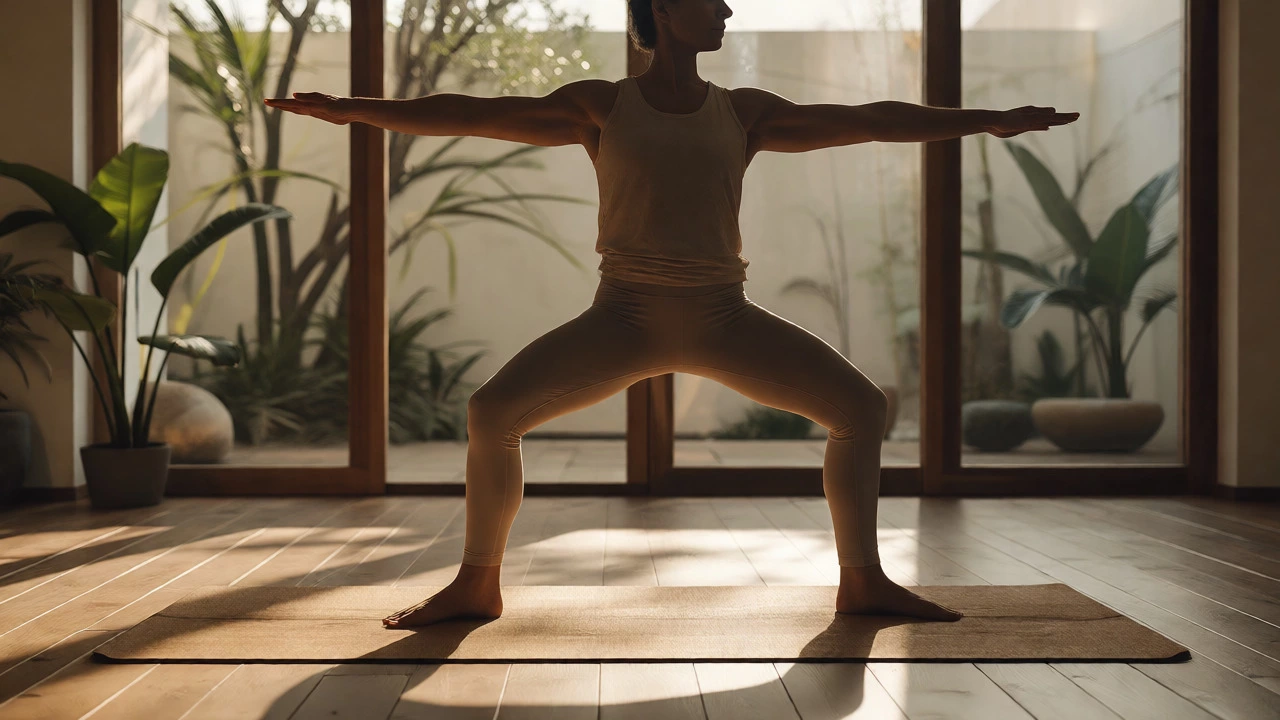
Why does this matter? Because bad habits stick. If you rush through poses in a fast-paced class, you might compensate with your lower back instead of engaging your core. Hatha allows you to pause, adjust, and ask questions. According to the American Council on Exercise, Hatha classes generally burn between 175 and 298 calories per hour, which is modest but significant for building strength and flexibility simultaneously. It’s not about getting your heart rate spiking to 160 bpm; it’s about understanding where your shoulders should sit in Downward Dog or how deep your knee should go in Warrior II.
- Pace: Slow and deliberate.
- Fitness Level Required: Low to Moderate.
- Best For: Learning proper alignment, building baseline strength, and reducing stress.
- Common Pitfall: Don’t skip the warm-up. Even slow classes require prepared muscles.
Restorative Yoga: When Your Body Needs a Break
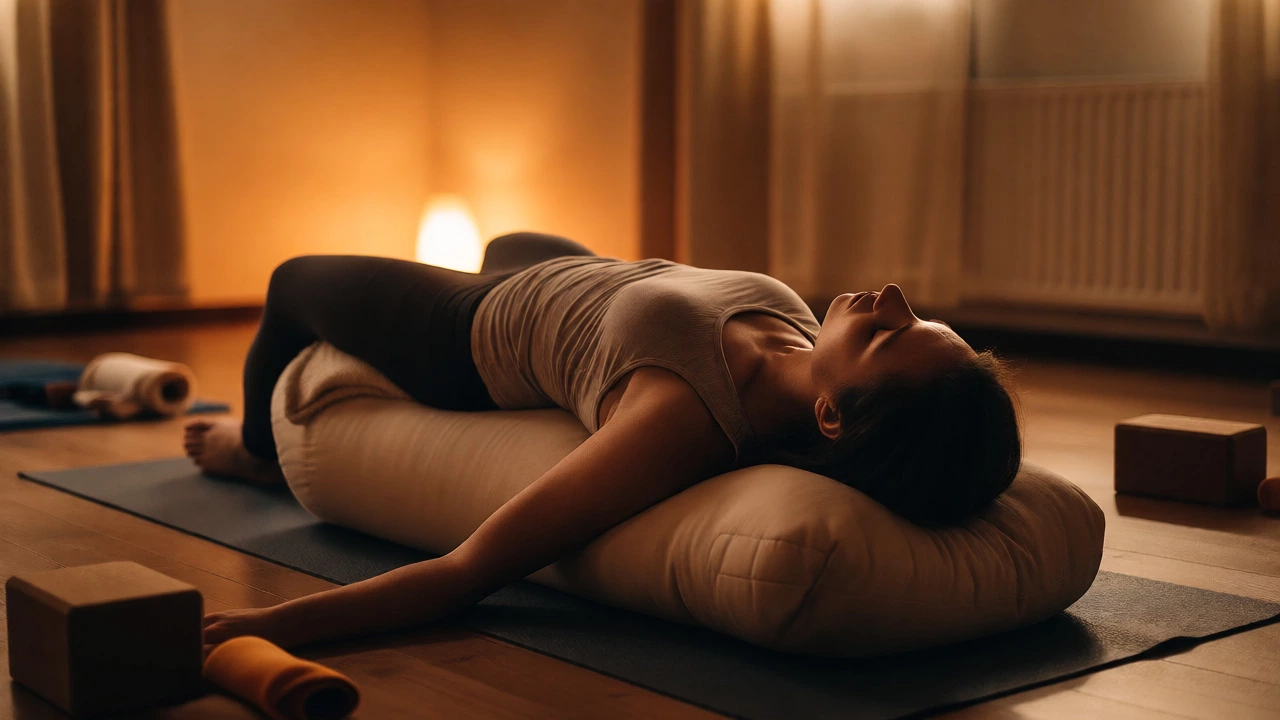
Not all yoga is about stretching until you cry. Sometimes, especially if you work a desk job or have high stress levels, what you need is Restorative Yoga is a gentle practice using props like bolsters, blankets, and blocks to support the body in passive poses for extended periods, promoting deep relaxation and nervous system regulation. Unlike Hatha, where you engage muscles to hold a pose, Restorative uses gravity and props to do the work for you. You might lie over a bolster with your legs draped over a chair for ten minutes.
This sounds lazy, but physiologically, it’s doing heavy lifting. Restorative yoga activates the parasympathetic nervous system-the "rest and digest" mode. A study published in the Journal of Alternative and Complementary Medicine found that regular restorative practice significantly lowered cortisol levels in participants. If you find yourself clenching your jaw or holding tension in your neck, this is your entry point. It requires almost no athletic ability, making it perfect for those who feel intimidated by the physical demands of other styles.
| Feature | Hatha Yoga | Restorative Yoga |
|---|---|---|
| Primary Goal | Alignment & Strength | Relaxation & Recovery |
| Physical Effort | Moderate muscular engagement | Minimal muscular effort |
| Prop Usage | Occasional (blocks/straps) | Extensive (bolsters/blankets) |
| Calorie Burn | ~200 kcal/hour | ~50-80 kcal/hour |
| Best Time to Practice | Morning or midday | Evening or after intense exercise |
Iyengar Yoga: Precision Over Flow
If you are analytical or have specific injuries, Iyengar Yoga is a method developed by B.K.S. Iyengar that emphasizes precise alignment and the extensive use of props to help students achieve correct posture regardless of their limitations. might be your sweet spot. While Hatha teaches you the basics, Iyengar drills them into your bones. Instructors in Iyengar classes are trained to spot misalignments instantly. They won’t just say "straighten your back"; they’ll tell you exactly how much to rotate your thigh or where to place a block under your hand.
This style is particularly effective for people dealing with chronic pain, such as sciatica or lower back issues. Because the props allow you to modify poses deeply, you can safely explore ranges of motion that would otherwise be inaccessible. However, be warned: Iyengar can be mentally demanding. It requires focus and attention to detail. If you prefer zoning out while exercising, this might feel too rigorous. But if you want to understand your anatomy, this is the gold standard.
What About Vinyasa and Power Yoga?
You’ve probably seen Instagram reels of people flowing beautifully through sun salutations. That’s usually Vinyasa Yoga is a dynamic style of yoga that links movement with breath, creating a continuous flow from one pose to another, often varying in intensity. or Power Yoga. Should beginners avoid these entirely? Not necessarily, but proceed with caution.
The problem with Vinyasa for novices isn't the difficulty-it's the speed. In a beginner-level Vinyasa class, the instructor will likely move slowly enough for you to follow. But if you accidentally walk into an "All Levels" or "Intermediate" class, you will get left behind. The risk here is injury. Moving too fast without proper engagement leads to sloppy form, which puts strain on joints.
Here is a simple rule of thumb: If you cannot hold a plank position for 30 seconds with good form, or if you struggle to touch your toes without bending your knees excessively, wait a few months before diving into serious Vinyasa. Start with Hatha to build the stabilizing muscles first. Once you feel confident in the basic shapes, transitioning to Vinyasa becomes much safer and more enjoyable.
How to Choose Based on Your Goals
Selecting the right yoga depends less on what looks cool and more on what you actually need from the practice. Let’s break it down by common beginner scenarios:
- You’re stiff and sore: Start with Restorative or Yin Yoga. These styles target connective tissues (fascia) rather than muscles, improving flexibility over time without aggressive stretching.
- You want to lose weight: Try Hatha first to build muscle tone, then graduate to Vinyasa or Power Yoga for higher calorie expenditure.
- You have anxiety or insomnia: Restorative and Kundalini (if you enjoy chanting/breathwork) are excellent for calming the mind.
- You have back pain: Iyengar is superior due to its emphasis on safe alignment and prop usage.
- You want a full-body workout: Look for Hatha classes labeled "Strength" or "Gentle Flow." Avoid "Hot Yoga" initially, as the heat can mask fatigue and lead to overexertion.
Practical Tips for Your First Month
Knowing the style is half the battle. Executing it consistently is the other half. Here are three non-negotiable tips for surviving your first month of yoga:
First, ignore the person next to you. In yoga, comparison is the thief of joy-and safety. The woman touching her head to her knee in the front row has likely been practicing for five years. Focus on your own sensation. If a pose hurts sharply (not just uncomfortable stretching), come out of it immediately. Yoga should never hurt.
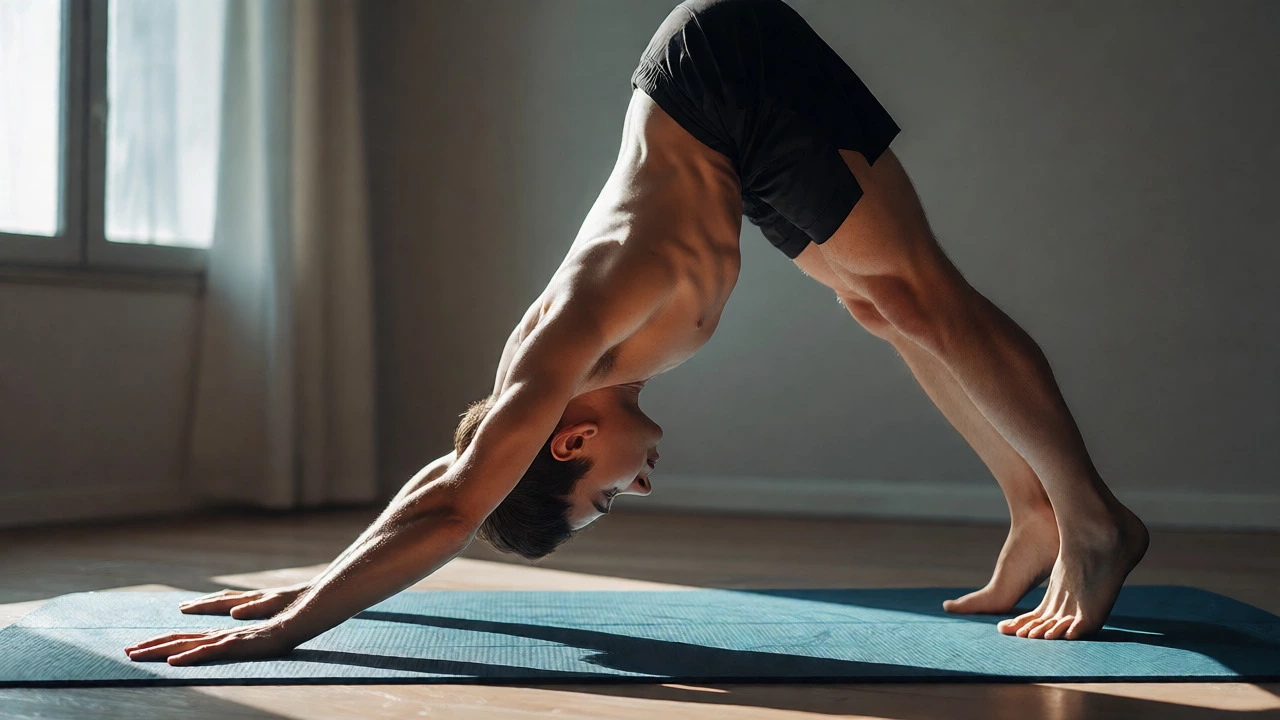
Second, invest in a decent mat. A sticky, cushioned mat provides stability. Sliding around in Downward Dog ruins your confidence and alignment. You don’t need a $100 cork mat, but avoid the thin plastic ones sold in big-box stores if possible. Look for mats with at least 4mm thickness for joint protection.
Third, consistency beats intensity. Doing 15 minutes of Hatha yoga every day is far better than one brutal 90-minute session once a week. Your body adapts to frequency. Small, daily practices build neural pathways and flexibility faster than sporadic bursts of effort.
Final Thoughts on Starting Out
There is no shame in starting slow. The best yoga for beginners is the one you will actually show up for. For most people, Hatha offers the perfect balance of structure and accessibility. It teaches you the language of yoga so you can eventually explore other dialects like Vinyasa or Ashtanga with confidence. Listen to your body, respect your limits, and remember that progress in yoga is measured in millimeters, not miles.
Can I start yoga if I am completely inflexible?
Absolutely. In fact, inflexibility is the primary reason many people start yoga. Styles like Hatha and Restorative use props (blocks, straps, bolsters) to bring the floor closer to you, allowing you to perform poses correctly despite limited range of motion. Flexibility improves gradually with consistent practice.
Is Hot Yoga suitable for beginners?
Generally, no. Hot Yoga (often Bikram) involves high temperatures (around 105°F/40°C) which can cause dizziness, dehydration, and nausea for newcomers. The heat also loosens muscles rapidly, which can trick you into pushing into deeper stretches than your ligaments are ready for, increasing injury risk. Wait until you have built some base strength and familiarity with poses.
How often should a beginner practice yoga?
Aim for 2-3 times per week initially. This frequency allows your body to adapt and recover between sessions. Daily practice is ideal, but even short 15-20 minute home practices count. Consistency is more important than duration or intensity in the beginning stages.
Do I need special clothes for beginner yoga?
No, but comfort matters. Wear breathable, flexible clothing that doesn't restrict movement. Avoid loose t-shirts that fall over your face during forward folds. Leggings or fitted shorts are usually preferred because they stay in place during inversions or downward dog.
What is the difference between Yin and Restorative yoga?
Both involve long holds, but they differ in intent. Yin Yoga applies mild stress to connective tissues to increase mobility, often involving active stretching in seated positions. Restorative Yoga aims for complete relaxation and recovery, using extensive props to fully support the body so muscles can let go entirely. Yin is slightly more physically challenging; Restorative is purely restful.