

Strength Training Progress Calculator
Your Profile
Projected Outcomes
Enter your details and click calculate to see your projected progress.
You’ve just finished your fourth week of lifting weights. You’re sore less often than before, and you feel like you can handle more weight on the bar. But when you look in the mirror, nothing has changed. Your arms look the same. Your waistline hasn’t moved. It’s frustrating, isn’t it? You put in the work, but where are the results?
The short answer is yes, you can see results after one month of working out. But if you’re expecting a completely transformed physique, you might be setting yourself up for disappointment. The truth is that the first four weeks of strength training are about laying the groundwork for future success. The changes happening inside your body are significant, even if they aren't immediately visible in the reflection.
What Actually Happens in the First Four Weeks?
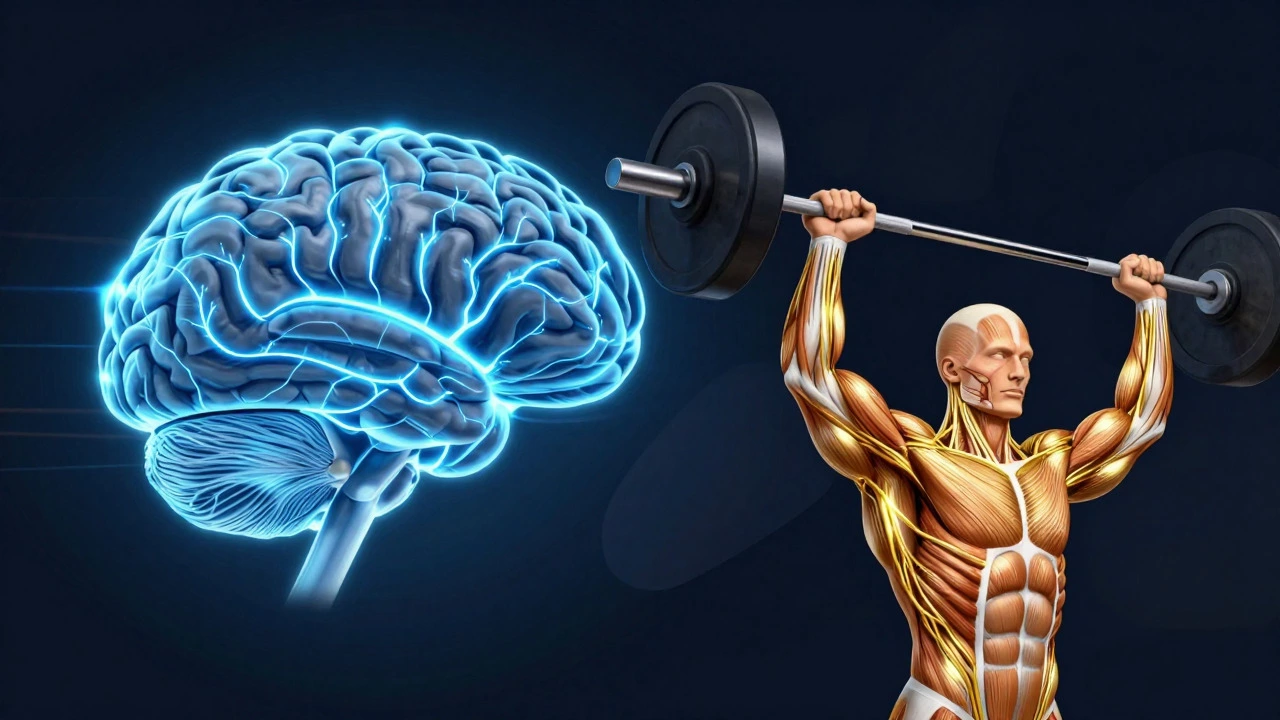
To understand why you might not see massive muscle growth yet, we need to look at what your body is actually doing during this initial phase. When you start a new resistance program, your nervous system takes the lead. This process is called neural adaptation.
Your brain is learning how to recruit muscle fibers more efficiently. Think of it like upgrading the software before you upgrade the hardware. In the first few weeks, you get stronger not because your muscles have grown significantly, but because your nerves are sending better signals to those muscles. You’re becoming more coordinated. You’re learning the proper movement patterns for squats, deadlifts, and presses.
Research from the American Council on Exercise (ACE) suggests that beginners can expect to increase their strength by up to 30% in the first eight weeks due to these neural adaptations. So, if you were bench pressing 40kg in week one and you’re now hitting 50kg, that’s a huge win. That is a result. It’s just not the kind of result that shows up as six-pack abs overnight.
Visible vs. Invisible Gains: Managing Expectations
We need to separate "feeling" strong from "looking" strong. At the one-month mark, the invisible gains usually outweigh the visible ones. Here is what you should realistically expect to notice:
- Improved Performance: You will likely lift heavier weights or perform more repetitions with the same weight. This is the most reliable metric of progress in the early stages.
- Better Posture: If your routine includes back and core exercises, you might stand taller. People around you might comment that you look more confident, even if your body composition hasn’t drastically shifted.
- Clothing Fit: Some people experience slight changes in how their clothes fit. This can happen due to reduced bloating from better hydration and nutrition, or minor muscle tone improvements in areas like the shoulders or glutes.
- Mental Clarity: Many beginners report feeling less stressed and sleeping better within the first three weeks. This is a physiological result of exercise-induced endorphins and improved sleep quality.
If you are looking for dramatic fat loss or significant muscle hypertrophy (growth), one month is rarely enough time. Visible muscle growth typically requires consistent training for at least 8 to 12 weeks. Fat loss depends heavily on your calorie deficit, which is a separate conversation from lifting weights alone.
The Role of Nutrition in Early Results
You cannot out-train a bad diet, especially when you are trying to see physical changes quickly. Your workouts provide the stimulus, but your nutrition provides the building blocks. If you want to maximize the chances of seeing visible results in month one, pay attention to two things: protein intake and caloric balance.
To support muscle repair and potential growth, aim for approximately 1.6 to 2.2 grams of protein per kilogram of body weight daily. For an average person weighing 70kg, that’s between 112g and 154g of protein each day. Without adequate protein, your body struggles to repair the micro-tears created during lifting, slowing down any potential visual changes.
Additionally, consider your overall energy balance. If your goal is to lose fat and reveal muscle definition, you need to be in a slight caloric deficit. If your goal is to build size, you might need a slight surplus. Trying to do both simultaneously-body recomposition-is possible for beginners, but it requires precision. Eating too much while lifting will mask muscle gains with fat. Eating too little will leave you without the energy to train hard enough to stimulate change.
Common Mistakes That Hide Your Progress
Sometimes, the reason you don’t see results isn’t biology; it’s strategy. Many beginners sabotage their own progress with common errors that prevent them from getting the most out of their first month.
Inconsistency is the biggest killer. Going to the gym once or twice a week won’t trigger the necessary adaptations. Aim for at least three sessions per week, spaced out to allow for recovery. Lack of Progressive Overload is another major issue. If you lift the exact same weight for the same number of reps every single session, your body has no reason to change. You must gradually increase the difficulty over time. This could mean adding 2.5kg to the bar, doing one more rep, or improving your form.
Poor Sleep Hygiene also plays a role. Muscle growth happens when you rest, not when you train. If you’re sleeping less than seven hours a night, your cortisol levels may remain elevated, which can hinder fat loss and muscle gain. Finally, neglecting mobility and warm-ups can lead to injuries that sideline you, resetting your progress clock entirely.

How to Track Progress Beyond the Mirror
Relying solely on visual cues is a recipe for frustration. To stay motivated and objectively measure your success, you need data. Start keeping a workout log. Record the exercises, sets, reps, and weights you use in every session.
This log becomes your proof of progress. When you look back at week one versus week four, you’ll see clear evidence of improvement. Did you go from 8 reps to 12 reps on dumbbell rows? That’s a win. Did you improve your squat depth and stability? That’s a win.
You can also take progress photos. Take them in the same lighting, at the same time of day, wearing the same clothes. Compare week one to week four side-by-side. Sometimes the changes are subtle-a slight rounding of the shoulders, a tighter midsection-that you miss in the daily mirror check but catch clearly in a photo comparison.
| Timeframe | Primary Adaptation | Visible Changes | Performance Gains |
|---|---|---|---|
| Weeks 1-4 | Neural Adaptation | Minimal to none | High (learning movements) |
| Weeks 4-8 | Early Hypertrophy | Slight muscle firmness | Moderate (weight increases) |
| Weeks 8-12 | Muscle Growth | Noticeable tone/size | Significant (PRs common) |
| Months 3-6 | Structural Change | Clear physique shift | Advanced (complex lifts) |
Why Consistency Beats Intensity in Month One
A lot of beginners make the mistake of going all-out in the first week. They train six days a week, push to failure on every set, and then burn out or get injured by week three. This approach is counterproductive. The goal in the first month is to build the habit, not to exhaust your central nervous system.
Consistency creates the compound effect. Showing up for three moderate sessions a week for four months will yield far better results than showing up for five brutal sessions a week for one month and then quitting. Treat your first month as an investment in your routine. Focus on perfecting your form. Enjoy the process of learning new movements. Let the physical changes come as a byproduct of your dedication.
If you stick with it, the momentum will carry you forward. By week five, you’ll be stronger than you were in week one. By week twelve, you’ll look different. And by week twenty-four, you’ll be unrecognizable to your former self. But none of that happens if you quit because you didn’t see a transformation in thirty days.
Is it normal to not see muscle growth after 1 month?
Yes, it is completely normal. Significant muscle hypertrophy typically takes 8 to 12 weeks to become visually apparent. The first month is dominated by neural adaptations, meaning you get stronger through better nerve-muscle communication rather than actual tissue growth. Trust the process and focus on performance metrics instead of mirror checks.
How much weight should I expect to lose in the first month of working out?
Weight loss varies greatly depending on your starting point, diet, and activity level. A safe and sustainable rate is 0.5 to 1 kg (1-2 lbs) per week. However, if you are strength training, you might not see the scale move much because muscle is denser than fat. Focus on body measurements and how your clothes fit rather than just the number on the scale.
Can I build noticeable muscle in 4 weeks?
For most natural lifters, noticeable muscle growth in just four weeks is unlikely. While beginners may experience some rapid initial gains due to glycogen storage and water retention in muscles, true structural muscle growth requires consistent progressive overload over several months. Don't let lack of immediate visual change discourage you; the foundation is being built.
What are the best exercises for beginners to see quick results?
Compound movements like squats, deadlifts, bench presses, overhead presses, and pull-ups engage multiple muscle groups and provide the highest return on investment. These exercises stimulate the most muscle mass and hormonal response, leading to faster strength gains and overall body composition changes compared to isolation exercises like bicep curls.
Does cardio help with seeing results faster?
Cardio can aid in fat loss, which may reveal underlying muscle definition faster. However, excessive cardio can interfere with strength gains and recovery if not managed properly. A balanced approach of 2-3 strength sessions and 1-2 low-intensity cardio sessions per week is often ideal for beginners looking to improve body composition without sacrificing muscle growth.