

Walking Fat Loss Calculator
Calculate how much fat you can lose by walking with this simple calculator. Based on the article "Can I lose fat by walking? The real science behind walking for fat loss".
Walking won’t make you sweat like a HIIT session, and you won’t see Instagram posts of people posting their 10K-step selfies with dramatic before-and-afters. But if you’re wondering whether walking can actually help you lose fat, the answer is yes-if you do it the right way. It’s not magic. It’s math. And it works better than most people think.
Walking burns calories-here’s how many
A 70 kg person walking at a moderate pace (5 km/h) burns about 280 calories per hour. That’s not a lot compared to running (which burns around 600 calories per hour), but here’s the catch: you can walk for hours without feeling wrecked. Run for an hour, and you’re done for the day. Walk for two hours, and you’re still ready to cook dinner, play with your kids, or take the dog out.
Let’s say you walk 30 minutes every day. That’s 140 calories burned daily. Over a week, that’s 980 calories. Over a month? Nearly 4,000 calories. Since one kilogram of fat equals about 7,700 calories, you’re looking at roughly half a kilo of fat lost in a month-just from walking. Add a small tweak to your diet, like cutting out one sugary drink a day (that’s about 150 calories), and you’re on track to lose a kilo in six weeks. No gym membership. No fancy gear. Just your shoes and time.
Why walking works better than you think
Most people think fat loss requires high intensity. That’s a myth. Your body doesn’t care if you’re sprinting or strolling-it just cares about the total energy deficit. Walking keeps your heart rate in the fat-burning zone (around 50-70% of your max heart rate), where your body uses fat as its main fuel source. Run too hard, and you start burning mostly carbs. Walk steadily, and you tap into fat stores for longer.
Also, walking is sustainable. People quit running because it hurts their knees, they get bored, or they’re too tired. Walking? You can do it in the rain, at 6 a.m., after work, with a stroller, or while talking on the phone. It’s the only exercise people actually stick with for years.
A 2023 study from the University of Otago tracked 1,200 adults over 12 months. Those who walked at least 10,000 steps a day lost an average of 2.3 kg of body fat-without changing their diet. Those who walked 7,000 steps lost 1.1 kg. The difference? Consistency. Not speed.
How to make walking work for fat loss
Walking isn’t enough if you’re just pacing around the block. To turn it into a fat-loss tool, you need structure.
- Walk at a brisk pace-you should be able to talk but not sing. If you’re not breathing harder, you’re not working hard enough.
- Walk for at least 45 minutes-short walks burn calories, but longer walks tap into fat stores more deeply.
- Walk daily-don’t save it for weekends. Daily movement keeps your metabolism active and prevents fat storage.
- Add inclines-walking uphill burns 30-50% more calories. Find a hill, a staircase, or a treadmill with a 5-8% incline.
- Track your steps-aim for 8,000-10,000 steps a day. Use a free app or a basic pedometer. Seeing the number helps you stay accountable.
One woman in Auckland, 54, lost 14 kg in 8 months just by walking 10,000 steps a day and drinking more water. She didn’t cut carbs. She didn’t join a gym. She just started walking after dinner-every single day. Her knees didn’t hurt. Her energy improved. And she kept it up for two years.

Walking vs strength training: Can you lose fat without lifting?
You might be thinking: "But I’ve heard strength training burns more fat long-term." That’s true-but only if you’re doing it consistently. Most people who say they "lift to lose fat" only go to the gym twice a week. Meanwhile, they’re sitting at a desk for 8 hours and walking 2,000 steps.
Strength training builds muscle, which raises your resting metabolism. But muscle doesn’t magically melt fat. You still need a calorie deficit. Walking creates that deficit without requiring equipment, recovery time, or a personal trainer.
Best combo? Walk daily for fat loss, and add two strength sessions a week to keep your muscles strong and your metabolism high. You don’t need heavy weights. Bodyweight squats, push-ups against the wall, and resistance bands work fine. But if you’re choosing between walking every day or lifting twice a week? Walk. Every. Day.
When walking won’t help
Walking won’t work if:
- You’re eating 3,000 calories a day and walking 5,000 steps.
- You’re walking slowly while scrolling on your phone.
- You think walking for 15 minutes after dinner counts as "exercise."
- You’re waiting for walking to give you a six-pack.
Fat loss isn’t about spot reduction. You can’t walk your way to a flat stomach if you’re still eating pizza every night. Walking helps you create the calorie gap. You still need to eat smart.
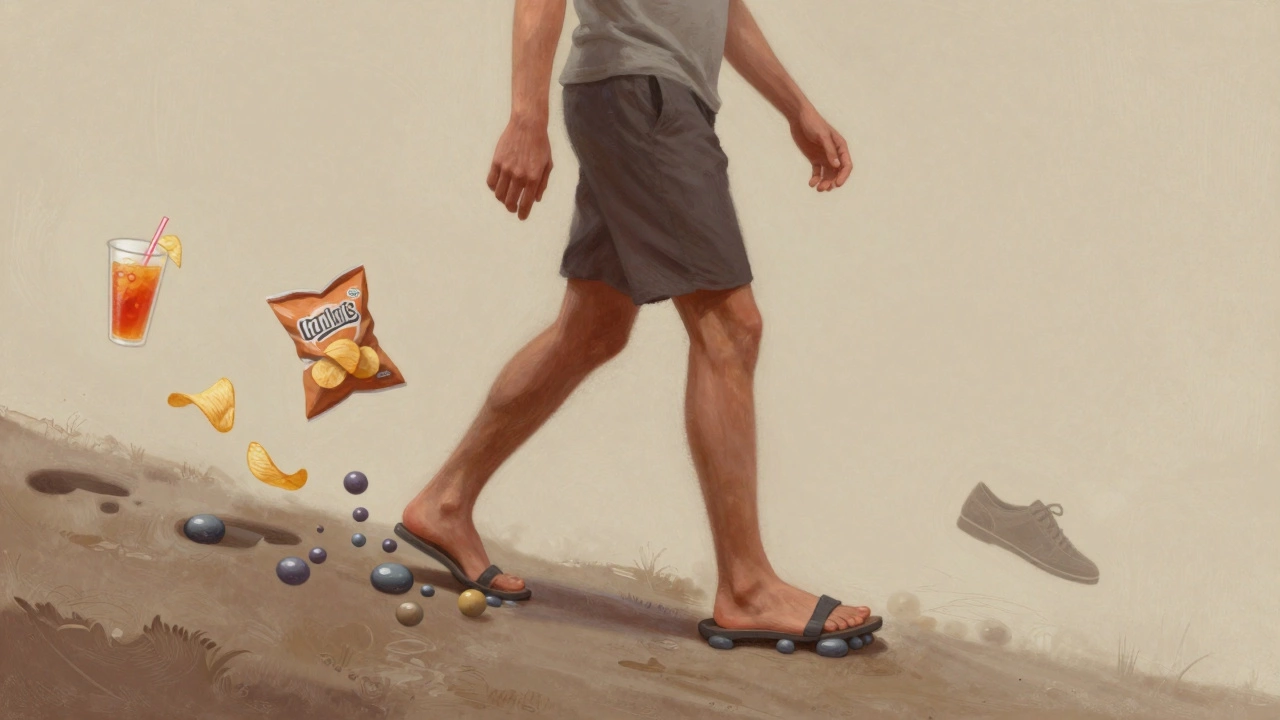
Try this: Cut out one processed snack a day-say, a bag of chips or a chocolate bar. That’s 200-300 calories gone. Add a 45-minute walk. That’s another 200-250 calories. You’ve created a 500-calorie daily deficit. That’s half a kilo of fat lost per week. Simple. No supplements. No shakes. Just walking and less junk.
Realistic expectations
Walking won’t turn you into a fitness model overnight. But it will slowly, steadily, and safely turn you into someone who feels lighter, moves easier, and sleeps better.
People who walk regularly report:
- Less lower back pain
- Better mood and less anxiety
- Improved digestion
- More energy during the day
- Weight loss that sticks
That’s the real win. Not the scale. Not the mirror. It’s the way you feel when you walk into a room without being out of breath.
What to do next
Start tomorrow. Put on your shoes. Step outside. Walk for 20 minutes. Don’t check your phone. Just move.
Next week, add 5 minutes. Then 5 more. In a month, you’ll be walking 45 minutes without thinking about it. That’s when the fat starts to melt.
You don’t need to run. You don’t need to lift. You don’t need to buy a fitness tracker. You just need to move more than you sit. And walking is the easiest way to do that.
Can I lose weight by walking 30 minutes a day?
Yes, but only if you’re in a calorie deficit. Walking 30 minutes burns about 140 calories. If you’re eating the same as before, you won’t lose weight. Combine it with cutting 100-200 calories from your diet, and you’ll see results in 4-6 weeks. Consistency matters more than duration.
Is walking better than running for fat loss?
Running burns more calories per minute, but most people can’t run daily without injury or burnout. Walking is easier to sustain. If you walk 60 minutes a day, 5 days a week, you’ll burn more total calories than someone who runs 20 minutes three times a week. For fat loss, sustainability beats intensity.
How many steps should I walk to lose fat?
Aim for 8,000-10,000 steps daily. Studies show people who hit 10,000 steps lose more fat than those who walk 5,000-7,000. But even 7,000 steps a day will help if you’re eating clean. Start where you are. Add 1,000 steps a week until you hit your target.
Does walking tone your legs and butt?
Walking improves endurance and can slim down your legs, but it won’t build significant muscle. To tone your glutes and thighs, add inclines, stairs, or short bursts of speed. Two 5-minute hill walks per week will make a bigger difference than flat walking alone.
Can I lose belly fat by walking?
You can’t spot-reduce fat, but walking helps reduce overall body fat-including belly fat. Belly fat is often the first to go when you create a consistent calorie deficit. Walking, combined with less sugar and more protein, is one of the most effective ways to lose visceral fat over time.
Final thought: Walking is the quiet hero of fat loss
There’s no hype. No influencers. No $100 supplements. Just you, your shoes, and the pavement. Walking doesn’t promise quick fixes. It promises something better: steady progress, no injuries, and a life you can actually live while losing weight.