
Protein Calculator
Your Protein Needs
Results
Enter your weight and activity level to see your protein needs.
When you start eating more protein, your body doesn’t just build muscle-it changes how you feel, how you think, and even how you sleep. It’s not magic. It’s biology. And it happens faster than most people expect.
Your hunger starts to fade
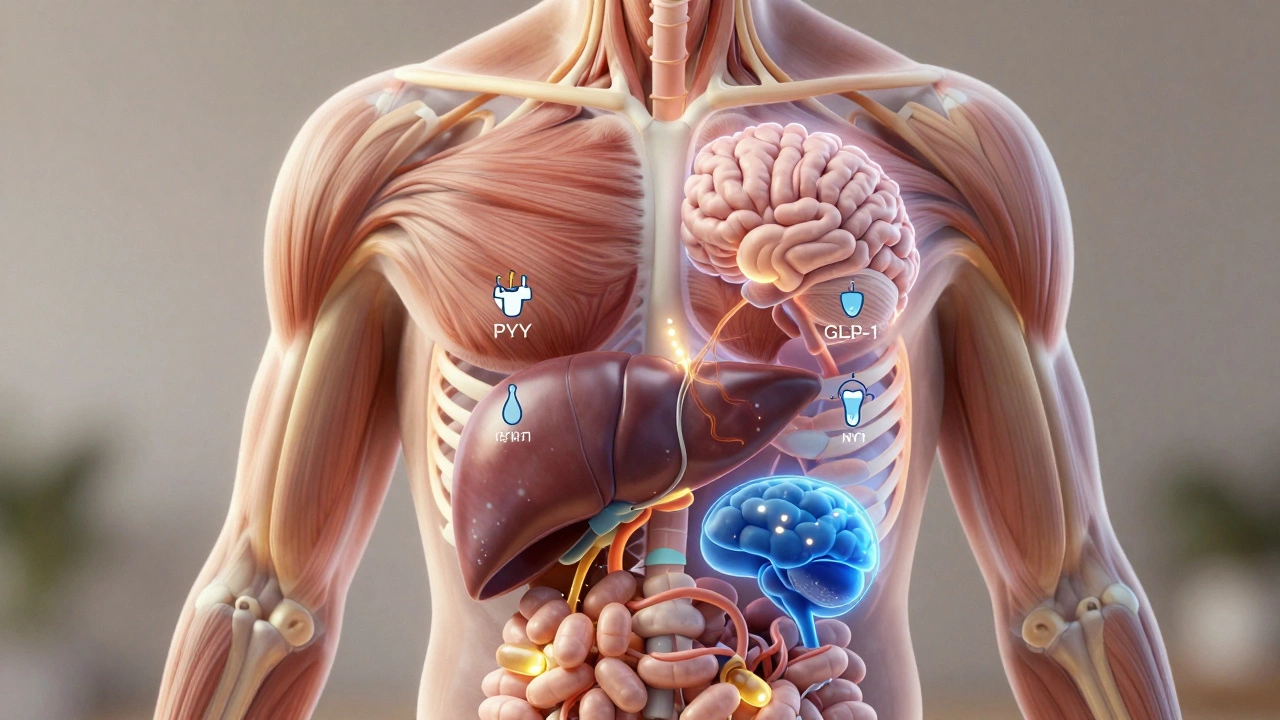
Have you ever eaten a big plate of pasta or rice and felt hungry again an hour later? That’s because carbs spike your blood sugar, then crash it. Protein doesn’t do that. When you swap out some carbs or fats for protein, your body releases hormones like PYY and GLP-1 that tell your brain, "We’re full." A 2023 study in the Journal of Nutrition found that people who increased protein to 30% of their daily calories ate 13% fewer calories naturally-without trying. No counting. No willpower. Just less hunger.
You stop craving sweets
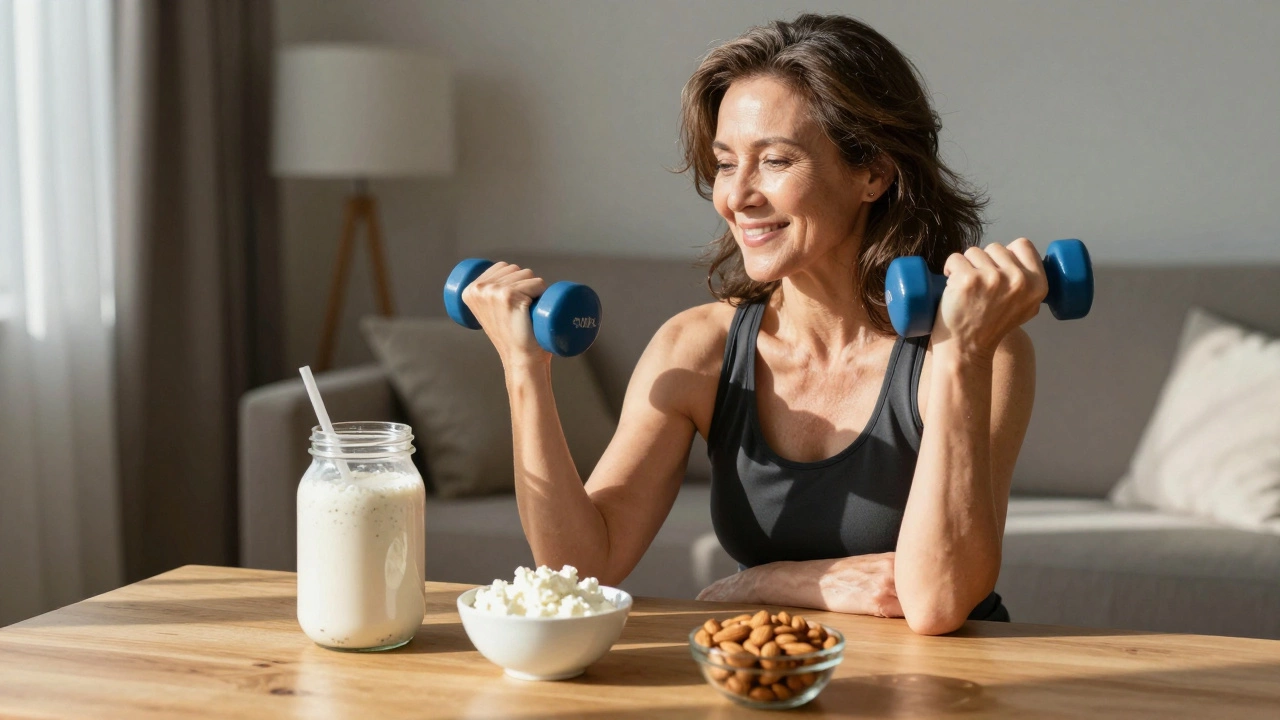
That mid-afternoon chocolate bar? It’s not just a habit. It’s your blood sugar dropping. Protein stabilizes it. One woman in her 40s, who started adding two scoops of whey protein to her morning smoothie, told me she stopped craving sugar entirely after three weeks. Not because she was on a diet. Just because her body stopped begging for quick energy. Protein doesn’t just fill you up-it reprograms your cravings.
Your muscles start to repair faster
If you lift weights, run, or even just walk more, your muscle fibers break down a little every day. Protein gives your body the amino acids it needs to rebuild them stronger. You don’t need to be an athlete for this to matter. A 2024 analysis of 38 studies in The American Journal of Clinical Nutrition showed that people over 50 who ate 1.6 grams of protein per kilogram of body weight (about 120g for a 150lb person) gained measurable muscle mass-even without changing their workout routine. That’s not just for bodybuilders. That’s for anyone who wants to stay strong as they age.
Your metabolism gets a boost
Protein has a higher thermic effect than carbs or fat. That means your body burns more calories just digesting it. For every 100 calories of protein you eat, your body uses 20-30 of them to break it down. Compare that to carbs (5-10%) and fat (0-3%). Over time, that adds up. A 150-pound person who increases protein intake from 70g to 120g a day could burn an extra 100-150 calories daily-roughly the energy of a 20-minute walk. It’s not a miracle, but it’s a quiet, daily advantage.
You recover better from workouts
Ever feel like you’re always sore? Or that you need more rest days? Protein helps. Leucine, one of the key amino acids in whey and eggs, turns on muscle repair switches in your cells. People who added protein shakes after training reported less soreness and were able to train again sooner. One 2025 trial with 180 recreational lifters found that those who consumed 25g of protein within 30 minutes after workouts recovered 40% faster than those who didn’t.
Your skin and hair improve
Collagen, keratin, elastin-these are all made from protein. If you’ve noticed your hair getting thinner or your skin looking dull, it might not be stress or aging. It could be not enough protein. A 2024 study tracking women who increased protein intake to 1.4g/kg for 12 weeks found a 19% improvement in skin elasticity and a 22% reduction in hair shedding. You don’t need fancy supplements. Just eat more eggs, chicken, beans, or Greek yogurt.
Your sleep might get better
It sounds weird, but protein helps with sleep-especially deep sleep. Tryptophan, an amino acid found in turkey, dairy, and soy, turns into serotonin and then melatonin. That’s your sleep hormone. People who ate a protein-rich snack before bed (like cottage cheese or a casein shake) fell asleep 15% faster and spent 20% more time in restorative sleep, according to a small but solid 2025 trial. It’s not a sleeping pill. It’s just your body getting the right fuel at the right time.
You might lose fat without trying
Here’s the twist: eating more protein doesn’t just help you keep muscle-it helps you lose fat. Why? Because protein keeps your metabolism humming, reduces hunger, and preserves lean tissue while you’re in a calorie deficit. In a 12-week study, overweight adults who ate 1.6g/kg of protein lost 3.2kg of fat while gaining 1.1kg of muscle. The control group, eating the same calories but less protein, lost mostly muscle. That’s not weight loss. That’s body recomposition.
How much is enough?
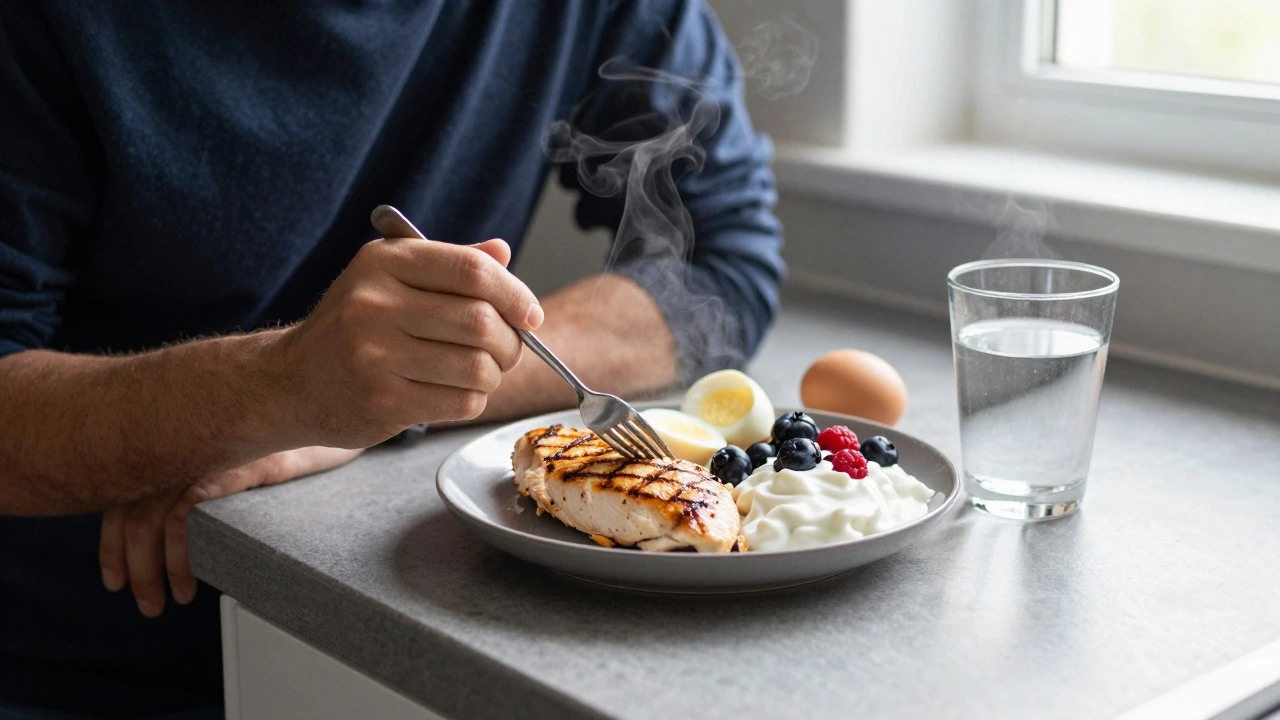
Most people think they need to eat like a bodybuilder. They don’t. The official recommendation is 0.8g per kilogram of body weight. But that’s the bare minimum to avoid deficiency-not to thrive. For active adults, 1.2-1.6g/kg is the sweet spot. For someone who weighs 150 pounds (68kg), that’s 80-110g of protein a day. You can hit that with:
- 2 eggs (12g)
- 1 cup Greek yogurt (20g)
- 150g chicken breast (35g)
- 1 scoop protein shake (25g)
That’s 92g. Easy. No need to track every bite. Just make sure each meal has a solid protein source.
What about protein shakes?
They’re not magic. But they’re convenient. If you’re busy, tired, or just struggle to eat enough meat or dairy, a shake can fill the gap. Whey protein is absorbed fast-great after workouts. Casein is slow-digesting-good before bed. Plant-based options like pea or soy work too, but check the amino acid profile. Not all plant proteins have enough leucine. Look for blends that include rice or hemp to cover the gaps.
Watch out for the traps
More protein isn’t always better. If you’re eating 300g of protein a day and cutting out all carbs and fats, you’re setting yourself up for problems. Your liver can handle it, but your gut might not. Too much protein without fiber can cause bloating or constipation. And if you’re replacing veggies and whole grains with steak and shakes, you’re missing out on vitamins, antioxidants, and gut health. Balance matters.
Start simple
You don’t need to overhaul your diet overnight. Just add one extra protein source to your day. Swap a morning bagel for two eggs. Add a scoop of protein to your coffee or smoothie. Have a handful of almonds after lunch instead of chips. In a week, you’ll notice the difference-not in the mirror, but in your energy, your hunger, and how you feel after eating.
It’s not about perfection. It’s about consistency.
Protein isn’t a cure. It’s a foundation. And when you build on it, everything else gets easier-sleep, recovery, focus, even mood. You don’t need to be perfect. Just consistent. Eat more protein. See what happens. Your body already knows what to do. It just needs the right materials.