

HIIT Calorie Burn & EPOC Estimator
Total Estimated Calories Burned
You’re sweating through a 20-minute session. Your heart is pounding at 170 beats per minute. You just finished eight rounds of burpees followed by sprinting in place. It’s brutal. But here is the question that keeps you coming back: Is HIIT actually better for losing weight than just jogging for an hour?
The short answer is yes, but with a major caveat. High-Intensity Interval Training (HIIT) is one of the most time-efficient methods for burning fat, but it is not a magic wand that works without effort or strategy. If you do it wrong, you might burn out your central nervous system before you see the scale move. Let’s look at how this workout style actually changes your body, why it burns fat after you stop moving, and how to fit it into a realistic routine.
How HIIT Triggers Fat Loss
To understand why HIIT works, you have to look at what happens inside your body during those intense bursts. When you sprint or jump with maximum effort, your body cannot get enough oxygen to fuel your muscles instantly. This pushes you into an anaerobic state. Your body starts breaking down glucose stored in your muscles for quick energy.
During steady-state cardio, like walking on a treadmill, your body primarily uses fat as fuel because the intensity is low enough to process oxygen efficiently. In HIIT, you are mostly burning carbs during the actual workout. So, where does the fat loss come from?
It comes from the aftermath. This phenomenon is called Excess Post-exercise Oxygen Consumption, or EPOC. After a HIIT session, your body needs to recover. It has to replenish oxygen stores, clear out lactic acid, repair muscle tissue, and lower your core temperature. All of these processes require energy. Because of this metabolic boost, your body continues to burn calories at a higher rate for hours after you finish exercising. Studies suggest this elevated metabolism can last anywhere from 12 to 48 hours depending on the intensity of the session.
This means a 20-minute HIIT workout can sometimes burn more total calories over 24 hours than a 60-minute jog, simply because the jogger’s metabolism returns to baseline almost immediately after stopping.
HIIT vs. Steady-State Cardio: The Comparison
Many people wonder if they should ditch their running shoes for kettlebells. Both methods have merit, but they serve different purposes. Steady-state cardio is great for building endurance and active recovery. It is easier to sustain daily. HIIT is harder to recover from but offers a greater metabolic punch in less time.
| Feature | HIIT (High-Intensity Interval Training) | Steady-State Cardio (LISS) |
|---|---|---|
| Time Efficiency | High (15-30 minutes) | Low (45-90+ minutes) |
| Calorie Burn During Workout | Moderate to High | Low to Moderate |
| Post-Workout Calorie Burn (EPOC) | Significant (Hours later) | Minimal |
| Muscle Preservation | Better (Preserves lean mass) | Poorer (Can lead to muscle loss) |
| Recovery Time Needed | Long (24-48 hours) | Short (Can do daily) |
| Injury Risk | Higher (Due to impact/speed) | Lower (If form is correct) |
If your goal is purely weight loss in the shortest amount of time, HIIT usually wins. However, if you are new to exercise, starting with HIIT can be overwhelming. A hybrid approach often works best: use steady-state cardio for active recovery days and reserve HIIT for when you are fresh and energized.
The Muscle Factor: Why Strength Matters
One of the biggest advantages of HIIT over long-distance running is its ability to preserve muscle mass. When you lose weight, you want to lose fat, not muscle. Muscle tissue is metabolically active, meaning it burns calories just by existing. If you strip away muscle, your resting metabolic rate drops, making it easier to regain weight later.
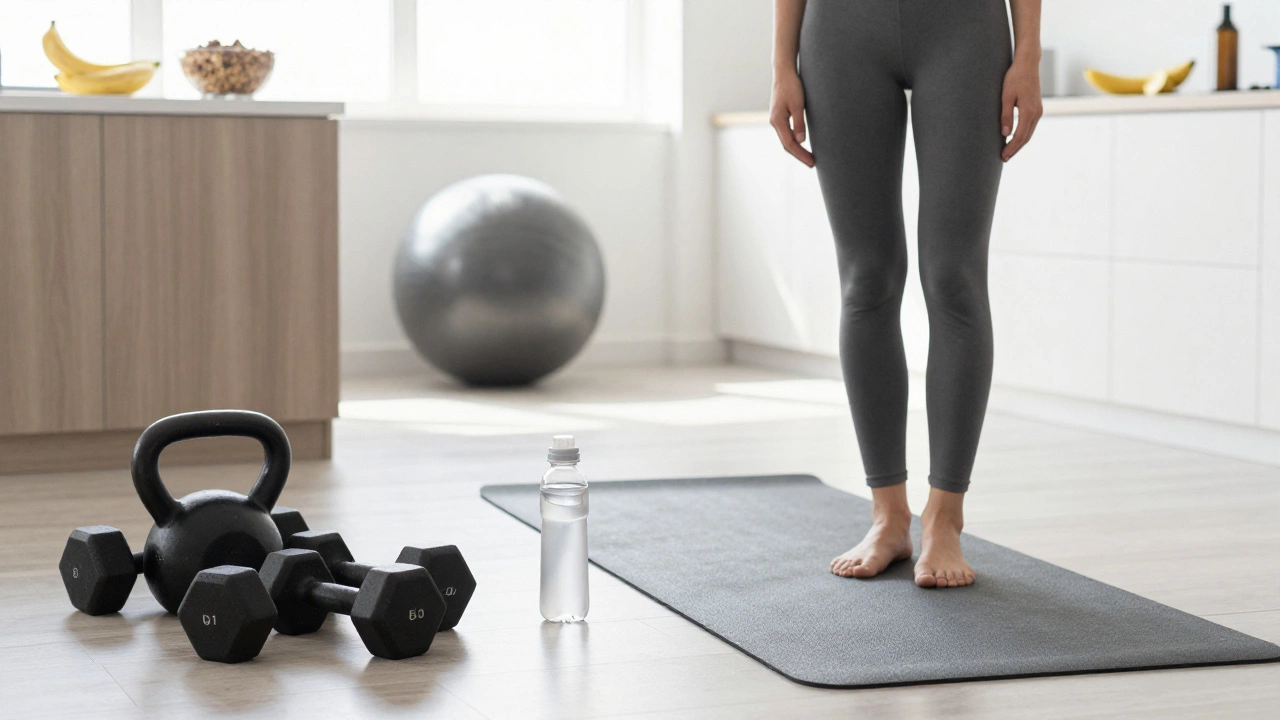
Traditional HIIT often relies on bodyweight movements like squats, lunges, and push-ups. These resistance-based movements signal your body to maintain muscle strength. For even better results, many trainers recommend adding weighted exercises to your intervals. Holding dumbbells during a squat thrust or using a kettlebell for swings increases the load on your muscles. This combination of cardiovascular stress and resistance training creates a potent environment for body recomposition-losing fat while keeping or even building lean muscle.
If you only do pure cardio, you risk becoming "skinny fat," where the scale goes down but your body shape remains soft. Adding resistance ensures you stay toned.

Common Mistakes That Sabotage Results
Just because HIIT is effective doesn’t mean it’s foolproof. Many people fall into traps that prevent them from seeing results. Here are the most common errors:
- Faking the Intensity: The "H" in HIIT stands for High. If you can hold a conversation during your work intervals, you aren’t doing HIIT; you’re doing moderate cardio. You need to reach 80-90% of your maximum heart rate. If you’re not breathless, turn up the effort.
- Doing It Every Day: HIIT places significant stress on your central nervous system. Doing it daily leads to overtraining, increased cortisol levels, and potential injury. Aim for 2-3 sessions per week. On other days, focus on rest, light walking, or strength training.
- Neglecting Nutrition: You cannot out-train a bad diet. HIIT might burn 300 extra calories, but one large smoothie can undo that instantly. Weight loss is still driven by a calorie deficit. Use HIIT to help create that deficit, not to justify eating more.
- Poor Form: Speed amplifies mistakes. If your knee alignment is off during a squat, doing it slowly is manageable. Doing it explosively at max speed can tear ligaments. Prioritize technique over speed.
Designing Your First HIIT Routine
You don’t need expensive equipment to start. Bodyweight exercises are highly effective. Here is a simple structure for a beginner-friendly session that targets full-body fat loss.
- Warm-up (5 minutes): Dynamic movements like arm circles, leg swings, and light jogging in place. Never start cold.
- The Work Phase: Choose 4 exercises. Perform each for 30 seconds at high intensity, followed by 30 seconds of rest. Repeat this circuit 4 times.
- Bodyweight Squats
- Push-ups (knees or toes)
- Lunges (alternating legs)
- Mountain Climbers
- Cool Down (5 minutes): Static stretching to help lower your heart rate and improve flexibility.
As you get fitter, you can adjust the ratio. Beginners might start with a 1:1 work-to-rest ratio (30 seconds work, 30 seconds rest). Advanced athletes might try 1:2 or even 1:1 with shorter rests (e.g., 40 seconds work, 20 seconds rest). The key is progressive overload-making the workout slightly harder over time to keep challenging your body.
Who Should Avoid HIIT?
While HIIT is powerful, it isn’t for everyone. If you have uncontrolled hypertension, heart conditions, or joint issues, consult a doctor before attempting high-impact intervals. The sudden spikes in blood pressure and heart rate can be risky for certain populations.
Additionally, if you are chronically stressed or sleep-deprived, HIIT might add too much physiological stress to your system. In these cases, lower-intensity activities like yoga or walking might support your health better until your lifestyle stabilizes. Listen to your body. If you feel dizzy, nauseous, or excessively fatigued, stop and reassess.
The Verdict: Is It Worth It?
Is HIIT good for weight loss? Absolutely. It is one of the most efficient tools available for burning fat and boosting metabolism. It saves time, preserves muscle, and keeps things interesting. However, it is not a substitute for healthy eating or consistent movement throughout the day.
Think of HIIT as a catalyst. It speeds up the process, but you still need to provide the fuel (or lack thereof) and the consistency. Combine 2-3 HIIT sessions a week with strength training, a balanced diet, and plenty of sleep, and you will see real changes. Just remember: quality matters more than quantity. One intense, well-executed session is worth ten half-hearted ones.
How many times a week should I do HIIT for weight loss?
For most people, 2 to 3 times per week is optimal. HIIT is demanding on the body, so you need recovery days to allow your muscles to repair and your nervous system to reset. Doing it more than 3-4 times a week can lead to overtraining, increased injury risk, and stalled progress. Use the other days for light activity, strength training, or rest.
Does HIIT burn belly fat specifically?
No exercise can target fat loss in one specific area, including the belly. Spot reduction is a myth. However, HIIT is excellent for reducing overall body fat percentage. As you lose fat globally, your abdominal area will shrink along with the rest of your body. Consistency in both diet and exercise is required to see changes in stubborn areas like the midsection.
Can I do HIIT every day?
It is generally not recommended to do high-intensity intervals every day. Your body needs time to recover from the systemic stress caused by maximal efforts. Daily HIIT can lead to chronic fatigue, hormonal imbalances, and injuries. If you want to work out daily, alternate HIIT days with low-intensity steady-state cardio (like walking) or active recovery sessions.
Is HIIT better than running for weight loss?
HIIT is often more time-efficient and may produce a greater afterburn effect (EPOC) than steady-state running. However, running is easier to sustain for longer periods and has a lower barrier to entry for beginners. The "best" option depends on your schedule, fitness level, and preferences. Many people find success combining both methods.
What should I eat before a HIIT workout?
You need easily digestible carbohydrates for energy. Avoid heavy fats or proteins right before working out, as they sit in the stomach and can cause discomfort. A banana, a slice of toast with honey, or a small bowl of oatmeal 30-60 minutes before your session is ideal. Stay hydrated, but don't chug large amounts of water immediately before starting.