

Daily Running Impact Calculator
The Truth About the Two-Mile Daily Habit
You might think that two miles isn't much in the grand scheme of marathons or triathlons, but for most people, it's the sweet spot. Many of us get paralyzed by the idea that if we aren't training for a race, the effort doesn't count. But here is a reality check: consistency beats intensity every single time. If you can commit to about 30 minutes of movement every morning, you're doing more for your heart and head than someone who hits the gym for three hours once a week and then spends six days on a couch.
Is it "good"? For the vast majority of adults, yes. It's a manageable distance that provides a significant boost to your cardiovascular health without putting your joints through the absolute meat-grinder that high-mileage training requires. However, whether it's the "right" amount depends entirely on what you're trying to achieve. Are you trying to drop ten pounds, clear your mind, or just stop feeling winded when you climb two flights of stairs?
Key Takeaways
- Heart Health: Greatly reduces the risk of chronic disease and lowers resting heart rate.
- Sustainability: High adherence rate because it doesn't take up your whole day.
- Weight Management: Effective for maintenance, though diet plays a bigger role in loss.
- Mental Clarity: Triggers a reliable endorphin release (the runner's high).
- Risk Factor: Daily impact can lead to overuse injuries if you don't vary your pace.
What Happens to Your Body?
When you start running 2 miles a day, your body goes through a series of adaptations. In the first two weeks, you'll likely feel exhausted. Your lungs are waking up, and your muscles are figuring out how to efficiently use oxygen. But around the one-month mark, something shifts. Your VO2 Max-which is basically the maximum amount of oxygen your body can use during exercise-starts to climb. This means your heart doesn't have to work as hard to pump blood, and your resting heart rate typically drops.
Beyond the heart, your metabolism gets a nudge. While two miles won't burn a massive amount of calories compared to a long-distance trek, it keeps your insulin sensitivity high. This means your body handles sugar better, which is a huge win for preventing Type 2 Diabetes. You'll also notice your legs feeling firmer. While running isn't a substitute for heavy weightlifting, the constant resistance of your own body weight strengthens your calves and quads.
The Mental Game and the "Runner's High"
Let's talk about the brain. Running isn't just a physical act; it's a neurological reset. When you hit that two-mile mark, your brain releases Endorphins and endocannabinoids. These are the chemicals responsible for that floating, euphoric feeling often called the "runner's high." It's not just a cliché; it's a biological response to physical stress.
For many, this daily ritual becomes a form of moving meditation. In a world of constant notifications and emails, spending 30 minutes without a screen is a radical act of self-care. If you've ever felt a "brain fog" at 2 PM, a morning two-mile run often clears that right up by increasing blood flow to the prefrontal cortex. You'll likely find that you're more productive at work and less reactive to stress.

Calculating the Numbers: Calories and Effort
People always want to know the numbers. How many calories are we actually talking about? On average, a person burns roughly 100 calories per mile, though this varies based on weight and speed. If you weigh 160 lbs and run two miles, you're looking at roughly 200 to 220 calories burned. Over a week, that's about 1,400 extra calories. While that won't magically erase a weekend of pizza and beer, it creates a caloric deficit that makes weight maintenance much easier.
| Goal | Effectiveness | Primary Benefit | Required Adjustment |
|---|---|---|---|
| General Health | High | Heart & Lung function | None (Just stay consistent) |
| Weight Loss | Moderate | Metabolic boost | Caloric deficit in diet |
| Mental Health | Very High | Stress reduction | Run in nature (green space) |
| Athletic Performance | Low | Base aerobic fitness | Add interval training |
The Danger Zone: Avoiding Overuse Injuries
Here is where we need to be honest: running every single day can be a trap. Your muscles adapt to running much faster than your tendons and ligaments do. If you go from zero to seven days a week immediately, you are asking for a Stress Fracture or a nasty case of Shin Splints. The repetitive impact of hitting the pavement 10,000+ times a day adds up.
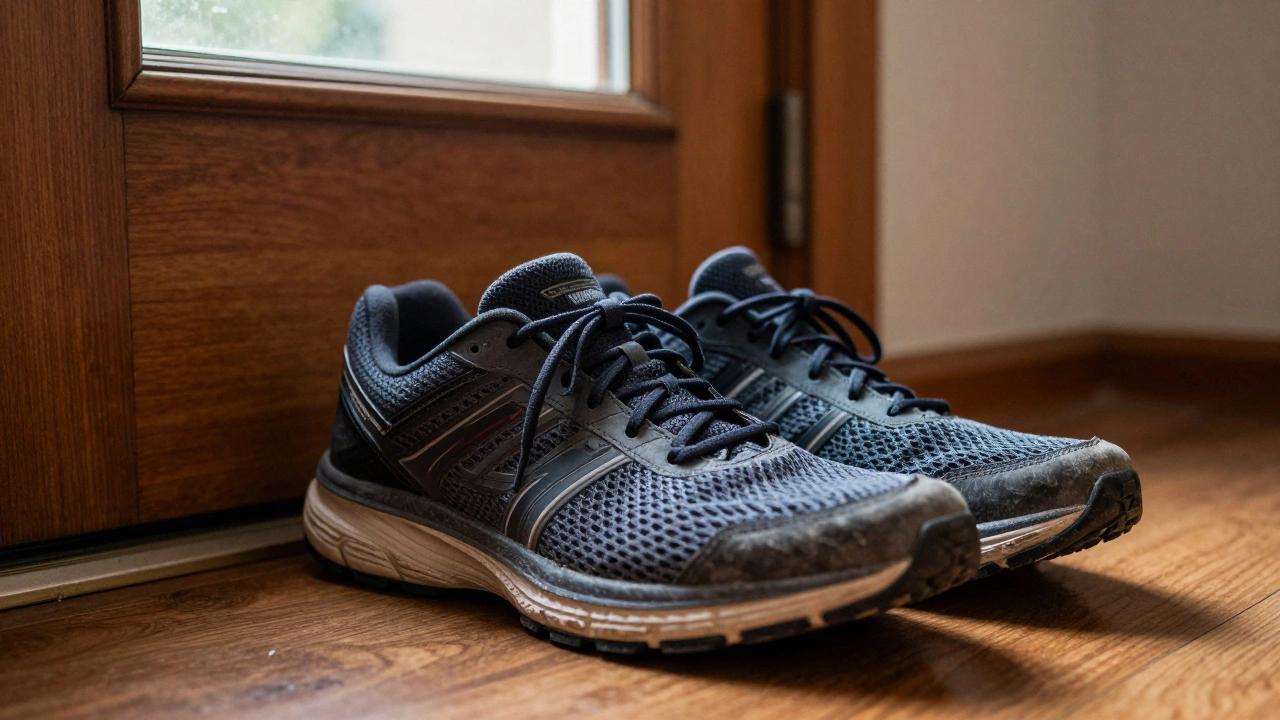
To avoid the injury clinic, you need to implement "intelligent variation." This doesn't mean you stop running, but it means you change how you do it. One day should be a slow, easy jog. The next could be a brisk walk-run. The third could be a few short sprints. This prevents your body from adapting to a single repetitive motion and keeps your joints from wearing down in the same spot. Also, don't ignore your shoes. A pair of Running Shoes loses its cushioning every 300 to 500 miles. If you run two miles a day, you're hitting that limit every 6 to 8 months. If you keep wearing dead shoes, your knees will feel it.
How to Build This Into Your Life
The biggest hurdle isn't the running; it's the logistics. If you've never been a "runner," the idea of doing this daily feels daunting. The trick is to reduce the friction between your bed and the front door. Lay your clothes out the night before. Set your shoes by the door. Don't negotiate with yourself in the morning-just put the shoes on. Once the shoes are on, the hardest part is already over.
If you're a complete beginner, don't even start by running. Use a Couch to 5K style approach. Start by walking one mile, jogging for 60 seconds, and walking again. Slowly tilt the ratio until you can cover the full two miles without stopping. Pushing through pain is a mistake; pushing through mild discomfort is where the growth happens. Know the difference.
Is it Better Than Other Workouts?
Compared to Strength Training, running is less effective for building lean muscle mass. If your goal is to look like a bodybuilder, two miles a day won't get you there. However, compared to a gym session, running is infinitely more accessible. You don't need a membership, a commute, or a fancy set of dumbbells. You just need a sidewalk and a pair of sneakers.
For those who hate the gym, this is a lifeline. It's a low-barrier entry into fitness. When you combine a daily two-mile run with a basic protein-rich diet, you'll see changes in your energy levels that no supplement can replicate. The magic isn't in the distance; it's in the habit of showing up every day.
Will running 2 miles a day help me lose weight?
Yes, but it's not a magic bullet. Running two miles burns roughly 200 calories for an average person. While this helps create a caloric deficit, weight loss is primarily driven by what you eat. If you eat an extra snack because you're hungry after your run, you'll negate the progress. However, it helps significantly with maintaining weight and improving metabolic health.
Can I run every day without rest days?
For a short distance like two miles, many people can handle daily runs. However, your body needs recovery to repair tissues. If you feel persistent pain in your shins, ankles, or knees, take a day off. A better approach is the "6-1 rule"-run for six days and take one day for a light walk or stretching to let your joints recover.
What is the best time of day to run these two miles?
The "best" time is whenever you will actually do it. Morning runs jumpstart your metabolism and clear your head for the workday. Evening runs are great for decompression and releasing the stress of the day. Just be careful with very late runs, as the spike in heart rate and body temperature can interfere with some people's sleep quality.
Do I need to stretch before and after?
Avoid static stretching (holding a stretch) on cold muscles before a run; it can actually increase injury risk. Instead, do dynamic movements like leg swings or a brisk walk for five minutes. After the run, while your muscles are warm, that is the perfect time for static stretching of the hamstrings, calves, and hip flexors to maintain flexibility.
Is running on concrete bad for my joints?
Concrete is the hardest surface and provides the least shock absorption. If you have the option, run on asphalt (which is slightly softer), a dirt path, or a synthetic track. If you must run on concrete, invest in high-quality running shoes with good cushioning to protect your joints from the repetitive impact.
Next Steps for Your Journey
If you've been doing two miles a day and it feels "easy," you have a few choices. You can either increase the distance-perhaps moving toward a 3.1-mile 5K distance-or you can increase the intensity. Try "tempo runs," where you run a bit faster than your usual pace for one mile, then slow down. This pushes your anaerobic threshold and makes you a faster, more efficient athlete.
For those who are just starting today, don't worry about your pace. Whether you run a 10-minute mile or a 15-minute mile doesn't matter. The only metric that counts in the beginning is the calendar. Mark an X on every day you complete your two miles. Once you see a string of ten X's in a row, you've built a habit. At that point, the run isn't a chore-it's just part of who you are.