
Beginner Workout Plan Builder
Create Your Personalized Plan
Build a sustainable workout routine that fits your life. Based on research from the American College of Sports Medicine.
Your Personalized Plan
This plan is based on your selected preferences and follows science-backed beginner principles.
Starting a workout plan as a beginner can feel overwhelming. You see influencers lifting heavy weights, doing 30-minute HIIT sessions, or running 5Ks on day one-and wonder if you’re doing it right. The truth? Most beginners fail not because they lack effort, but because they start too hard, too fast. The best workout plan for beginners isn’t about intensity. It’s about consistency, safety, and building habits that last.
Start with Movement, Not Metrics
Forget counting calories, tracking reps, or comparing yourself to someone on Instagram. Your first goal is simple: move your body regularly. That means getting up from the couch, walking around the block, or doing a few squats while brushing your teeth. Movement builds confidence. Confidence builds consistency. And consistency is the only thing that changes your body over time.Research from the American College of Sports Medicine shows that people who stick with a routine for just 8 weeks are 80% more likely to keep exercising long-term. That’s not because they got stronger or lost weight. It’s because they learned how to show up-even on days they didn’t feel like it.
What a Real Beginner Plan Looks Like
A solid beginner plan doesn’t need fancy equipment or a gym membership. It needs structure, balance, and time. Here’s what works for most people starting out:- 3 days a week of full-body workouts (Monday, Wednesday, Friday)
- 2 days a week of light cardio or walking (Tuesday, Saturday)
- 2 rest days (Sunday and Thursday)
Each workout lasts 30-40 minutes. No more. No less. You’re not trying to burn out. You’re trying to build a habit.
Strength Training (3 Days a Week)
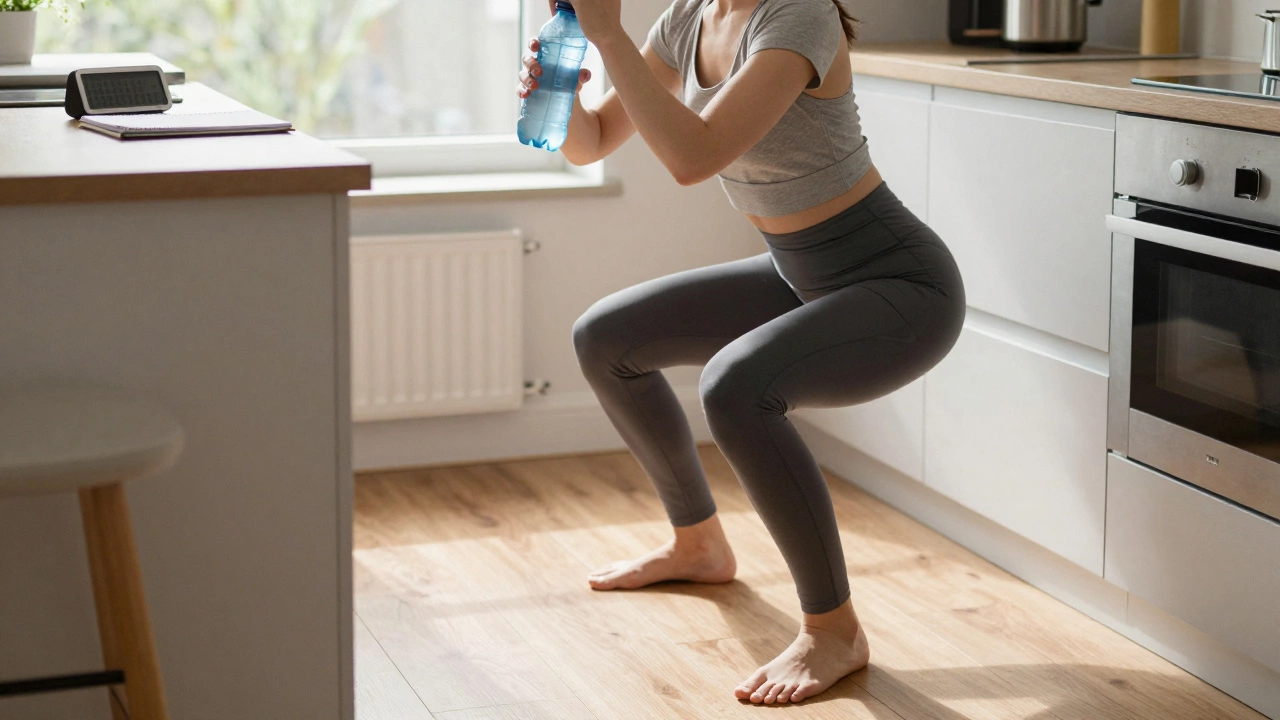
You don’t need dumbbells. You don’t need machines. Your body weight is enough. Focus on these five moves:- Bodyweight squats - 3 sets of 10-12 reps
- Push-ups (on knees or against a wall if needed) - 3 sets of 5-10 reps
- Bent-over rows with water bottles or a backpack - 3 sets of 10 reps
- Glute bridges - 3 sets of 12 reps
- Plank - hold for 20-30 seconds, 3 times
Rest 60 seconds between sets. If you can do 12 squats easily, take a step back. Do 10 with perfect form. Form beats volume every time.
Cardio (2 Days a Week)
Cardio doesn’t mean sprinting on a treadmill. It means raising your heart rate gently. Try:- Brisk walking around your neighborhood
- Walking up and down stairs at home
- Light cycling on a stationary bike or outdoors
- Dancing to one song while cleaning the kitchen
Keep it at a pace where you can talk but not sing. That’s your sweet spot. Aim for 20-30 minutes. If you can’t do that yet, start with 10 minutes. Build up slowly.
Why This Works for Beginners
This plan hits three key needs most beginners ignore:- It’s manageable - Only 5 days a week, under 40 minutes each. You can fit it around work, kids, or school.
- It’s balanced - Strength builds muscle, cardio improves heart health, rest prevents injury.
- It’s scalable - When squats feel easy, add a backpack. When walking feels boring, try a new route. You control the pace.
People who follow this plan for 6 weeks typically report better sleep, more energy, and less lower back pain. They don’t always lose weight. But they start feeling stronger-and that’s the real win.

What to Avoid as a Beginner
There are three big mistakes beginners make-and they’re easy to avoid.1. Doing Too Much Too Soon
Trying to do 100 push-ups on day one? You’ll be sore for a week. You might quit. Or worse-you’ll hurt your shoulder. Start with 5. Build to 10. Then 15. Progress isn’t linear. It’s slow. And that’s okay.2. Ignoring Recovery
Rest days aren’t optional. They’re when your body gets stronger. If you’re sore, take an extra rest day. Walk instead of lifting. Stretch. Hydrate. Sleep 7-8 hours. Recovery is part of the workout.3. Comparing Yourself to Others
Someone online might be doing pull-ups while you’re still learning how to do a squat. That’s fine. Your journey isn’t theirs. Your goal isn’t to look like them. It’s to feel better than you did last week.What to Expect in the First 4 Weeks
Week 1: You’ll feel awkward. Your muscles will ache. You’ll question why you started. That’s normal. Week 2: You start noticing small wins. You slept better. You climbed stairs without getting winded. You didn’t skip a workout. Week 3: You begin to enjoy the routine. You look forward to your walks. You feel proud when you finish a set. Week 4: You realize you’re not doing this to lose weight. You’re doing it because you feel more alive.This isn’t magic. It’s biology. Your body adapts to what you ask it to do. If you move regularly, it gets stronger. If you rest, it recovers. If you keep showing up, it becomes part of who you are.
Tools That Help (Without Overcomplicating)
You don’t need apps, trackers, or subscriptions. But a few simple tools can help:- A free calendar app to block out workout times
- A notebook to write down how you felt after each session
- A phone timer for rest periods
- A water bottle you keep visible (hydration matters)
That’s it. No fancy gear. No expensive memberships. Just you, your body, and a little patience.

When to Progress
After 4-6 weeks, ask yourself:- Can I do 15 squats without stopping?
- Can I hold a plank for 45 seconds?
- Can I walk for 40 minutes without feeling exhausted?
If yes, it’s time to level up. Add one more set. Increase your plank by 5 seconds. Walk a little farther. Or try adding light dumbbells to your squats. But don’t rush. Progress is a slow burn.
Final Thought: It’s Not About the Plan. It’s About You.
The best workout plan for beginners isn’t the one with the most exercises. It’s the one you’ll stick with. It’s the one that fits your life, not the other way around. You don’t need perfection. You need presence.Start small. Stay consistent. Listen to your body. And remember-every expert was once a beginner who didn’t quit.
How long should a beginner workout last?
A beginner workout should last 30 to 40 minutes, including warm-up and cool-down. The goal isn’t to exhaust yourself-it’s to build consistency. Even 20 minutes of movement three times a week is enough to start seeing changes in energy and strength.
Do I need equipment to start?
No. You can start with just your body weight. Squats, push-ups, planks, and walking require no equipment. If you want to add resistance later, household items like water bottles, backpacks, or cans work fine. Expensive gear isn’t necessary-especially at first.
How often should I work out as a beginner?
Three days a week of strength training and two days of light cardio is ideal. That gives you five active days and two full rest days. Rest is critical for recovery and prevents burnout. Don’t feel pressured to work out every day.
What if I’m too sore to move?
Mild soreness is normal. If you’re so sore you can’t walk or stand up straight, you likely pushed too hard. Take an extra rest day. Do gentle stretching or a short walk. Ice or a warm bath can help. Next time, reduce the number of reps or sets. Progress slowly.
Can I lose weight with a beginner workout plan?
You can, but weight loss depends mostly on what you eat. Exercise helps build muscle and boost metabolism, but nutrition plays the bigger role. Focus on moving more and eating whole foods. Don’t obsess over the scale. Notice how your clothes fit, how much energy you have, and how you sleep.
When should I see results?
Most people notice small changes in energy and mood within 2-3 weeks. Physical changes like stronger arms or better posture show up around 4-6 weeks. Visible muscle tone or weight loss takes longer-usually 8-12 weeks. Be patient. Real change happens slowly, but it lasts.
Next Steps
If you’re reading this and thinking, "I’ll start tomorrow," that’s great. But don’t wait. Start today. Even if it’s just 10 minutes. Walk around the block. Do five squats. Stretch for two minutes. That’s your first win.Write down one thing you’ll do tomorrow. Put it on your fridge. Set a reminder. Then show up-not because you have to, but because you want to feel better.
That’s how real change begins.