

5x5 Strength Calculator & Program Planner
The 5x5 Rule Basics
- Sets: 5 per exercise
- Reps: 5 per set
- Rest: 2-3 minutes between sets
- Frequency: 3 days per week
- Progression: Add 2.5-5 lbs when you hit all reps
You walk into the gym, grab a barbell, and see someone doing five sets of five reps. You’ve heard it called the 5x5 rule, but you’re not sure if it’s just for bodybuilders or if it actually works for regular people trying to get stronger. The short answer is yes. It is one of the most effective ways to build raw strength without spending hours at the gym.
The 5x5 rule isn’t magic, but it is mathematically sound for building power. By lifting a heavy weight five times, resting, and repeating that process five times, you create enough tension on your muscles to force them to adapt. This method was popularized by strength coaches like Jim Wendler (with his Starting Strength program) and StrongLifts 5x5. It strips away the fluff of complicated supersets and drop sets, focusing purely on moving heavy loads with good form.
How the 5x5 Rule Actually Works
To understand why this works, you need to look at the numbers. Most people think more reps mean more muscle. That’s true for endurance, but for strength, lower reps with heavier weights are key. When you do five reps, you are working in the hypertrophy-to-strength range. You aren’t going to failure on every single rep, which keeps your nervous system fresh enough to lift heavy again tomorrow.
Here is the basic structure:
- Sets: 5
- Reps: 5
- Rest: 2-3 minutes between sets
- Frequency: 3 days a week (e.g., Monday, Wednesday, Friday)
The secret sauce is progressive overload. If you squat 100 pounds for 5x5 today, you aim for 102.5 pounds next week. Small, consistent jumps add up quickly. In six months, you might be squatting 150 pounds. That’s a 50% increase in strength, which is massive for a natural lifter.
The Big Five Exercises You Need
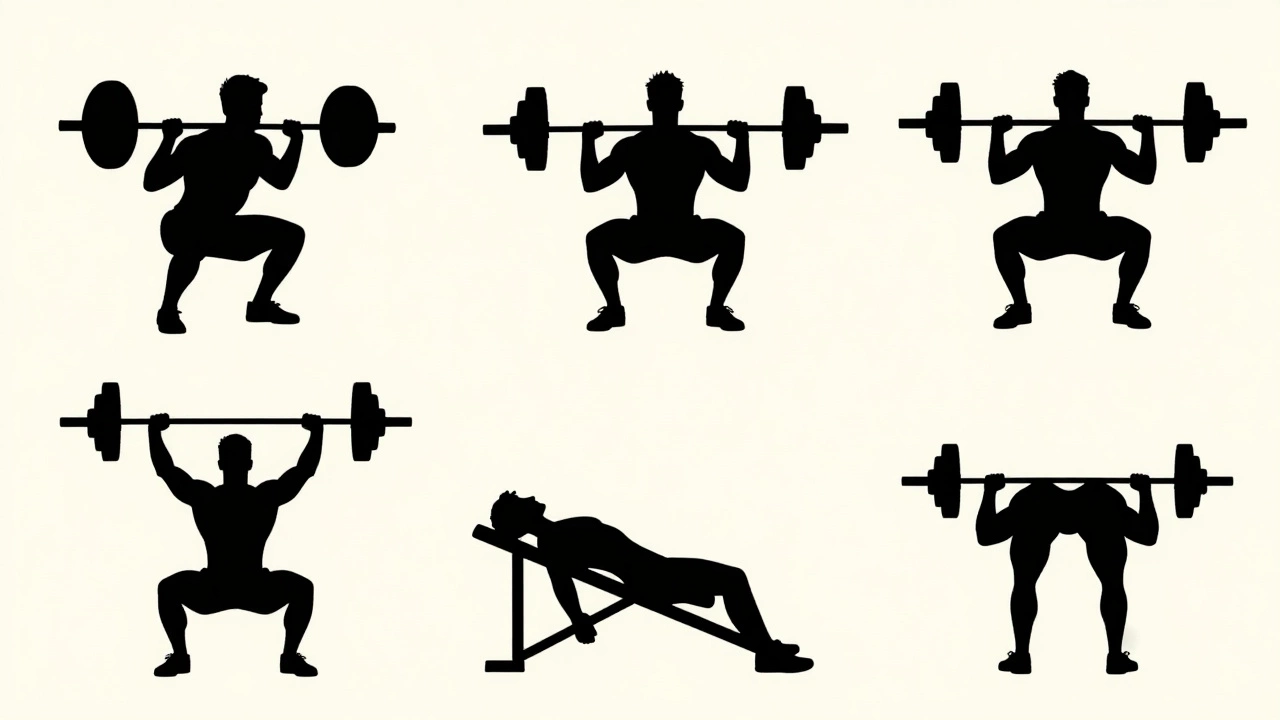
You can’t do 5x5 with bicep curls. This rule relies on compound movements-exercises that use multiple joints and muscle groups at once. These moves allow you to lift the most weight safely. Here are the core lifts used in almost every 5x5 program:
| Exercise | Primary Muscles Worked | Why It’s Included |
|---|---|---|
| Barbell Squat | Quadriceps, Glutes, Core | Builds lower body power and overall stability |
| Deadlift | Hamstrings, Lower Back, Grip | Tests total body strength; often done as 1x5 due to fatigue |
| Bench Press | Chest, Shoulders, Triceps | Essential for upper body pushing strength |
| Overhead Press | Shoulders, Triceps, Upper Chest | Builds shoulder stability and core strength |
| Barbell Row | Back, Biceps, Rear Delts | Counteracts bench pressing posture; builds back thickness |
Notice there are no leg extensions or lat pulldowns here. Those isolation moves have their place, but they won’t drive the systemic strength gains that the 5x5 rule promises. Stick to the barbell. It’s cheaper, simpler, and more effective for this specific goal.
Sample Weekly Schedule
Consistency beats intensity. You don’t need to train six days a week. In fact, you shouldn’t. Your central nervous system needs time to recover from heavy loading. A standard split looks like this:
Day A (Monday):
- Squat: 5 sets of 5 reps
- Bench Press: 5 sets of 5 reps
- Barbell Row: 5 sets of 5 reps
Day B (Wednesday):
- Squat: 5 sets of 5 reps
- Overhead Press: 5 sets of 5 reps
- Deadlift: 1 set of 5 reps (yes, just one set-it’s brutal enough)
Day C (Friday):
- Squat: 5 sets of 5 reps
- Bench Press: 5 sets of 5 reps
- Barbell Row: 5 sets of 5 reps
On Day B, notice the deadlift is only one set. Deadlifting heavy five times is too taxing for most people to recover from while also squatting. Doing one heavy set still provides the stimulus needed for strength without wrecking your lower back for the rest of the week.
Common Mistakes That Kill Progress
I see three major errors when beginners try the 5x5 rule. Avoid these, and you’ll stay injury-free.
1. Ego Lifting
If you can’t complete five clean reps, the weight is too heavy. Form must always come first. A sloppy squat with 200 pounds does nothing for you except risk a herniated disc. Drop the weight until you can hit 5x5 with perfect technique. Then add weight slowly.
2. Skipping Rest Periods
You aren’t doing cardio here. You need 2 to 3 minutes between sets to let your ATP-PC energy system recharge. If you rush, you’ll fail your fifth rep because your lungs burned out, not because your muscles were tired. Set a timer on your phone if you have to.
3. Not Eating Enough
Strength requires fuel. If you are cutting calories to lose fat, you will struggle to progress on the 5x5 rule. Aim for a slight calorie surplus or maintenance. Protein intake should be around 0.7 to 1 gram per pound of body weight. Without protein, your muscles can’t repair the micro-tears caused by heavy lifting.

When to Switch Up Your Routine
The 5x5 rule works wonders for the first year or two. But eventually, you will stall. You’ll hit a weight where you can’t add another 2.5 pounds. This is normal. At that point, you have two options:
- Deload: Take a week off or reduce the weight by 50% for one session to let your joints and nervous system recover.
- Change Rep Scheme: Switch to a 3x10 or 8x8 program for a few weeks to build muscle mass (hypertrophy). More muscle means more potential strength later. Then return to 5x5.
Don’t stick to 5x5 forever if it stops working. Your body adapts. You need to change the stimulus to keep growing.
Is 5x5 Right for You?
If your goal is to look like a bodybuilder with huge arms and tiny legs, 5x5 isn’t the best fit. It builds functional, athletic strength. You’ll get bigger, but proportionally balanced. If you want to run marathons, skip it. But if you want to carry groceries easily, improve your posture, and feel powerful in your daily life, this is one of the best investments of time you can make.
Start light. Track your numbers. Eat well. Sleep eight hours. The results will follow.
Can I do 5x5 every day?
No. Heavy compound lifting stresses your central nervous system and connective tissues. You need at least one rest day between sessions. Training 3 days a week (e.g., Mon/Wed/Fri) is the standard recommendation for recovery.
How much weight should I start with?
Start lighter than you think. For squats, begin with just the bar (45 lbs / 20 kg) or even an empty PVC pipe to practice form. Add 5 lbs (2.5 kg) per side each week if you hit all 5x5 reps cleanly.
Does 5x5 build muscle size?
Yes, especially for beginners. While high-rep training is better for pure aesthetics, the mechanical tension from heavy 5x5 sets triggers significant hypertrophy (muscle growth) in the first 1-2 years of training.
What if I miss a rep?
If you miss a rep, do not increase the weight next week. Repeat the same weight until you successfully complete 5x5. Only then do you add weight. Consistency is key.
Do I need a spotter for 5x5?
For bench press and squats, having a spotter is safer, especially when you are close to your max. However, using a rack with safety pins is equally effective and allows you to train alone safely.