
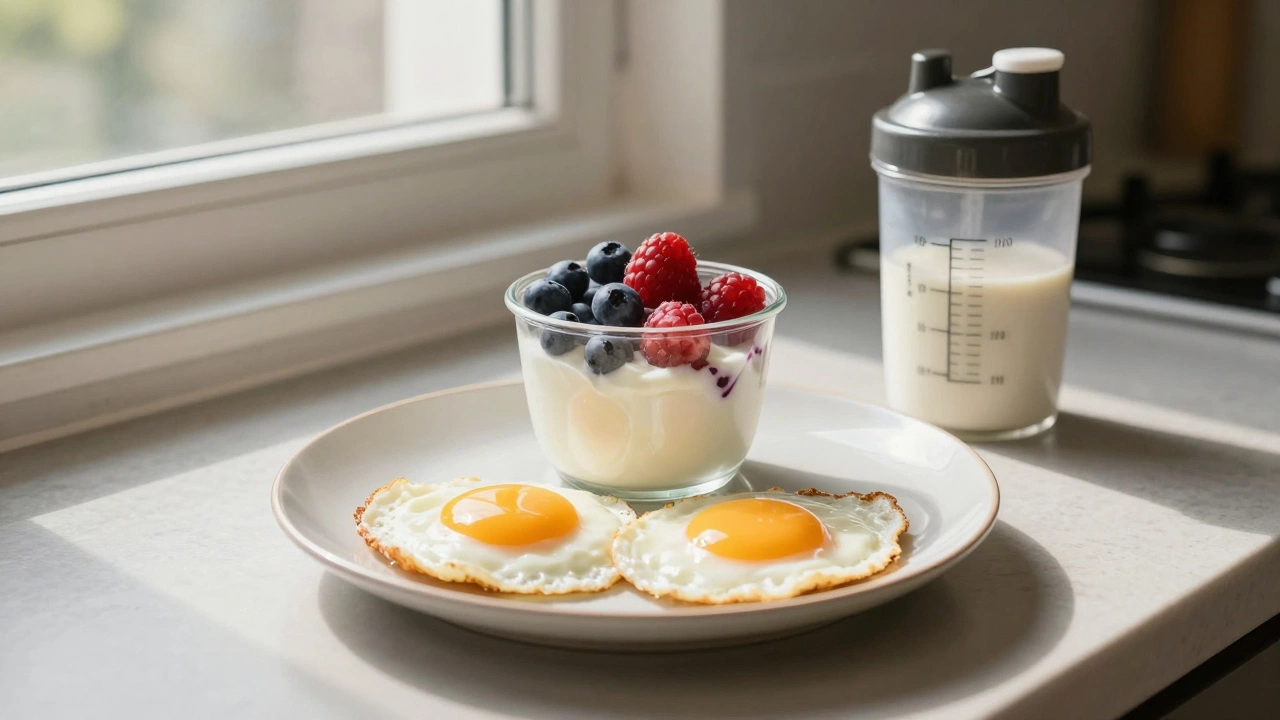
Protein Distribution Calculator
Distribute Your Protein
Calculate how to spread your daily protein intake into 30-gram portions for optimal muscle growth and recovery.
Your Distribution Plan
Enter your total protein intake to see your optimal distribution.
30g Protein Meal Examples
- 1 scoop whey protein + 1 cup Greek yogurt
- 4 large eggs + 1 slice whole grain toast
- 150g grilled chicken breast + ½ cup cottage cheese
- 1 scoop plant-based protein + 1 tbsp peanut butter + 1 cup soy milk
Ever heard of the 30/30/30 method for protein? It sounds simple: eat 30 grams of protein at breakfast, 30 grams at lunch, and 30 grams at dinner. No more, no less. It’s been popping up on social media, fitness forums, and even in some nutrition apps. But does it actually work - or is it just another trend dressed up like science?
Let’s cut through the noise. The 30/30/30 method isn’t about protein shakes alone. It’s about spreading protein evenly across your day. And while protein shakes can help hit those numbers, they’re not the only tool. The real question is: does this pattern make a difference in muscle growth, recovery, or fat loss? The answer isn’t yes or no. It’s more like, "It depends."
Where did the 30/30/30 method come from?
The idea didn’t come from a lab study. It came from real-world observations. Researchers noticed that people who ate most of their protein at dinner - like a big steak at night - weren’t building muscle as effectively as those who spread it out. One 2018 study in the Journal of the International Society of Sports Nutrition found that subjects who consumed 30 grams of protein at each of three meals gained more lean mass over 12 weeks than those who ate 10 grams at breakfast and 70 grams at dinner. The difference? Muscle protein synthesis. Your body can only use so much protein at once. Around 20-40 grams per meal is the sweet spot for most adults. Eat more than that in one sitting? The rest gets burned for energy or stored as fat.
That’s why 30 grams became the target. It’s high enough to trigger muscle repair, low enough to avoid waste. The 30/30/30 method just formalized that. It’s not magic. It’s biology.
How does your body use protein?
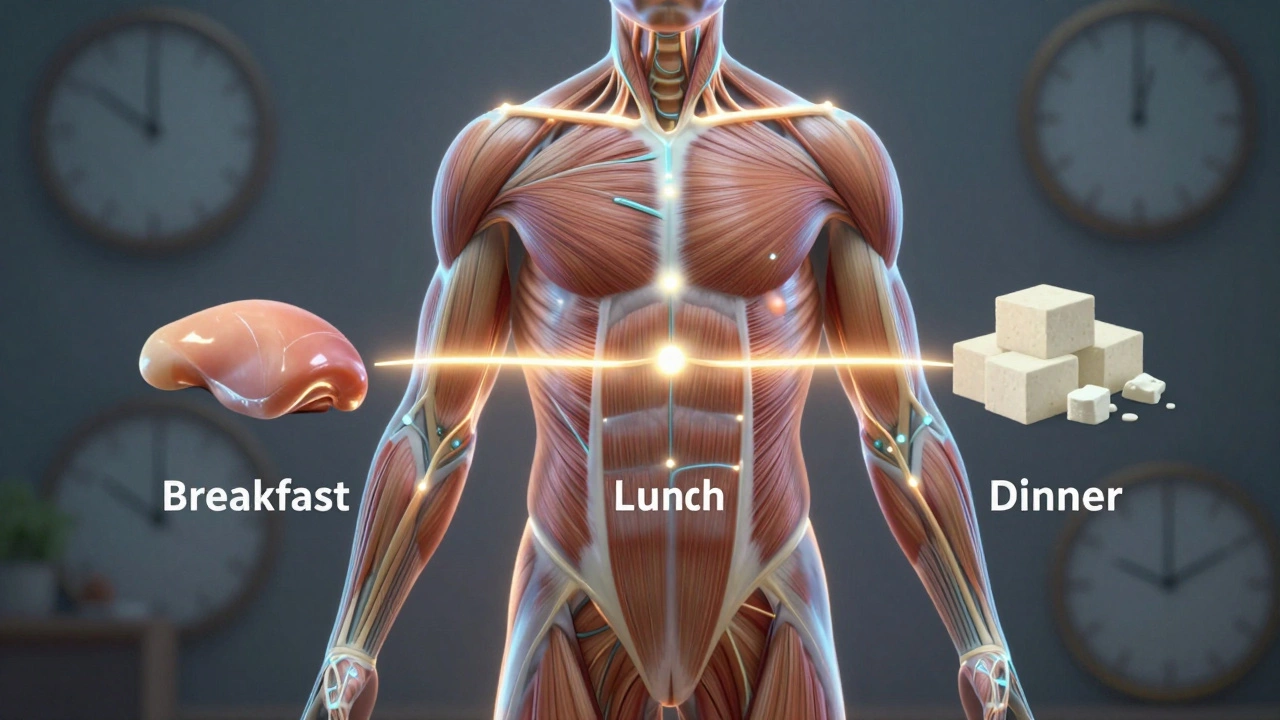
Your muscles don’t store protein like they store glycogen. They don’t have a "protein tank." Every few hours, your body breaks down and rebuilds muscle tissue. That process needs amino acids - the building blocks of protein. If you only get a big hit of protein at dinner, your muscles spend most of the day in repair mode with no fuel. But if you give them 30 grams every 8 hours? You keep the engine running.
Think of it like refueling a car. You wouldn’t fill the tank once a week and expect to drive 1,000 miles. You refill when it’s low. Protein works the same way. Your body doesn’t care if you eat it in a chicken breast, an egg, or a shake. It cares about timing.
Can protein shakes help you hit 30 grams?
Yes - but not always easily. A typical protein shake with one scoop of whey powder gives you 20-25 grams. That means you’ll need a second scoop, or to pair it with something else. A cup of Greek yogurt? Add 17 grams. Two eggs? Another 12 grams. So a shake alone won’t get you to 30 unless you’re using a high-protein formula.
Here’s what 30 grams of protein looks like in real meals:
- 1 scoop whey protein + 1 cup Greek yogurt = 42g
- 4 large eggs + 1 slice whole grain toast = 28g
- 150g grilled chicken breast + ½ cup cottage cheese = 35g
- 1 scoop plant-based protein + 1 tbsp peanut butter + 1 cup soy milk = 31g
So yes, protein shakes are useful. But they’re not the whole story. The 30/30/30 method works best when you mix whole foods with shakes. Relying only on shakes? You might miss out on fiber, healthy fats, and micronutrients your body needs.
Who benefits most from this method?
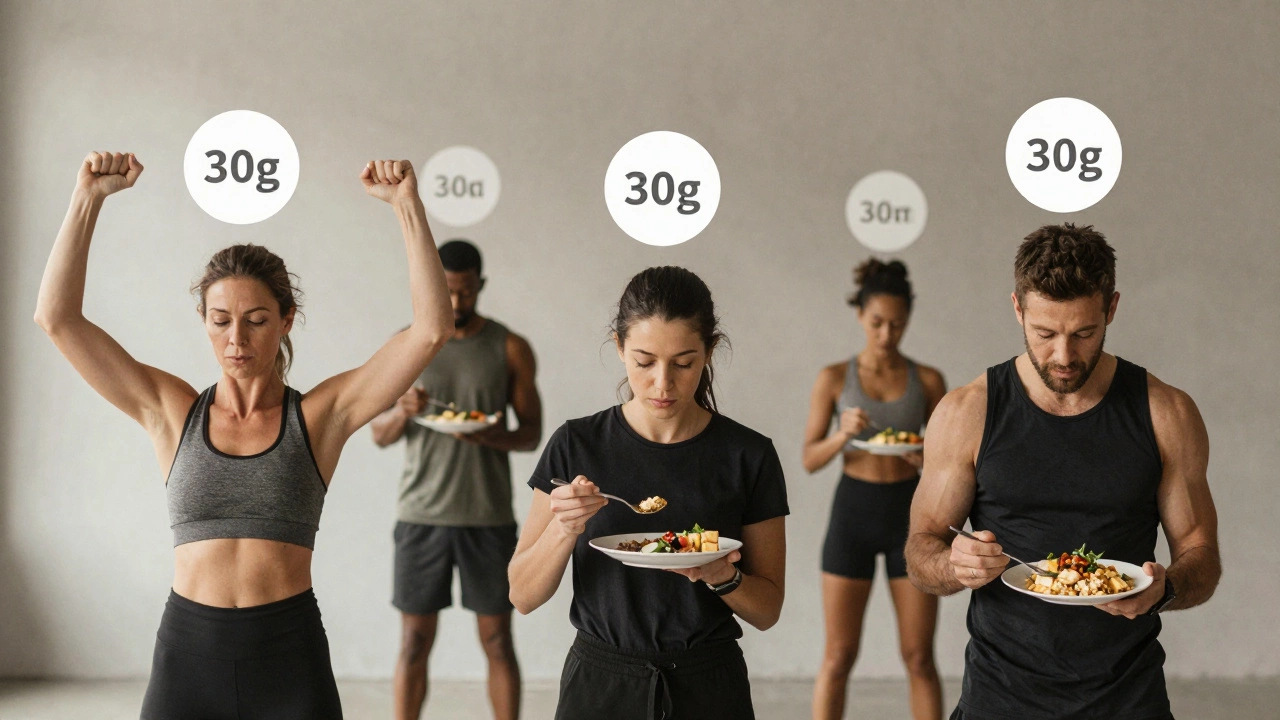
Not everyone needs to follow 30/30/30. If you’re sedentary and eating 70 grams of protein total per day, splitting it into three 23-gram meals won’t change much. But if you’re active - lifting weights, running, playing sports - then this method helps.
Studies show the biggest gains come from people who:
- Train 3-5 days a week
- Are over 40 (muscle loss accelerates with age)
- Are trying to lose fat while keeping muscle
- Struggle to eat enough protein overall
For example, a 45-year-old woman in Auckland who lifts weights three times a week and eats mostly carbs for breakfast (toast, cereal) might only get 10 grams of protein before noon. Switching to a shake with yogurt and a hard-boiled egg? She doubles her morning intake. That’s not a trend - that’s recovery.
What about protein timing around workouts?
You’ve probably heard: "Take protein within 30 minutes after training." That’s the old "anabolic window" myth. New research shows it’s wider than we thought - up to 4-6 hours. So if you eat 30 grams at lunch and train at 5 p.m., you’re still covered. The 30/30/30 method doesn’t require you to time your shake right after the gym. Just make sure you’re hitting your daily total and spreading it out.
That said, if you train fasted (like first thing in the morning), then having a shake with breakfast becomes even more important. Your body’s been fasting all night. It needs fuel. 30 grams then? Perfect.
Is 30 grams enough for everyone?
No. The 30/30/30 method is a guideline, not a rule. Your needs depend on:
- Body weight
- Activity level
- Age
- Goals
A 60kg woman doing light yoga might do fine with 20 grams per meal. A 90kg man lifting heavy five days a week? He might need 40 grams per meal. The 30-gram target is a good starting point for the average adult. But adjust based on results.
Try this: Track your protein for a week. If you’re consistently hitting 90-100 grams total and feeling strong, recovering well, and not losing muscle - keep going. If you’re tired, sore, or losing strength? Increase your daily total. You might need 100-120 grams. Then split it into 35/35/35.
What are the downsides?
Some people stress over hitting exactly 30 grams at every meal. That’s counterproductive. If you eat 22 grams at breakfast and 38 at lunch? You’re still ahead of most people. Perfection isn’t the goal. Consistency is.
Another issue: processed protein shakes. Some are loaded with sugar, artificial flavors, or fillers. A shake with 30 grams of protein but 15 grams of sugar? That’s not helping. Always check the label. Look for:
- Less than 5g sugar per serving
- Minimal ingredients (whey, casein, pea, soy - no mystery additives)
- No artificial sweeteners like sucralose if you’re sensitive
Also, if you have kidney issues, high protein intake isn’t always safe. Talk to a doctor before making big changes.
Real-world example: How one person made it work
Meet Sarah, 38, from Wellington. She’s a teacher, mom of two, and lifts weights twice a week. She used to skip breakfast. Lunch was a salad with chicken. Dinner was pasta. Her protein total? 55 grams. She felt sluggish, weak after workouts, and couldn’t lose belly fat.
She switched to 30/30/30:
- Breakfast: 2 eggs + 1 cup cottage cheese + 1 scoop whey protein = 38g
- Lunch: 120g grilled salmon + 1 cup quinoa + spinach = 32g
- Dinner: 150g lean beef + 1 cup lentils + broccoli = 35g
She didn’t change her calories. Just redistributed protein. In six weeks, her strength increased 15%. Her energy improved. She lost 2.5kg of fat without trying.
She didn’t need a new workout. She just fed her body better.
Final verdict: Does it work?
Yes - if you’re serious about building or keeping muscle, recovering well, and eating enough protein overall. The 30/30/30 method isn’t revolutionary. It’s practical. It’s based on how your body actually works. It’s not about shakes. It’s about consistency. It’s not about perfection. It’s about progress.
Start here: Check your protein intake for one day. If breakfast has less than 20 grams, add a shake or some yogurt. See how you feel in a week. If you’re sleeping better, recovering faster, and lifting heavier? You’ve already found your answer.
Do I need protein shakes to follow the 30/30/30 method?
No. Protein shakes are just one way to hit 30 grams. Whole foods like eggs, chicken, tofu, Greek yogurt, and cottage cheese work just as well - and often better. Shakes are convenient, especially for breakfast or post-workout, but they’re not required. Focus on total daily protein and even distribution.
Is 30 grams of protein too much for one meal?
For most healthy adults, no. Studies show your body can effectively use up to 40 grams of protein in one sitting for muscle repair. The idea that your body can only absorb 20 grams at once is outdated. What matters is not how much you eat at once, but whether you’re spreading it out over the day. Eating 30 grams per meal avoids the "all-or-nothing" pattern of eating too little early and too much late.
Can I do 30/30/30 on a plant-based diet?
Absolutely. Plant-based proteins like tofu (20g per 150g), tempeh (25g), lentils (18g per cup), edamame (17g per cup), and pea protein powder (20-25g per scoop) can easily get you to 30 grams per meal. Combine sources - like lentils with rice or tofu with nuts - to get all essential amino acids. Many plant-based athletes follow this method successfully.
What if I work night shifts? Can I still follow 30/30/30?
Yes. The method is about spacing protein evenly across your waking hours, not fixed meal times. If you sleep during the day and work at night, have your first 30 grams when you wake up (even if it’s 3 p.m.), then again 8 hours later, and again 8 hours after that. Your body doesn’t care what time it is on the clock - it cares about consistent fuel.
Will the 30/30/30 method help me lose weight?
It can, but not directly. Protein keeps you full longer, reduces cravings, and helps preserve muscle while losing fat. If you’re eating fewer calories overall and spreading protein evenly, you’re more likely to lose fat instead of muscle. But if you’re eating more calories than you burn - even with 30/30/30 - you won’t lose weight. It’s a tool, not a magic solution.
Next steps: Try this for one week
Here’s a simple plan:
- Use a food tracker (like MyFitnessPal or Cronometer) to log your protein for three days.
- See where you’re falling short - usually breakfast.
- Swap one low-protein meal for a 30-gram option: shake + yogurt, eggs + cheese, or tofu scramble.
- Notice how you feel: energy, hunger, recovery.
- Adjust up or down based on results.
You don’t need to be perfect. You just need to be consistent. That’s how real change happens.