

HIIT Frequency Calculator
Your Recommendation
Recommended HIIT sessions per week: 2
How many times a week should you do HIIT? It’s not a one-size-fits-all answer. Too little, and you won’t see progress. Too much, and you risk burnout, injury, or losing muscle instead of fat. The sweet spot? Most people get the best results with HIIT workouts 2 to 3 times a week - but it depends on your fitness level, goals, and how you recover.
Why HIIT Isn’t Like Other Workouts
HIIT isn’t just another cardio session. It’s high-intensity. That means short bursts of all-out effort - like sprinting, burpees, or kettlebell swings - followed by brief rest. Your heart rate spikes, your muscles burn, and your body keeps burning calories for hours after you stop. That’s the afterburn effect, or EPOC. But that same intensity means your body needs time to repair.Think of HIIT like lifting heavy weights. You wouldn’t bench press 5 days a week and expect to get stronger. Your muscles need rest to rebuild. The same goes for your nervous system, your joints, and your energy stores. Do HIIT too often, and you’re not recovering - you’re breaking down.
Beginners: Start with 2 Days a Week
If you’re new to HIIT, start slow. Two sessions a week is plenty. Pick non-consecutive days - say, Monday and Thursday. Each session should be 20 to 25 minutes max. Focus on form over speed. A sample routine: 30 seconds of jumping jacks, 30 seconds rest; 30 seconds of bodyweight squats, 30 seconds rest; repeat for 5 rounds.Why not more? Your body hasn’t adapted yet. You might feel sore for two or three days after your first session. That’s normal. But if you’re still achy on day three and you hit the gym again, you’re training on fatigue. That’s when form breaks down. That’s when knees or lower backs get hurt.
One study from the University of New South Wales tracked 40 sedentary adults doing HIIT twice a week for 8 weeks. They lost an average of 2.7% body fat without changing their diet. That’s real. And they didn’t get injured. Pushing to three sessions didn’t improve results - it just made them more tired.
Intermediate: 3 Days a Week Is the Max
If you’ve been doing HIIT for 3 months or more, and you’re not constantly sore or drained, you can add a third session. But here’s the catch: it has to be different.Don’t do the same 20-minute burpee circuit three times a week. Your body adapts fast. Instead, vary the stimulus. One day: sprint intervals on a treadmill. Another: battle ropes and box jumps. A third: rowing machine sprints with core circuits. This keeps your muscles guessing and reduces overuse injuries.
Also, make sure your other days are active recovery. Walk. Stretch. Do yoga. Swim. Don’t just sit on the couch. Recovery isn’t passive - it’s movement without intensity. In Auckland, I see people do HIIT three days a week and then spend the other four glued to their desks. That’s not recovery. That’s stagnation.
Advanced Athletes: Maybe 4, But Only With Planning
If you’re a runner, cyclist, or competitive athlete, you might do HIIT up to four times a week - but only as part of a periodized plan. That means you’re not doing full-body HIIT every time. One session might be upper-body only. Another might be low-impact, like cycling sprints. And one might be sport-specific - think short hill sprints for trail runners.Even then, you need to monitor your body. Heart rate variability (HRV) apps like Whoop or Oura can tell you if your nervous system is recovering. If your HRV drops below your baseline for two days in a row, skip HIIT. Rest. Sleep. Eat protein. Don’t push through fatigue.
One CrossFit athlete I worked with did HIIT four times a week for six months. She lost muscle mass, got a stress fracture, and quit training for three months. She thought more was better. It wasn’t. She’s back now - doing HIIT twice a week, lifting heavy twice, and walking every day. Her performance is better than ever.
What About Daily HIIT? Don’t Do It
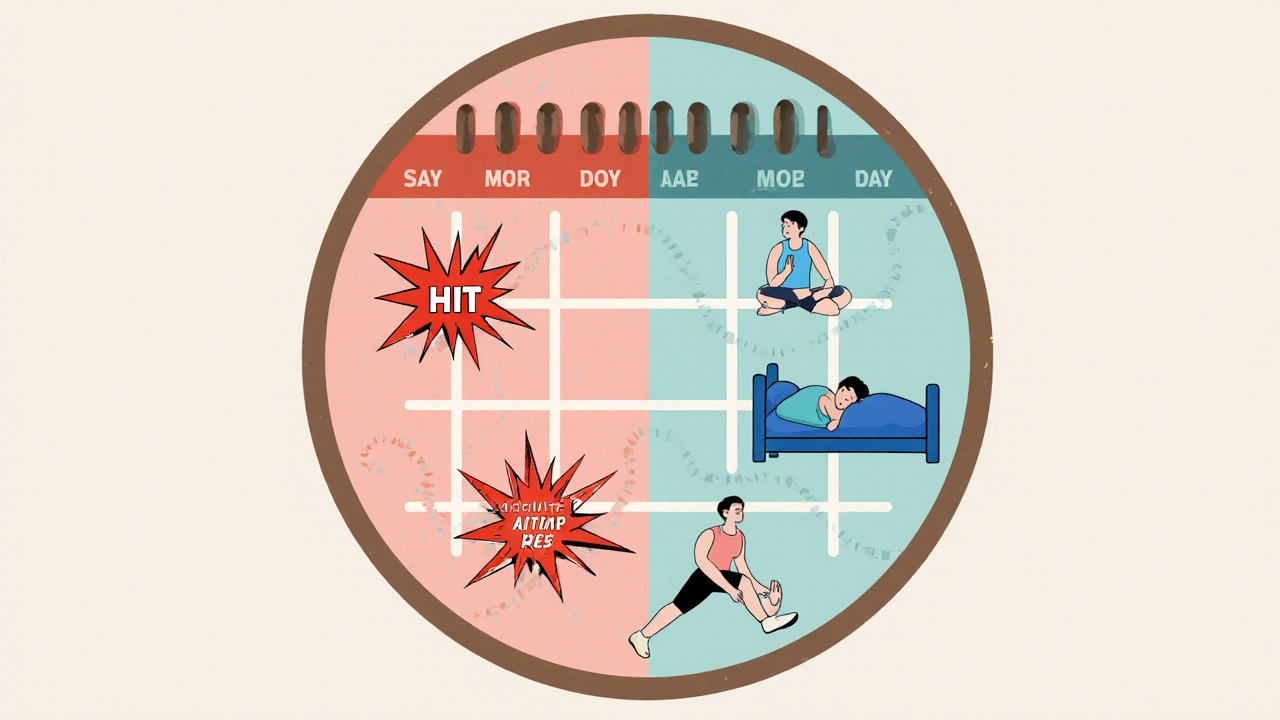
You’ve seen the Instagram posts: “HIIT every day for 30 days and lose 10 pounds!” That’s not science. That’s marketing. Daily HIIT leads to overtraining syndrome. Symptoms? Constant fatigue, trouble sleeping, irritability, elevated resting heart rate, and stalled progress.A 2023 review in the Journal of Strength and Conditioning Research looked at 17 studies on HIIT frequency. The ones with daily sessions had the highest dropout rates - 42% quit within 6 weeks. The ones with 2-3 sessions had 90% adherence. Consistency beats intensity every time.
If you want to move every day, fine. But make the other days low intensity. Walk 10,000 steps. Do mobility drills. Foam roll. Your body will thank you.
Recovery Is Non-Negotiable
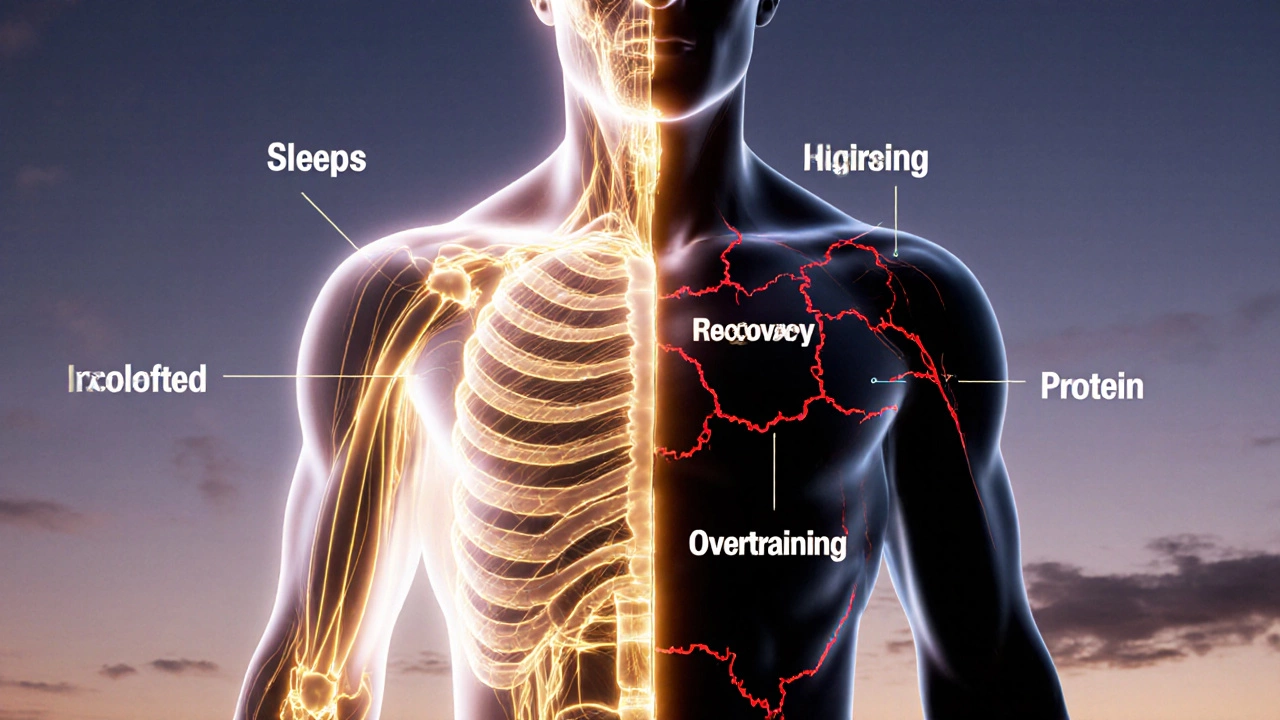
You can’t out-train bad recovery. Sleep, nutrition, and stress management matter as much as the workout itself.After a HIIT session, your body needs:
- Protein - at least 20-30 grams within 45 minutes to repair muscle
- Hydration - electrolytes lost through sweat need replacing
- 7-9 hours of sleep - growth hormone peaks during deep sleep
- Low stress - cortisol stays high if you’re constantly stressed, blocking fat loss
One client of mine, a teacher in Wellington, did HIIT three times a week but slept 5 hours a night and drank 3 coffees after 3 p.m. She couldn’t lose belly fat. We cut her to two HIIT sessions, added a 10-minute evening walk, and moved her last coffee to noon. In six weeks, her waistline shrank by 1.5 inches. The workout didn’t change. Her recovery did.
Signs You’re Doing Too Much HIIT
Ask yourself these questions:- Do you feel drained instead of energized after workouts?
- Are you getting more injuries - shin splints, knee pain, lower back tightness?
- Has your performance plateaued or dropped?
- Do you dread your next HIIT session?
- Are you sleeping worse or waking up with a racing heart?
If you answered yes to two or more, you’re overdoing it. Take a week off. Do walks, yoga, or swimming. Come back with just two sessions. You’ll feel stronger.
Sample Weekly Schedule
Here’s a realistic plan for most people:- Monday: HIIT (20 min - sprints and bodyweight circuits)
- Tuesday: Walk 8,000 steps + light stretching
- Wednesday: Strength training (full body)
- Thursday: HIIT (20 min - rowing and kettlebells)
- Friday: Yoga or mobility work
- Saturday: Long walk, hike, or bike ride
- Sunday: Rest or light swim
This balances intensity, recovery, and consistency. No burnout. No boredom. Just steady progress.
Final Answer: Stick to 2-3 Days
For 90% of people, 2 to 3 HIIT sessions a week is the golden number. It’s enough to boost metabolism, burn fat, and improve cardiovascular health - without wrecking your body.More isn’t better. Smarter is better. Listen to your body. Prioritize recovery. Keep it simple. That’s how you get lasting results - not just a 30-day Instagram transformation that vanishes in a week.
Can I do HIIT every day to lose weight faster?
No. Doing HIIT every day increases your risk of injury, burnout, and muscle loss. Your body needs recovery time to repair and adapt. For sustainable fat loss, stick to 2-3 HIIT sessions per week and focus on sleep, nutrition, and low-intensity movement on other days.
What if I’m already fit? Can I do more than 3 HIIT sessions?
If you’re an experienced athlete, you might do up to 4 HIIT sessions a week - but they must be varied and purposeful. One could be upper-body focused, another low-impact, and one sport-specific. Never do full-body, high-impact HIIT four times a week. Track your recovery with HRV or sleep data to avoid overtraining.
Is 10 minutes of HIIT enough?
Yes - if it’s truly high intensity. A 10-minute HIIT session with 20 seconds of all-out effort followed by 40 seconds of rest, repeated 6-8 times, can be as effective as a 30-minute steady cardio session. The key is intensity, not duration. But don’t rely on 10-minute sessions every day. Your body still needs recovery.
Should I do HIIT on an empty stomach?
No, unless you’re specifically training for endurance fasting. HIIT requires quick energy. Working out on an empty stomach can lead to dizziness, low performance, and muscle breakdown. Eat a small snack with carbs and protein 30-60 minutes before - like a banana with peanut butter or a hard-boiled egg.
Can I combine HIIT with strength training on the same day?
Yes, but not always. If you do HIIT first, your strength performance will drop. Better to do strength training first, then 10-15 minutes of HIIT. Or split them - do strength in the morning and HIIT in the evening. Never do both at full intensity on the same day if you’re not advanced.
How long should I rest between HIIT sessions?
At least 48 hours between full-body HIIT sessions. If you’re doing upper-body HIIT on Monday, wait until Wednesday or Thursday for the next one. Your muscles and nervous system need time to recover. Active recovery - like walking or stretching - is fine on off days.
Do I need to track my HIIT workouts?
Not mandatory, but helpful. Tracking helps you see progress and avoid overtraining. Use a simple log: date, workout type, duration, perceived effort (1-10), and how you felt the next day. Over time, you’ll spot patterns - like when you perform best or when you need more rest.