

HIIT Recovery Calculator
Your Fitness Profile
Your HIIT Frequency
Recovery Assessment
Doing HIIT every day sounds like a fast track to fitness-burn more calories, get leaner, build endurance. But what actually happens when you push your body through high-intensity intervals seven days a week? The truth isn’t as simple as it looks on social media.
Your Body Can’t Keep Up
HIIT isn’t just hard-it’s designed to push you to your limits. A typical session spikes your heart rate, breaks down muscle fibers, and floods your system with stress hormones like cortisol. That’s fine if you give your body time to recover. But doing it daily? You’re skipping the most important part: repair.
Studies from the Journal of Strength and Conditioning Research show that muscles need 48 to 72 hours to fully recover after a hard HIIT session. When you train every day, you’re not building strength-you’re breaking it down faster than your body can rebuild. This leads to a condition called overtraining syndrome, where fatigue piles up, strength drops, and even simple movements feel exhausting.
Performance Starts to Decline
You might start strong. Week one feels amazing-your energy is high, your heart rate recovers fast, you’re crushing every interval. By week three? You’re dragging. Your sprints feel slower. Your burpees turn into slow-motion nightmares. Your resting heart rate creeps up. That’s not laziness. That’s your body screaming for rest.
One 2024 study tracked 45 people doing daily HIIT for six weeks. Half took two rest days a week. The other half trained every day. The rest group improved VO2 max by 12%. The daily group? Zero improvement. Some even lost ground. Their bodies were stuck in survival mode, not adaptation mode.
Increased Risk of Injury
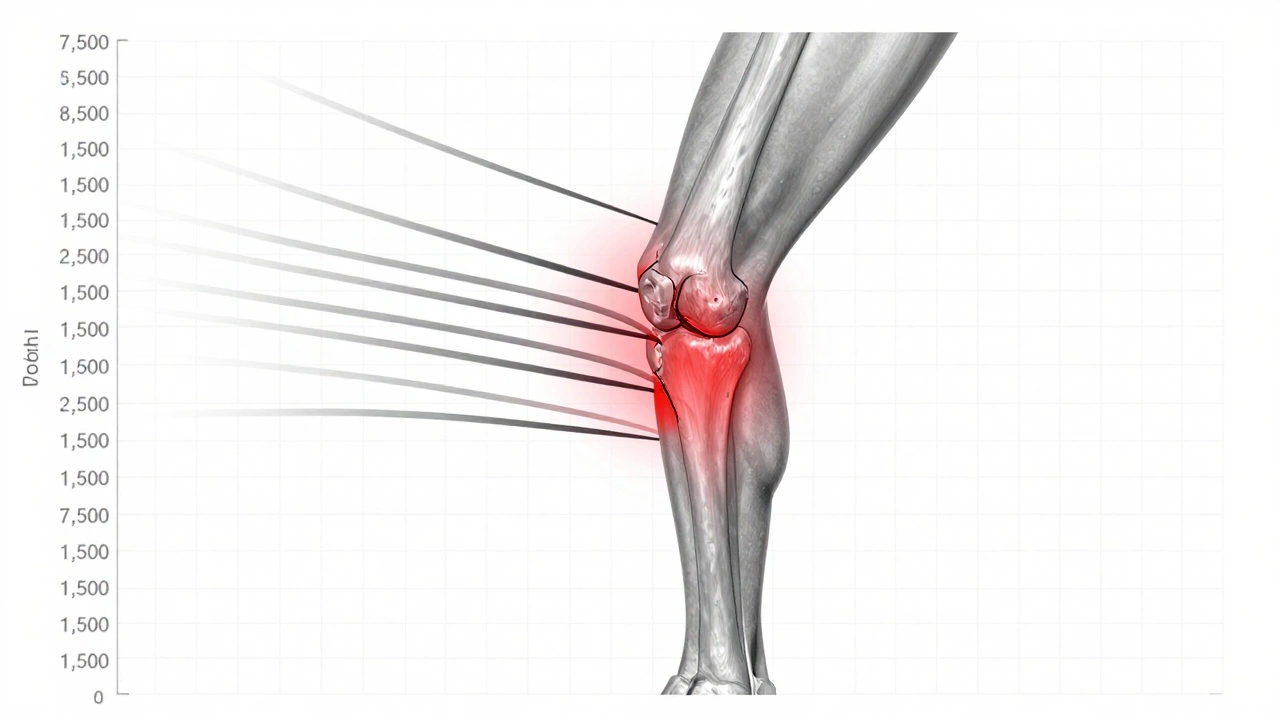
HIIT involves explosive movements: jumps, sprints, kettlebell swings, burpees. These put serious stress on joints, tendons, and connective tissue. Doing them daily without recovery increases your chance of injury dramatically.
Think about your knees. Each jump squat transfers 3 to 5 times your body weight through them. Do that 50 times in a session, five days a week? That’s over 7,500 impacts in a month. No wonder patellar tendonitis and shin splints are common in daily HIIT practitioners.
Shoulder injuries from repetitive overhead movements? Ankle sprains from landing wrong? These aren’t accidents-they’re predictable outcomes of constant strain without recovery.
Hormones Get Out of Balance
Your body doesn’t just recover muscles-it balances hormones. Cortisol, the stress hormone, rises during HIIT. It’s meant to drop after rest. When you train every day, cortisol stays high. That leads to:
- Increased belly fat storage (yes, even if you’re burning calories)
- Disrupted sleep
- Cravings for sugar and carbs
- Lower testosterone and growth hormone levels
A 2023 study from the University of Auckland followed 60 healthy adults doing daily HIIT. After four weeks, 68% showed elevated cortisol levels. 42% reported trouble sleeping. 55% said they felt hungrier than before-even though they were working out more.
Recovery Isn’t Optional
Recovery isn’t just sleep and stretching. It’s rest days. It’s low-intensity movement. It’s letting your nervous system reset.
Instead of doing HIIT every day, try this: three HIIT sessions a week, spaced out by at least 48 hours. On the other days, walk. Do yoga. Swim. Lift light weights. Your body will thank you.
One woman in her 30s from Wellington switched from daily HIIT to three times a week. She lost 4 pounds in six weeks-not because she burned more calories, but because her metabolism stopped being stuck in stress mode. Her energy improved. Her sleep got deeper. Her workouts became stronger.

What You Should Do Instead
Here’s a realistic weekly plan that works better than daily HIIT:
- Monday: HIIT (20 minutes)
- Tuesday: Strength training (full body)
- Wednesday: Active recovery (walk, stretch, foam roll)
- Thursday: HIIT (20 minutes)
- Friday: Low-intensity cardio (cycling, swimming)
- Saturday: HIIT (20 minutes)
- Sunday: Rest
This gives you three hard HIIT sessions, two recovery days, and one full rest day. You’ll see better results, fewer injuries, and more consistent energy.
Who Should Avoid Daily HIIT?
Some people should never do HIIT every day-no matter how motivated they are:
- Anyone with joint pain or past injuries
- Women in the postpartum phase
- People with adrenal fatigue or chronic stress
- Those taking certain medications (like beta-blockers)
- Anyone under 18 or over 60 without clearance
If you’re unsure, talk to a physiotherapist or certified trainer. What works for a 25-year-old athlete might wreck a 40-year-old with a desk job.
The Bottom Line
Doing HIIT every day doesn’t make you fitter-it makes you tired, sore, and at risk of injury. You don’t need to burn out to get results. In fact, the people who get the best results are the ones who rest.
HIIT is powerful. But like any tool, it’s only useful when used correctly. Three times a week, with space to recover, is the sweet spot. Push harder, not more often.
Can I do HIIT every day if I’m already fit?
Even elite athletes don’t do HIIT daily. Top runners and triathletes limit high-intensity sessions to 2-3 times a week. The rest of the week is for recovery, mobility, and low-intensity work. Being fit doesn’t make you immune to overtraining-it just means your body can handle more stress before breaking down. But it still breaks down.
What are signs I’m overtraining from daily HIIT?
Watch for: persistent fatigue, trouble sleeping, irritability, increased resting heart rate, loss of appetite, frequent injuries, or not improving despite working out more. If you notice two or more of these for over two weeks, you’re overtrained. Stop HIIT for at least 5-7 days and focus on walking and rest.
Can I do light cardio every day instead of HIIT?
Yes. Light cardio-like walking, cycling, or swimming at a comfortable pace-is safe and even beneficial daily. It improves circulation, helps recovery, and keeps you active without the stress. Aim for 30-45 minutes at a pace where you can still talk. That’s not HIIT. That’s recovery.
How long should a HIIT session last if I do it 3 times a week?
Keep it under 30 minutes. Most effective HIIT sessions last 15-25 minutes. A 20-minute session with 30 seconds of work and 60 seconds of rest, repeated 8-10 times, is enough. Longer doesn’t mean better. More intensity isn’t worth it if you’re too tired to recover.
Does daily HIIT help with weight loss faster?
Not really. While HIIT burns calories during the workout, daily sessions raise cortisol, which can increase belly fat storage. People who do HIIT 3x/week with rest days often lose more fat over time because their metabolism stays balanced. Consistency with recovery beats daily burnout.