

Beginner HIIT Workout Timer
Workout Settings
High Intensity Interval Training (HIIT) sounds intimidating if you have never done it. You might picture people sprinting until they vomit or lifting heavy weights while gasping for air. That is not what starting out looks like. In fact, doing too much, too soon is the fastest way to get injured or quit entirely. The secret to sticking with HIIT is not going harder; it is going smarter. You need a plan that respects your current fitness level while pushing you just enough to see results.
This guide breaks down exactly how to begin. We will cover the basic structure of a session, how to choose exercises that do not require fancy equipment, and most importantly, how to recover so you can keep showing up. By the end of this, you will have a clear roadmap for your first month of training.
The Core Concept: What Actually Is HIIT?
Before you start moving, you need to understand the mechanics. High Intensity Interval Training is a training methodology that alternates short bursts of intense anaerobic exercise with less intense recovery periods. It is not just "working out hard." It is about specific ratios of work to rest.
For a beginner, the goal is to elevate your heart rate into Zone 4 or Zone 5 during the work intervals. This means you should be breathing heavily and unable to hold a full conversation. During the rest intervals, your heart rate drops back down, allowing you to recover slightly before the next burst. This cycle creates an oxygen debt known as Excess Post-exercise Oxygen Consumption (EPOC). Essentially, your body burns calories at a higher rate for hours after you finish working out because it is trying to restore itself to normal levels.
Here is why this matters for beginners: Efficiency. A well-structured 20-minute HIIT session can provide similar cardiovascular benefits to a 45-minute steady-state jog. However, the stress on your joints and central nervous system is different. Steady-state cardio is low impact but time-consuming. HIIT is high impact (usually) and time-efficient. Understanding this trade-off helps you manage your expectations and schedule.
Setting Up Your First Session: The Golden Rules
Many beginners make the mistake of treating every minute like a race. Do not do this. Your first few weeks are about building neuromuscular coordination and aerobic capacity, not breaking personal records. Follow these three rules to stay safe:
- Frequency: Limit yourself to two sessions per week. HIIT is taxing on your body. You need days in between for recovery. If you try to do it daily, your performance will drop, and your injury risk will skyrocket.
- Duration: Keep total workout time under 30 minutes. This includes warm-up and cool-down. The actual high-intensity intervals should only last 10 to 15 minutes. Quality beats quantity here.
- Intensity: Use the Rate of Perceived Exertion (RPE) scale. On a scale of 1 to 10, your work intervals should feel like an 8 or 9. Your rest intervals should bring you down to a 3 or 4. If you cannot maintain good form, lower the intensity, not the effort.
Consistency is more important than intensity in the beginning. A mediocre workout completed is better than a perfect workout skipped because you were too sore to move.
Choosing Beginner-Friendly Exercises
You do not need a gym membership to start HIIT. In fact, bodyweight exercises are often safer for beginners because they allow you to control the load by changing your leverage rather than adding weight. Here are four foundational movements that build a strong base:
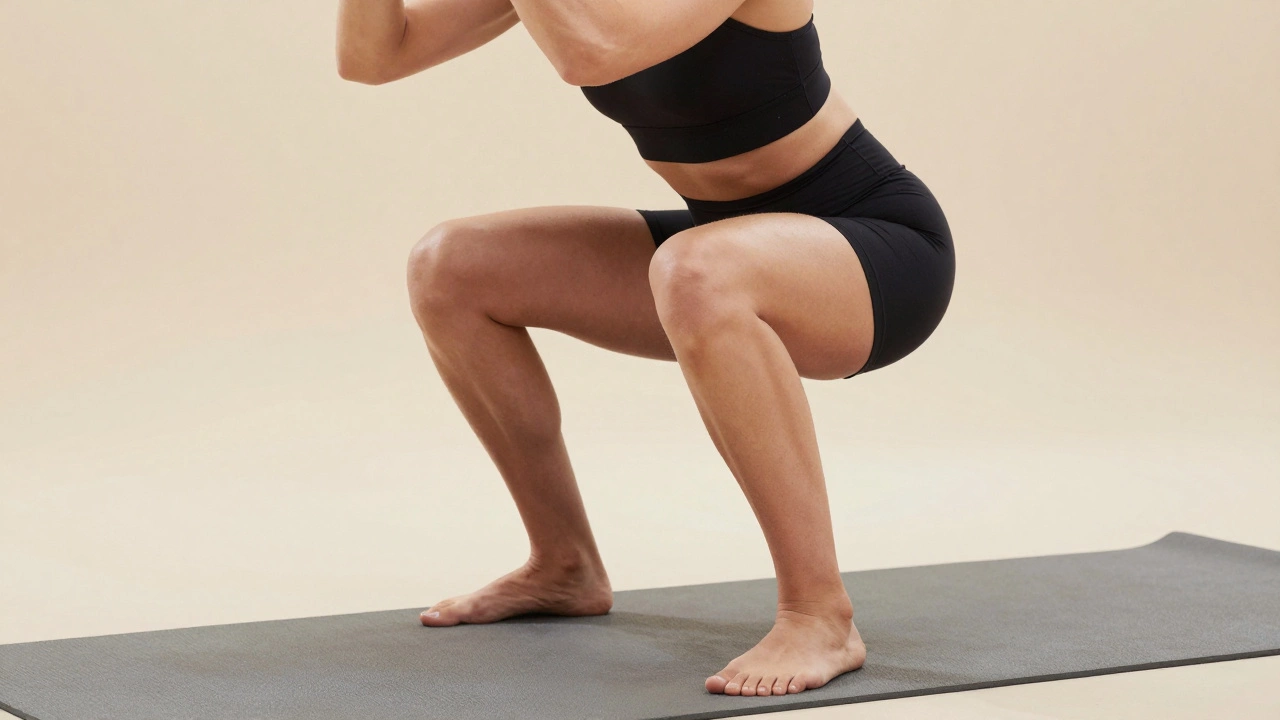
- Bodyweight Squats: Stand with feet shoulder-width apart. Lower your hips back and down as if sitting in a chair. Keep your chest up and knees tracking over toes. This builds leg strength and core stability.
- Incline Push-Ups: Standard push-ups might be too hard initially. Place your hands on a sturdy bench, countertop, or wall. Keep your body in a straight line from head to heels. Lower your chest to the surface and push back up. This protects your shoulders and lower back.
- Reverse Lunges: Step backward into a lunge position, lowering your back knee toward the ground. This is easier on the knees than forward lunges and improves balance.
- Glute Bridges: Lie on your back with knees bent and feet flat on the floor. Lift your hips toward the ceiling, squeezing your glutes at the top. This activates the posterior chain without straining the lower back.
Avoid complex plyometric moves like box jumps or burpees in your first month. These require significant joint resilience and coordination. Master the basics first. Once you can perform 15 clean repetitions of each movement without fatigue, you can start increasing the speed or adding complexity.
Structuring Your Workout: A Sample Plan
Confusion about structure is the biggest barrier to entry. You do not need a complicated timer app. A simple phone stopwatch works fine. Here is a proven template for your first four weeks:
| Phase | Activity | Duration | Notes |
|---|---|---|---|
| Warm-Up | Light Jogging & Dynamic Stretching | 5 Minutes | Arm circles, leg swings, torso twists. Get blood flowing. |
| Work Interval | Choose 1 Exercise (e.g., Squats) | 30 Seconds | Move with control. Focus on form, not speed. |
| Rest Interval | Active Rest (Walking in place) | 30 Seconds | Keep moving lightly to flush out lactate. |
| Repeat | Cycle through 4 Exercises | 12 Minutes Total | Do 2 rounds of all 4 exercises. |
| Cool Down | Static Stretching | 5 Minutes | Hold stretches for 30 seconds each. Focus on legs and chest. |
Notice the 1:1 work-to-rest ratio. This is crucial for beginners. As you get fitter over the next few months, you can change this to 2:1 (60 seconds work, 30 seconds rest) or even 3:1. But start equal. It allows you to complete the session with dignity and proper technique.
Recovery: The Hidden Half of Training
If training is digging a hole, recovery is filling it back up so you can dig deeper next time. Many beginners ignore this and wonder why they feel tired, achy, and unmotivated. Recovery is not lazy; it is physiological necessity.
First, prioritize sleep. Aim for 7 to 9 hours per night. Growth hormone, which repairs muscle tissue, is released primarily during deep sleep. Without it, your muscles cannot adapt to the new stress of HIIT.
Second, nutrition plays a massive role. You do not need expensive supplements. Focus on protein intake within two hours of your workout. Chicken, eggs, tofu, or Greek yogurt are excellent sources. Protein provides the amino acids needed to repair micro-tears in your muscle fibers. Also, hydrate adequately. Dehydration reduces power output and increases perceived exertion, making your workouts feel harder than they are.
Third, listen to your body. There is a difference between discomfort and pain. Discomfort is burning muscles and heavy breathing. Pain is sharp, localized, and often in joints or tendons. If you feel pain, stop immediately. Modify the exercise or take an extra rest day. Pushing through joint pain leads to injuries that can sideline you for months.

Common Mistakes to Avoid
Even with a good plan, pitfalls exist. Watch out for these common errors:
- Momentum Over Muscle: Swinging your arms wildly to complete reps faster. This cheats the target muscles and strains your spine. Slow down. Control the eccentric (lowering) phase of every movement.
- Skiping the Warm-Up: Jumping straight into sprints with cold muscles is a recipe for strain. Always spend five minutes raising your core temperature.
- Comparing Yourself to Others: Social media fitness influencers are not your benchmark. Compare yourself to who you were last week. Progress is personal.
- Ignoring Breathing: Holding your breath during exertion spikes blood pressure. Exhale during the effort phase (pushing up, standing up) and inhale during the release phase.
Avoiding these mistakes keeps you in the game long enough to see the transformation you want.
Progressing Beyond the Basics
After four to six weeks, your body will adapt. The same 30-second squats will feel easier. This is called accommodation. To continue seeing results, you must apply progressive overload. You can do this in three ways:
- Increase Time Under Tension: Extend work intervals from 30 to 40 seconds while keeping rest at 30 seconds.
- Add Complexity: Swap bodyweight squats for jump squats or reverse lunges for single-leg deadlifts.
- Reduce Rest: Keep work intervals at 30 seconds but cut rest to 20 seconds.
Change only one variable at a time. If you increase intensity and decrease rest simultaneously, you will likely burn out. Small, incremental changes lead to sustainable long-term fitness.
Can I do HIIT if I am overweight?
Yes, but you need to modify the impact. High-impact moves like jumping can stress your knees and ankles. Substitute running in place with marching, and swap jump squats for regular squats or chair dips. The intensity comes from the effort, not the elevation. Focus on maintaining a high heart rate through brisk movement rather than explosive jumping.
How many times a week should a beginner do HIIT?
Start with two non-consecutive days per week. For example, Tuesday and Friday. This gives your body ample time to recover. You can fill the other days with low-intensity steady-state cardio (like walking) or strength training, but avoid high-intensity efforts on those days.
Do I need special equipment for beginner HIIT?
No. Bodyweight exercises are sufficient for the first few months. A yoga mat and comfortable shoes are all you really need. If you want to add resistance later, dumbbells or resistance bands are affordable and effective options.
Is HIIT better than steady-state cardio for fat loss?
HIIT is more time-efficient and may boost metabolism post-workout due to EPOC. However, steady-state cardio burns more calories during the actual session if the duration is longer. The best approach for fat loss is a combination of both, paired with a calorie-controlled diet. Consistency with whichever method you enjoy more is the true winner.
What should I eat before a HIIT workout?
Eat a light snack rich in carbohydrates 30 to 60 minutes before your session. Examples include a banana, a slice of toast with honey, or a small bowl of oatmeal. Avoid heavy fats or proteins right before working out, as they digest slowly and can cause stomach discomfort during intense movement.