
5-Minute Home Workout Calculator
Your Micro-Workout Setup
Your Personalized Routine
3 squats while your coffee brews
1 minute of marching in place
You’ve said it a hundred times: "I’ll start tomorrow." But tomorrow never comes. You scroll through social media, watch one more episode, and lie there thinking, "I’m just too lazy." Sound familiar? Here’s the truth: you’re not lazy. You’re overwhelmed, confused, and stuck in a loop of guilt and inaction. The fix isn’t more willpower. It’s simpler than that.
Stop thinking about working out. Start moving.
Most people fail because they treat exercise like a chore they have to "get around to." But your brain doesn’t work that way. It doesn’t respond to big goals like "get fit" or "lose weight." It responds to tiny, automatic actions. The secret isn’t motivation-it’s momentum.
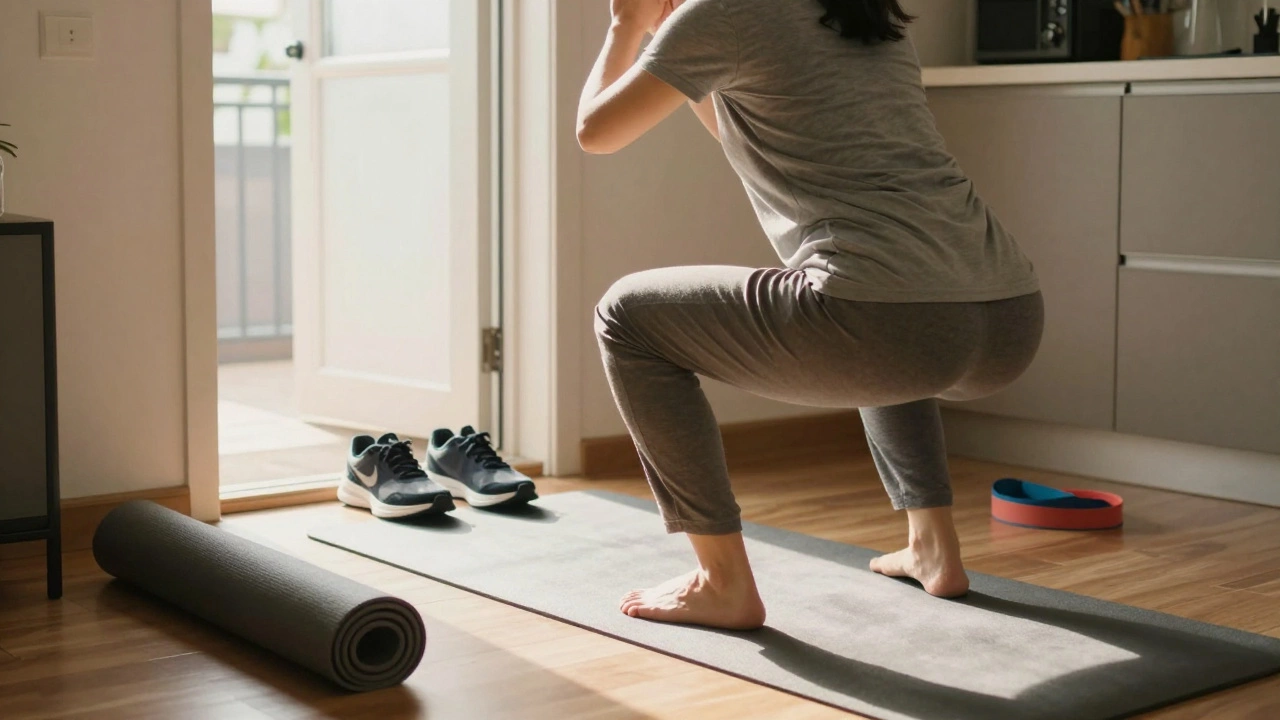
Try this: right now, stand up. Do five bodyweight squats. That’s it. No warm-up. No gear. No app. Just five squats. You didn’t need to decide to "work out." You just moved. That’s the trick. Once you start moving, your brain stops seeing it as a task and starts seeing it as a habit. Studies show that people who begin with just two minutes of daily activity are 80% more likely to stick with it long-term than those who aim for an hour.
Your environment is your biggest enemy-or your best ally
You don’t lack discipline. You lack design. If your workout clothes are buried in a drawer, you won’t wear them. If your phone is on the couch next to you, you’ll scroll instead of squat. Your home is your gym, but only if you make it easy.
Here’s how to set it up:
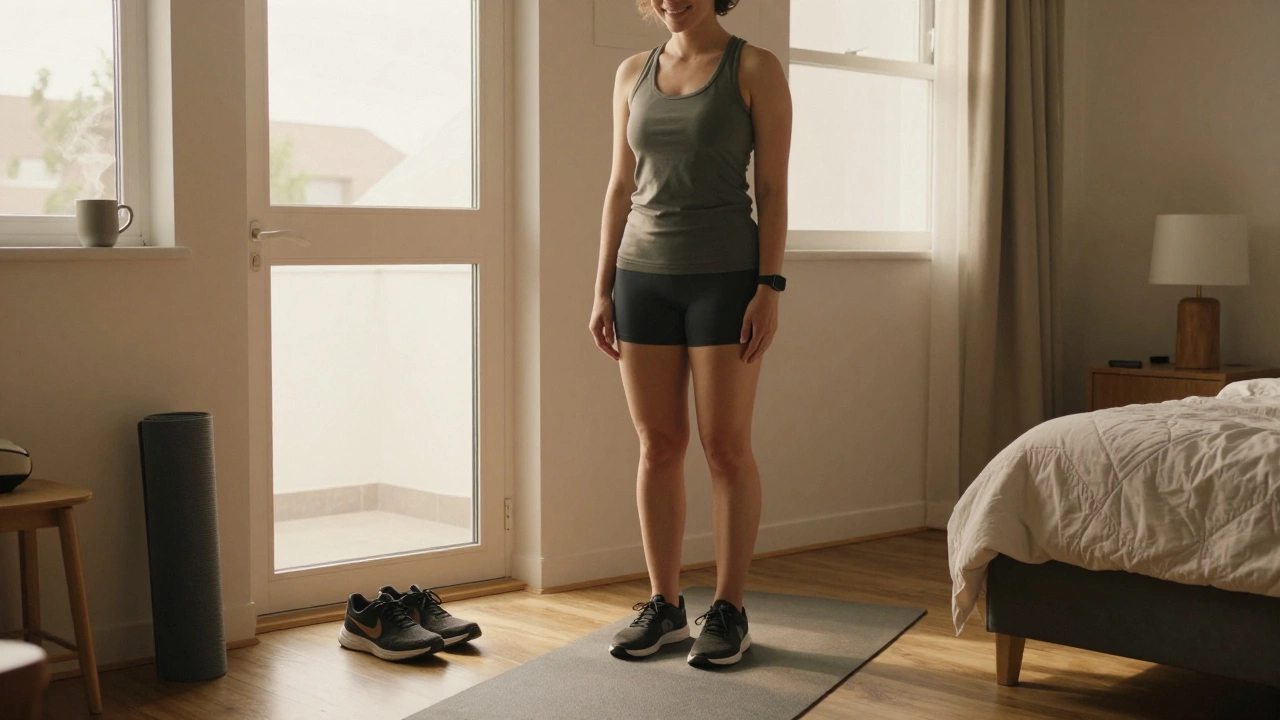
- Leave your sneakers by the door. Not in the closet. By the door.
- Keep a yoga mat rolled out in the living room. Not tucked under the bed.
- Put your resistance band on the kitchen counter. Where you see it every time you grab a snack.
- Turn off notifications for 15 minutes after you wake up. No emails. No TikTok. Just movement.
This isn’t about being perfect. It’s about making the right choice the easiest one. When your environment supports action, your brain stops fighting you.
Forget motivation. Use triggers instead.
Motivation is a myth. It comes after you start, not before. What you need are triggers-small, reliable cues that tell your brain it’s time to move.
Here are three that actually work:
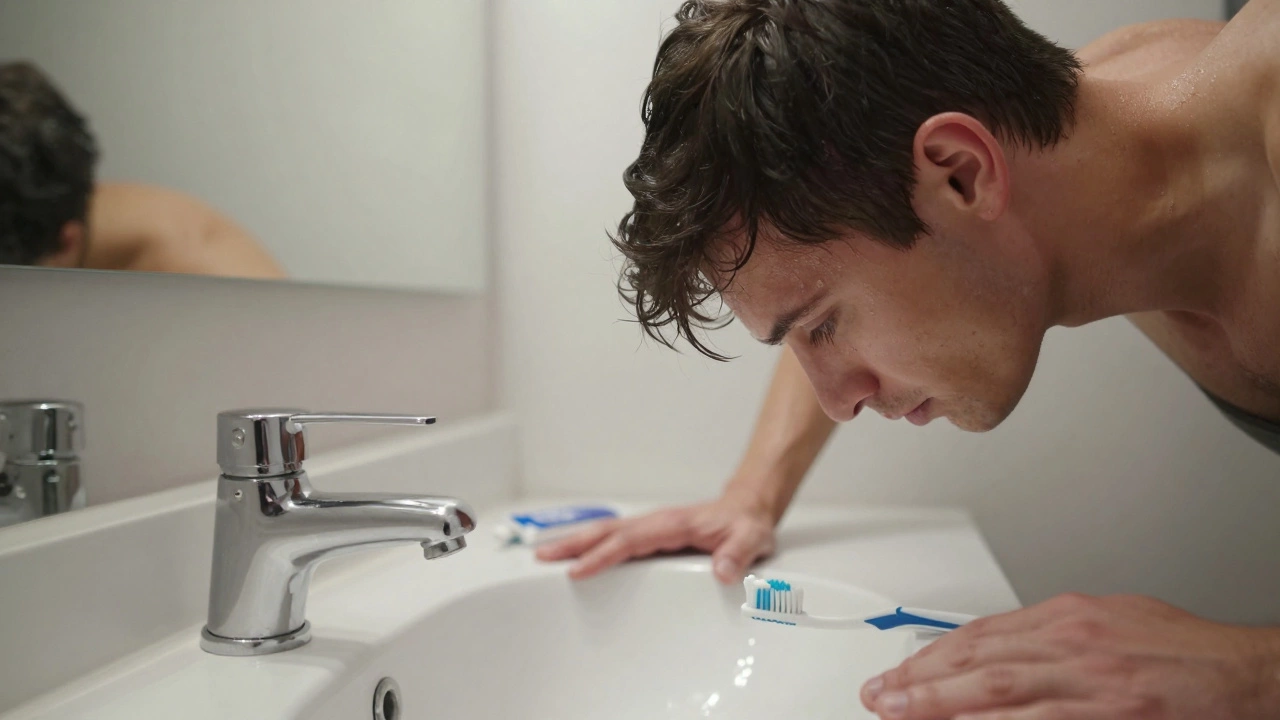
- After you brush your teeth in the morning, do three push-ups against the bathroom sink.
- Right after you pour your coffee, do 10 heel raises while you wait for it to brew.
- Before you sit down to watch TV, do one minute of marching in place.
These aren’t workouts. They’re rituals. They take less than 60 seconds. But they rewire your brain. Over time, your body starts expecting movement after these daily actions. You don’t have to think about it. You just do it.
Start with zero equipment
You don’t need dumbbells. You don’t need a treadmill. You don’t even need a mat. Your body is the best piece of equipment you own.
Here’s a real, no-excuses routine you can do in under 10 minutes:
- Wall sits (30 seconds)
- Bodyweight squats (15 reps)
- Push-ups (as many as you can-even if it’s three)
- Plank (20 seconds)
- Step-back lunges (10 per leg)
Do this three times a week. That’s it. No fancy apps. No tracking. No pressure. Just three days. On the fourth day, you might feel stronger. On the fifth, you might feel proud. That’s when the shift happens. You’re not doing it because you "should." You’re doing it because you feel better after.
Track progress differently
Forget weighing yourself or counting calories. Those numbers don’t tell you if you’re changing. They just make you feel worse.
Instead, track this:
- How many days in a row did you move?
- Did you do more reps this week than last?
- Did you feel less tired after your routine?
These are the real signs of progress. One person I know started with five squats a day. Three months later, she did 50. She didn’t lose 20 pounds. But she could climb stairs without breathing hard. She could play with her kids without needing a nap. That’s the win.
What to do when you skip a day
You will miss. Maybe tomorrow. Maybe next week. That’s not failure. It’s data.
When you skip:
- Don’t say, "I blew it." Say, "What got in the way?"
- Was it too early? Try doing it after lunch.
- Was it too long? Cut it to two minutes.
- Were you too tired? Just stretch for 30 seconds.
There’s no such thing as a bad workout. Only a missed opportunity to learn. Every time you get back on track-even after a week off-you’re building resilience. That’s more important than any set of reps.
It’s not about getting fit. It’s about feeling alive.
You don’t need to look like a fitness influencer. You just need to feel like yourself again. The kind of yourself who walks without groaning, who carries groceries without stopping, who gets up after sitting too long without needing to stretch for five minutes.
Home workouts aren’t about perfection. They’re about presence. They’re about showing up for your body, even when you don’t feel like it. And when you do, you start noticing things: your breath gets deeper. Your shoulders stop aching. You sleep better. You feel calmer.
That’s the real reward. Not six-pack abs. Not a lower number on the scale. But the quiet, steady feeling that you’re taking care of yourself. That’s the opposite of lazy. That’s power.
Start today. Not tomorrow.
Right now, stand up. Do one squat. One. Just one. That’s all you need to do today. No more. No less.
If you do that, you’ve already won.
What if I have no time to work out?
You don’t need time-you need two minutes. Do three squats while your coffee brews. Do wall sits while you brush your teeth. Movement doesn’t require blocks of time. It requires tiny moments you already have.
Do I need equipment to start?
No. Your body weight is enough. Squats, push-ups, lunges, planks-these need nothing but space. Resistance bands and dumbbells help later, but they’re not the start. Start with what you have: your feet, your floor, your breath.
How long until I see results?
You’ll feel different in 7-10 days-more energy, less stiffness. Physical changes like stronger arms or better posture show up in 4-6 weeks if you move three times a week. But the real change? You’ll stop dreading it. That happens faster.
What if I hate working out?
You don’t have to love it. You just have to do it. Think of it like brushing your teeth. You don’t enjoy it every time, but you do it because it matters. Movement isn’t about fun. It’s about function. After a few weeks, you might even start looking forward to it-not because it’s fun, but because you feel better after.
How do I stay consistent?
Link it to something you already do. After brushing your teeth. After your morning coffee. Before dinner. Make it part of your routine, not an extra task. Consistency comes from habit, not willpower. And habits stick when they’re simple, visible, and tied to existing actions.