

Running Recovery Calculator
How Safe Is Your Running Routine?
Answer these questions to find out if running 3 miles daily is appropriate for you based on your personal health and fitness factors.
Running 3 miles a day sounds simple. Lace up, step out, and do it. But is it actually good for you? It depends. Not on your age, not on your shoe brand, not even on how fast you go. It depends on your body and what you’re doing the rest of the day.
What 3 Miles a Day Actually Does to Your Body
Three miles is about 4.8 kilometers. For most people, that’s 30 to 45 minutes of steady running. Do that every day, and over time, your heart gets stronger. Your lungs take in more oxygen. Your muscles learn to use fuel more efficiently. Studies from the American Heart Association show that people who run regularly cut their risk of heart disease by up to 35%. That’s not magic - it’s biology.
But here’s the catch: your body doesn’t rebuild itself while you’re running. It rebuilds while you rest. If you’re running 3 miles every single day without a break, you’re not giving your tendons, joints, and muscles time to recover. A 2023 study in the British Journal of Sports Medicine found that runners who took at least one rest day per week had 42% fewer overuse injuries than those who ran daily without pause.
Who Should Avoid Running 3 Miles Every Day
Not everyone should do this. If you’re new to running, your knees, hips, and shins aren’t ready for daily pounding. I’ve seen too many beginners burn out after two weeks - not because they lacked motivation, but because they ignored their body’s warning signs. Shin splints, plantar fasciitis, stress fractures - these aren’t rare. They’re predictable.
Also, if you’re carrying extra weight, running 3 miles daily can be brutal on your joints. A 2024 study from the University of Auckland found that runners over 200 pounds who ran daily without strength training had a 68% higher chance of developing knee pain within six months. That doesn’t mean you can’t run. It means you need to start slower, mix in walking, and build strength first.
And if you’re already injured - even a minor tweak in your ankle or lower back - running daily will make it worse. No amount of willpower fixes a torn tendon. Rest isn’t weakness. It’s strategy.
Who Benefits Most From This Routine
People who’ve been running for over a year, have strong legs and core, and already do some strength training? They often thrive on a 3-mile daily run. It becomes a rhythm. A mental reset. A way to start the day clear-headed.
Take Sarah, a 34-year-old teacher from Tauranga. She started running 2 miles three times a week. After six months, she added a fourth day, then made it daily. She didn’t push speed. She didn’t chase distance. She just kept the pace easy - about 10 minutes per mile. Her energy levels shot up. Her sleep improved. Her anxiety dropped. She didn’t lose weight, but she felt stronger than ever.
That’s the sweet spot: consistency over intensity. Running 3 miles at a conversational pace, day after day, builds endurance without burning you out.
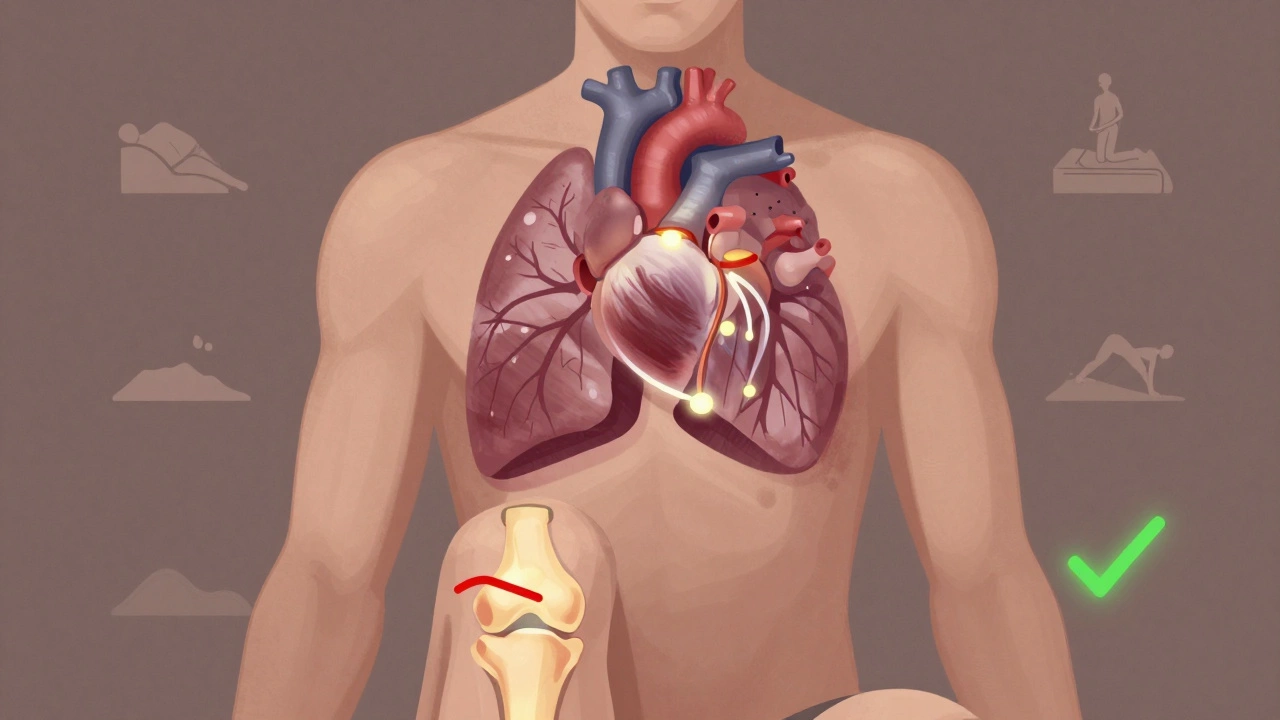
The Hidden Risks: Overuse and Mental Burnout
Running 3 miles every day sounds healthy. But it can become a trap. When you tie your self-worth to a daily run - when you feel guilty if you miss one - you’re no longer running for health. You’re running for punishment.
That’s mental burnout. And it’s real. A 2025 survey of 1,200 regular runners in New Zealand found that 37% of those who ran daily reported feeling “exhausted by their own routine.” Many said they ran even when sick, injured, or emotionally drained. That’s not discipline. That’s compulsion.
Also, running the same route, same pace, every day, trains your body to expect the same stress. That’s fine for a while. But your body adapts. Then it stops improving. Plateaus happen. And when they do, people either quit… or push harder. And that’s how injuries start.
How to Make It Work: The Smart 3-Mile Rule
You don’t need to run 3 miles every day to get the benefits. You need to run smart.
- Run easy - Your pace should let you talk in full sentences. If you’re gasping, you’re going too fast.
- Take at least one full rest day per week - Walk, stretch, or just sit. Let your body repair.
- Do strength training twice a week - Squats, lunges, planks. Stronger muscles protect your joints.
- Change your route every few weeks - Hills, trails, sidewalks. Variety prevents overuse.
- Listen to your body - If your knee aches, if your feet feel heavy, if you’re exhausted before you even lace up - take a day off. It’s not quitting. It’s recalibrating.
Some weeks, you’ll run 3 miles five days. Other weeks, you’ll run three days and walk two. That’s not failure. That’s intelligent training.
What to Expect After 30 Days
If you stick to this plan - easy pace, one rest day, strength work - here’s what most people notice after a month:
- Your resting heart rate drops by 5-8 beats per minute
- You sleep deeper and wake up more refreshed
- Your mood improves - even on rainy Auckland mornings
- Stairs feel easier
- You stop dreading the run. You start looking forward to it
But here’s what you won’t see: massive weight loss. Running 3 miles a day burns about 300-350 calories. That’s one banana. It’s not a magic fat-burning tool. If you want to lose weight, you need to look at your food. Running helps, but it’s not the main player.
What Comes Next?
After 3-6 months of consistent running, you might want to try something new. Add a long run on weekends. Try interval training once a week. Or just keep going - because sometimes, the best thing you can do is keep showing up, one mile at a time.
Running 3 miles a day isn’t a rule. It’s a tool. Use it wisely. Listen to your body. Rest when you need to. And don’t let anyone tell you that you’re not “real” if you skip a day. Real runners know: consistency beats perfection every time.
Is running 3 miles a day too much for a beginner?
Yes, for most beginners. Starting with 3 miles daily puts too much stress on joints and tendons that haven’t adapted yet. Instead, begin with 1-2 miles every other day. Add walking breaks if needed. Build up slowly over 8-12 weeks. Strength training and stretching are just as important as running at this stage.
Will running 3 miles a day help me lose weight?
It can help, but not on its own. Running 3 miles burns roughly 300-350 calories - about the same as a slice of pizza or a large coffee with sugar. To lose weight, you need to create a calorie deficit. That means paying attention to what you eat. Running improves metabolism and appetite control, but food choices still matter most.
Do I need special shoes to run 3 miles every day?
You need good shoes, not necessarily expensive ones. Replace them every 300-500 miles. If the midsole feels flat, or the tread is worn unevenly, it’s time. Worn-out shoes increase injury risk. Get fitted at a running store - don’t just buy the cheapest pair. Your feet will thank you.
Can I run 3 miles a day if I have knee pain?
Not without addressing the cause. Knee pain from running is usually due to weak hips, tight calves, or poor form - not the miles themselves. See a physiotherapist first. They’ll check your movement patterns and give you exercises to fix the root issue. Often, you can keep running - but only after strengthening supporting muscles.
Should I run on an empty stomach in the morning?
It’s fine if you’re used to it, but not necessary. If you feel dizzy, weak, or overly tired, eat a small snack like a banana or a handful of oats 30 minutes before. Your body needs fuel to run efficiently. Running on empty doesn’t burn more fat - it just makes you run slower and increases injury risk.
What if I miss a day? Am I ruined?
No. Missing one day doesn’t undo progress. In fact, rest days are part of the plan. If you miss a day because you’re tired, sick, or just need it - take it. Consistency over months matters more than perfection over weeks. One missed run won’t change your fitness. Quitting because you missed one might.