

Cardio Overtraining Risk Assessment Tool
Assess Your Cardio Routine
Answer these questions to determine if you might be overtraining
Running for an hour every day sounds like something a marathoner would do. But what if you’re not training for a race? What if you’re just trying to stay healthy, lose a few pounds, or clear your head after work? Is pushing through 60 minutes of cardio daily actually helping-or is it wearing you down?
What Happens When You Do an Hour of Cardio Daily
Doing an hour of cardio every day can burn between 500 and 800 calories, depending on intensity and body weight. That’s a lot. For someone trying to lose weight, that sounds like a win. But your body doesn’t just burn calories-it also breaks down muscle, stresses your joints, and floods your system with cortisol, the stress hormone. Over time, this can backfire.
Take a 35-year-old office worker who starts running 60 minutes a day after watching a fitness influencer. At first, they feel great. Energy up, sleep better, pants fit looser. But by week four, their knees ache. They’re constantly tired. Their appetite spikes, and they start craving sugar. They’re not losing weight anymore. They’re just exhausted.
This isn’t rare. A 2023 study from the University of Auckland followed 1,200 adults doing daily cardio for six months. Those who did 60+ minutes daily had higher rates of overuse injuries-especially in the knees, hips, and lower back-than those who did 30 to 45 minutes. The group doing longer sessions also showed elevated resting heart rates and signs of chronic inflammation.
Why More Isn’t Always Better
Your heart is a muscle. Like any muscle, it needs rest to get stronger. Doing intense cardio every single day without recovery doesn’t make your heart fitter-it makes it tired. The American Heart Association recommends 150 minutes of moderate cardio per week. That’s 30 minutes, five days a week. Not an hour every day.
Think of it like this: if you lifted heavy weights for an hour every day, you wouldn’t expect to grow stronger without rest. Cardio is the same. Your body repairs and adapts during rest, not during the workout. Constant cardio without recovery can lead to overtraining syndrome: fatigue, irritability, poor sleep, and even a weakened immune system.
There’s also the risk of muscle loss. When you do long-duration cardio without enough protein or strength training, your body starts using muscle for fuel. That lowers your metabolism. You end up burning fewer calories at rest-even if you’re burning a ton during your run.
Who Might Actually Benefit from an Hour of Daily Cardio
Not everyone should avoid an hour of daily cardio. Some people thrive on it. Professional athletes, endurance competitors, and highly active individuals often train this way-but they’re not doing it alone.
They have:
- Structured recovery days built into their schedule
- Regular blood work to monitor cortisol and inflammation
- Strength training to protect joints and preserve muscle
- Nutrition plans with enough calories and protein
- Access to physiotherapists and coaches
For the average person, that level of support doesn’t exist. And without it, an hour a day becomes a trap.
There’s also a psychological side. People who do long daily cardio often feel guilty if they miss a day. It turns exercise into a chore, not a tool for health. That guilt can lead to burnout-or worse, binge eating to compensate.
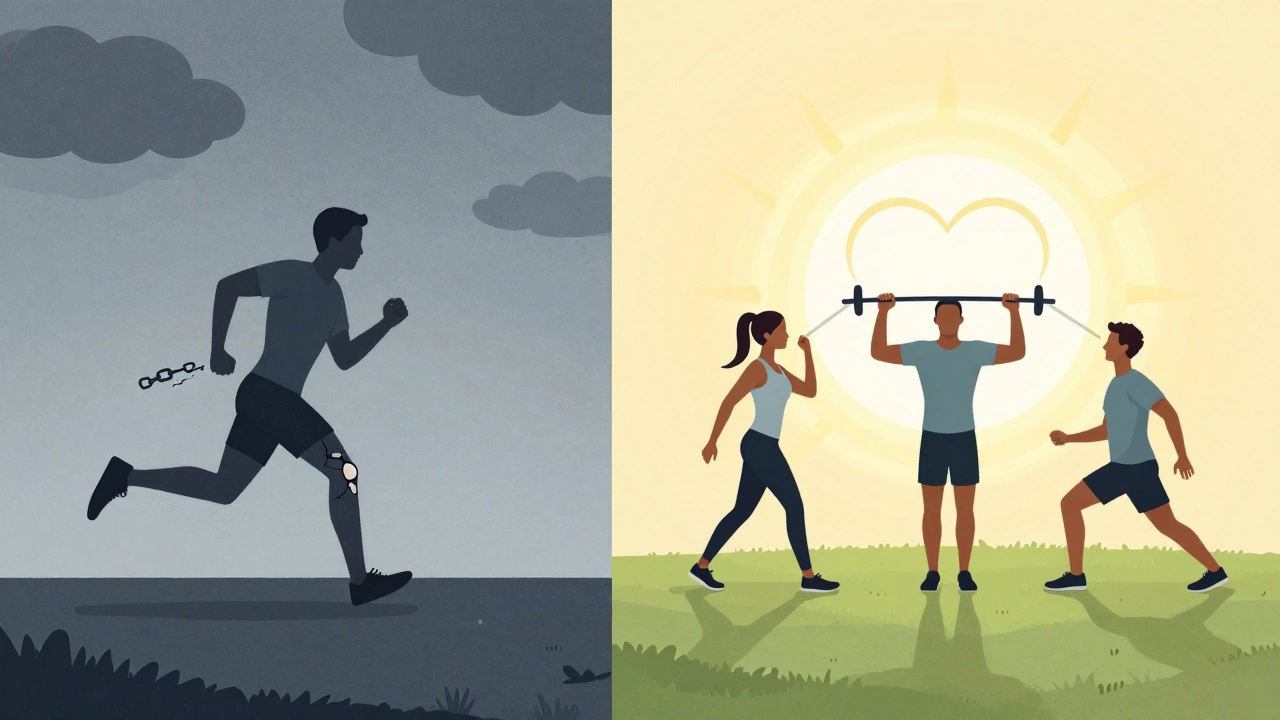
What You Should Be Doing Instead
You don’t need an hour of cardio every day to get fit, lose weight, or improve heart health. Here’s a better plan:
- Do 30 to 45 minutes of moderate cardio, 4 to 5 days a week. Brisk walking, cycling, swimming, or dancing count. Your heart rate should be high enough to talk in short sentences, but not so high you can’t speak at all.
- Add two days of strength training. Squats, push-ups, rows, and planks help protect your joints and boost metabolism. Muscle burns more calories at rest than fat.
- Take one full rest day. Let your body recover. Walk lightly if you want, but no intense movement.
- Listen to your body. If you’re sore, tired, or irritable, skip the cardio. Move less, not more.
This approach gives you the same heart health benefits as daily cardio-with far less risk of injury or burnout. A 2024 meta-analysis in the British Journal of Sports Medicine found that people doing 150 minutes of cardio per week had the lowest risk of heart disease, stroke, and early death. Going beyond that didn’t add much benefit-and sometimes increased risk.
Signs You’re Doing Too Much Cardio
How do you know if you’re overdoing it? Watch for these signs:
- Constant fatigue, even after a good night’s sleep
- Sleeping more than usual or having trouble falling asleep
- Increased resting heart rate (check it first thing in the morning)
- Frequent injuries: shin splints, knee pain, tendonitis
- Loss of motivation or dreading workouts
- Cravings for sugar or junk food, even if you’re eating enough
- Women: missed or irregular periods
If you’re seeing two or more of these, it’s time to cut back. Not because you’re weak-it’s because your body is telling you it needs a break.
Cardio Isn’t the Only Path to Health
Many people believe cardio is the golden ticket to fitness. But health isn’t just about heart rate. It’s about strength, mobility, balance, and recovery too.
One study tracked two groups for a year: one did only cardio, the other did cardio plus strength training. The strength group lost the same amount of fat-but kept 30% more muscle. They also had fewer injuries and better bone density.
Walking 20 minutes after dinner, doing bodyweight squats while brushing your teeth, or stretching before bed-all of these add up. You don’t need to sweat for an hour to be healthy.
Final Thought: Balance Over Brutality
Cardio is great. But it’s not a punishment. It’s not a test of willpower. It’s a tool. And like any tool, it works best when used wisely.
Instead of asking, "Is an hour of cardio every day too much?" ask yourself: "What kind of movement makes me feel energized, not drained?" If your answer is "I feel better after a 30-minute walk," then stick with that. If you love running for an hour and feel amazing afterward, fine-but make sure you’re eating enough, sleeping well, and lifting weights twice a week.
Long-term health isn’t about pushing yourself to the edge every day. It’s about showing up consistently, without burning out. That’s how you stay active for life-not just for the next six months.
Is it safe to do cardio every day?
Yes, but only if you’re doing moderate activity and giving your body time to recover. Walking, cycling, or swimming at a steady pace for 30 to 45 minutes daily is generally safe. But if you’re doing high-intensity cardio like running or HIIT every day, you’re increasing your risk of injury and overtraining. Most people benefit more from 4 to 5 days a week with rest or active recovery on other days.
Can daily cardio help me lose weight?
It can, but it’s not the most effective strategy long-term. Burning 600 calories a day sounds great, but your body adapts. Your metabolism slows, hunger increases, and muscle loss can happen. The best weight loss approach combines moderate cardio (3-5 days a week) with strength training and a balanced diet. That way, you burn fat while keeping muscle and avoiding rebound hunger.
Does too much cardio hurt your heart?
For most people, no. But extreme endurance exercise-like running marathons daily or doing 90+ minutes of high-intensity cardio every day-has been linked in some studies to temporary heart strain and increased risk of atrial fibrillation in middle-aged men. This doesn’t mean cardio is dangerous. It means pushing past your body’s limits daily can be. Stick to moderate intensity and listen to your body.
What’s better: 1 hour of cardio or 30 minutes of HIIT?
For most people, 30 minutes of HIIT is better. HIIT (High-Intensity Interval Training) burns similar or more calories than steady-state cardio in half the time. It also boosts metabolism for hours after the workout and preserves muscle better. Plus, it’s easier to stick with. You’re less likely to dread a 30-minute HIIT session than an hour-long jog.
Should I do cardio on rest days?
If you’re resting because you’re tired or sore, skip intense cardio. But light movement like a 20-minute walk, gentle yoga, or stretching is fine-and even helpful. Active recovery improves circulation and reduces stiffness without stressing your body. Don’t confuse rest with doing nothing. Rest means recovery, not zero movement.