

Personalized Belly Fat Workout Generator
Configure Your Plan
Select your preferences and click generate to see your personalized workout schedule.
You probably want a magic bullet. You’ve seen the ads promising that ten minutes of crunches a day will melt away your stubborn belly fat by next Tuesday. It’s tempting, especially when you’re staring at that soft layer around your midsection in the mirror. But here is the hard truth: no single exercise burns belly fat specifically. Your body doesn’t work like a remote control where you can select "abdomen" to lose weight there.
However, that doesn’t mean you’re stuck. There are specific types of movements and workout structures that create the metabolic environment needed to burn visceral fat-the dangerous deep fat surrounding your organs-and reveal your abs. The key isn’t just doing sit-ups; it’s combining high-intensity effort with full-body strength training and strategic nutrition. Let’s break down exactly what works, based on current exercise physiology, so you can stop wasting time on ineffective routines.
The Myth of Spot Reduction
Before we get into the best exercises, we need to kill the myth of spot reduction. This is the idea that exercising a specific muscle group burns the fat directly overlying it. If this were true, people with large thighs would just do endless leg presses to slim them down. It doesn’t work that way.
Fat loss is systemic. When you create a calorie deficit (burning more energy than you consume), your body pulls from fat stores all over. Genetics determine where you lose fat first and last. For many men, the belly is often the last place fat leaves. For women, it might be the hips or thighs. Understanding this saves you frustration. You don’t need to do 500 crunches; you need to lower your overall body fat percentage through efficient, whole-body workouts.
Why Visceral Fat Is Different
Not all belly fat is created equal. There are two main types:
- Subcutaneous fat: This is the pinchable fat under your skin. It’s annoying, but less harmful to your health.
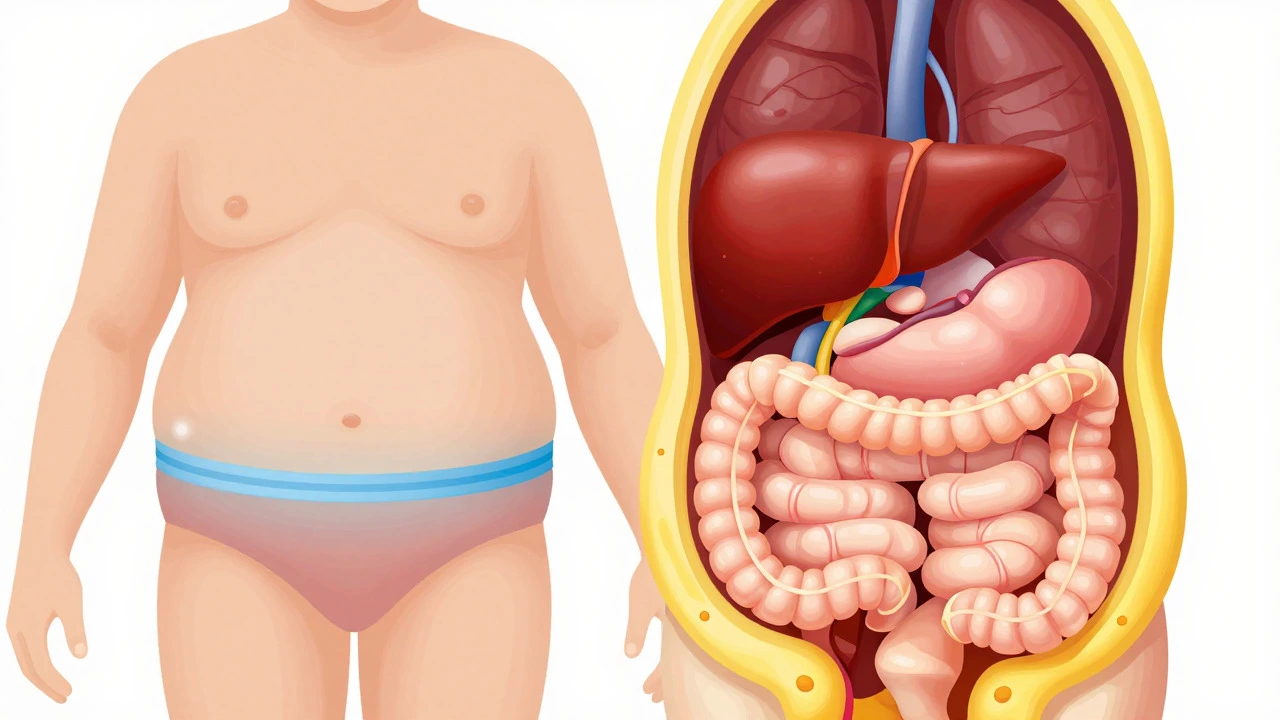
- Visceral fat: This sits deeper, wrapping around your liver, pancreas, and intestines. It’s metabolically active, meaning it releases hormones and inflammatory substances that increase your risk of type 2 diabetes, heart disease, and other issues.
The good news? Visceral fat is actually easier to lose than subcutaneous fat. It responds quickly to changes in diet and exercise. Because it’s highly vascularized (lots of blood flow), it’s very sensitive to adrenaline and noradrenaline-the hormones released during intense exercise. This makes high-intensity workouts particularly effective for targeting this dangerous fat depot.
High-Intensity Interval Training (HIIT): The Fat Burner
If you only have twenty minutes a day, High-Intensity Interval Training (HIIT) is your best friend. HIIT involves short bursts of near-maximum effort followed by brief recovery periods. A typical session might look like 30 seconds of sprinting (or burpees) followed by 30 seconds of walking.
Why does HIIT crush belly fat?
- EPOC Effect: After a HIIT session, your body continues to burn calories at an elevated rate for hours as it repairs itself and restores oxygen levels. This is called Excess Post-exercise Oxygen Consumption.
- Hormonal Response: The intensity spikes catecholamines (adrenaline), which mobilize fatty acids from those visceral fat stores.
- Time Efficiency: You can achieve similar fat-loss results in 15-20 minutes of HIIT compared to 45-60 minutes of steady-state cardio like jogging.
For home workouts, you don’t need a treadmill. Bodyweight moves like mountain climbers, jump squats, and burpees provide the necessary intensity. Aim for 3-4 sessions per week, keeping rest days in between to prevent burnout.
Strength Training: Building the Engine
Cardio burns calories while you do it. Strength training builds muscle, which burns calories while you sleep. Muscle tissue is metabolically expensive; your body needs energy just to maintain it. By increasing your lean muscle mass, you raise your Basal Metabolic Rate (BMR).
To maximize belly fat loss, focus on compound movements. These are exercises that use multiple joints and muscle groups simultaneously. They recruit more muscle fibers, leading to greater energy expenditure and hormonal benefits (like increased testosterone and growth hormone, which aid fat loss).
Top compound exercises for home workouts include:
- Squats: Engages quads, glutes, hamstrings, and core.
- Lunges: Great for lower body stability and core engagement.
- Push-ups: Works chest, shoulders, triceps, and core.
- Planks: An isometric hold that strengthens the entire anterior chain.
Aim for 3 sets of 8-12 repetitions for each exercise. As you get stronger, add resistance using dumbbells, kettlebells, or even filled water jugs if you’re working out at home.
Core-Specific Exercises: Tightening the Corset
While crunches won’t burn belly fat, they do strengthen the rectus abdominis (the six-pack muscles). Strong core muscles pull your stomach in tighter, improving posture and making your waist appear slimmer even before significant fat loss occurs. Think of your core as a corset; a tighter corset holds everything in better.
Focus on functional core movements rather than isolated flexion:
- Dead Bugs: Excellent for teaching core stability while moving limbs. Lie on your back, arms extended toward ceiling, knees bent at 90 degrees. Lower opposite arm and leg slowly while keeping your lower back pressed into the floor.
- Bird-Dogs: Improves balance and posterior chain strength. On hands and knees, extend opposite arm and leg. Hold for a few seconds, then switch.
- Side Planks: Targets the obliques, which run along the sides of your torso. Strengthening these helps define the waistline.
Incorporate these into your cool-down or alternate them with your strength training days. Consistency here leads to visible toning once the fat layer thins.
| Exercise Type | Primary Benefit | Frequency Recommendation | Equipment Needed |
|---|---|---|---|
| HIIT | Maximizes EPOC & visceral fat mobilization | 3-4 times/week | None (bodyweight) |
| Strength Training | Increases BMR via muscle growth | 3-4 times/week | Dumbbells/Kettlebells (optional) |
| Steady-State Cardio | Calorie burning during activity | 2-3 times/week | Running shoes/Yoga mat |
| Core Isolation | Muscle definition & posture | 2-3 times/week | Yoga mat |

The Role of Nutrition and Cortisol
You cannot out-train a bad diet. Even the most intense HIIT routine won’t help if you’re consuming more calories than you burn. To lose belly fat, you must be in a slight calorie deficit. Focus on whole foods: lean proteins, fiber-rich vegetables, and healthy fats. Reduce processed sugars and refined carbs, which spike insulin-a hormone that promotes fat storage, particularly in the abdominal area.
Also, consider stress. Chronic stress elevates cortisol levels. High cortisol is directly linked to increased visceral fat accumulation. If you’re sleeping poorly and stressed out, your body holds onto belly fat regardless of how many burpees you do. Prioritize 7-9 hours of quality sleep and incorporate relaxation techniques like deep breathing or meditation. In Auckland, where life can move fast, taking ten minutes to decompress is not just mental hygiene-it’s physical strategy.
Sample Home Workout Plan
Here is a simple, effective weekly schedule to target belly fat without needing a gym membership:
- Monday: HIIT Circuit (20 mins). Include burpees, mountain climbers, and jump squats. 40 seconds work, 20 seconds rest.
- Tuesday: Strength Training (Full Body). Squats, push-ups, lunges, rows (with bands or weights). 3 sets of 10 reps.
- Wednesday: Active Recovery. A brisk 30-minute walk or gentle yoga.
- Thursday: HIIT Circuit (20 mins). Try different moves like high knees, tuck jumps, and plank jacks.
- Friday: Strength Training + Core. Repeat Tuesday’s strength routine, adding 3 rounds of dead bugs and side planks.
- Saturday: Fun Activity. Hiking, swimming, or dancing-anything that keeps you moving for 45+ minutes.
- Sunday: Rest. Complete rest or light stretching.
Consistency beats intensity in the long run. Missing one workout won’t ruin your progress, but missing every workout will. Start small, build the habit, and gradually increase the difficulty.
Tracking Progress Beyond the Scale
The scale can be misleading. Muscle weighs more than fat by volume. You might stay at the same weight but lose inches off your waist. Use a tape measure to track your waist circumference every two weeks. Take photos from the front, side, and back monthly. How your clothes fit is also a great indicator. If your jeans feel looser around the waist, you’re winning, even if the number on the scale hasn’t budged much.
Can I lose belly fat in one week?
Losing significant fat in one week is unrealistic and often unhealthy. While you might lose some water weight by cutting carbs and salt, actual fat loss takes time. A safe rate is 0.5 to 1 pound per week. Focus on sustainable habits rather than quick fixes.
Do ab machines really work?
Ab machines can strengthen your abdominal muscles, but they do not burn the fat covering them. Without a calorie deficit and full-body exercise, strong abs will remain hidden under a layer of fat. Compound lifts and HIIT are far more effective for revealing them.
Is walking enough to lose belly fat?
Walking is excellent for health and can contribute to fat loss if it creates a calorie deficit. However, it is less efficient than HIIT or strength training for reducing visceral fat. Combining walking with resistance training yields the best results.
How does sleep affect belly fat?
Poor sleep increases cortisol and ghrelin (the hunger hormone), leading to cravings for sugary, high-calorie foods. It also disrupts insulin sensitivity. Getting 7-9 hours of quality sleep is crucial for regulating hormones that control fat storage.
What is the best diet for belly fat?
There is no single "best" diet, but a calorie-controlled diet rich in protein, fiber, and healthy fats works well. Reducing added sugars and refined carbohydrates is key. Intermittent fasting can also be effective for some people by helping control total calorie intake.