
Fitness Routine Planner
Create a personalized fitness routine that incorporates all four types of exercises for maximum health benefits. Select your goals and time commitment to get recommendations tailored to your needs.
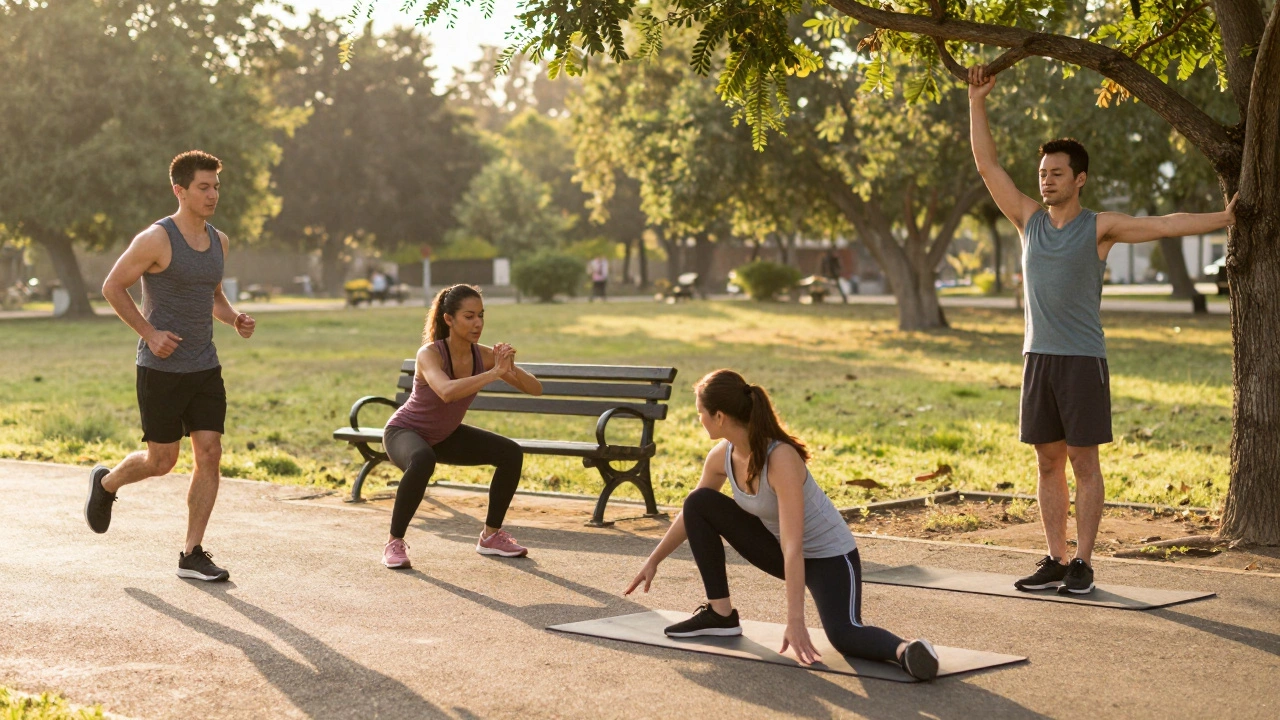
When you walk into a gym or scroll through a fitness app, you see hundreds of workouts. But beneath all the names and routines, there are only four types of exercises that actually matter. Everything else-Zumba, CrossFit, Pilates, boot camps-is just a mix of these four. Knowing them isn’t just useful; it’s the key to building a body that works well, stays injury-free, and lasts for decades.
Cardiovascular Exercise
Cardio is what most people think of first: running, cycling, swimming, dancing. It’s any activity that gets your heart pumping and your lungs working harder than normal. The goal? To strengthen your heart, improve circulation, and burn calories. But cardio isn’t just for weight loss. It lowers blood pressure, reduces bad cholesterol, and even helps with anxiety and depression.
The American Heart Association recommends at least 150 minutes of moderate cardio per week. That’s about 30 minutes, five days a week. You don’t need to run a marathon. Brisk walking, gardening, or even dancing around your living room counts. The key is consistency, not intensity. If you can talk but not sing during the activity, you’re in the right zone.
Cardio doesn’t just help your heart-it helps your brain too. Studies show people who do regular cardio have better memory and slower cognitive decline as they age. It’s not magic. It’s blood flow. More oxygen to your brain means better function.
Strength Training
Strength training is often misunderstood. People think it’s only for bodybuilders or young athletes. But here’s the truth: everyone needs it. After age 30, you naturally lose 3-8% of your muscle mass every decade. Without strength training, you lose the ability to carry groceries, get up from a chair, or climb stairs without help.
Strength training means using resistance-your body weight, dumbbells, resistance bands, or machines-to challenge your muscles. It doesn’t mean lifting heavy weights until you’re shaking. It means doing enough to make the last few reps hard. Two or three sessions a week are enough to rebuild muscle, protect your joints, and boost your metabolism.
Here’s what strength training actually does: it increases bone density, improves posture, reduces back pain, and even helps manage blood sugar levels. A 2023 study from the Journal of Strength and Conditioning Research found that older adults who did twice-weekly strength training reduced their risk of falls by nearly 40%. That’s not just fitness. That’s independence.
Flexibility Training
Flexibility isn’t about touching your toes or doing splits. It’s about having enough range of motion in your joints to move comfortably without pain. Think of it like a rubber band. If you never stretch it, it gets stiff and snaps easier. Your muscles and tendons work the same way.
Flexibility training includes static stretching (holding a stretch for 20-30 seconds), dynamic stretching (moving through a range of motion), and mobility drills. Yoga and tai chi are great examples. You don’t need to be flexible to start-you just need to show up.
Why does it matter? Poor flexibility leads to tight hips, stiff shoulders, and lower back pain. It also increases injury risk during other activities. If you run but never stretch your hamstrings, you’re asking for trouble. If you sit at a desk all day and never open your chest, your posture collapses.
Even five minutes of stretching after your workout helps. Try touching your toes, hugging your knees to your chest, or doing a doorway chest stretch. Do it daily. It’s not glamorous, but it’s one of the cheapest and most effective forms of self-care.
Balance Training
Balance gets ignored until you trip on a curb or can’t stand on one foot. But balance isn’t just for seniors. It’s essential for everyone. Your balance system involves your eyes, inner ear, muscles, and nerves working together. When one part weakens, your whole body pays the price.
Balance training includes standing on one foot, walking heel-to-toe, using a balance pad, or doing yoga poses like tree pose. You don’t need equipment. Just a wall for support and five minutes a day.
Here’s what happens when you skip it: you lose coordination. You take longer to react when you slip. You fall more often. Falls are the leading cause of injury-related hospital visits for people over 65. But even 20-year-olds benefit. Athletes improve agility. Office workers reduce dizziness from staring at screens all day.
Try this simple test: stand on one foot with your eyes closed. If you wobble or fall before 10 seconds, you need more balance work. Start with holding onto a chair. Do it three times a day. In a month, you’ll notice you walk more confidently. You’ll stop grabbing railings on stairs.
How the Four Types Work Together
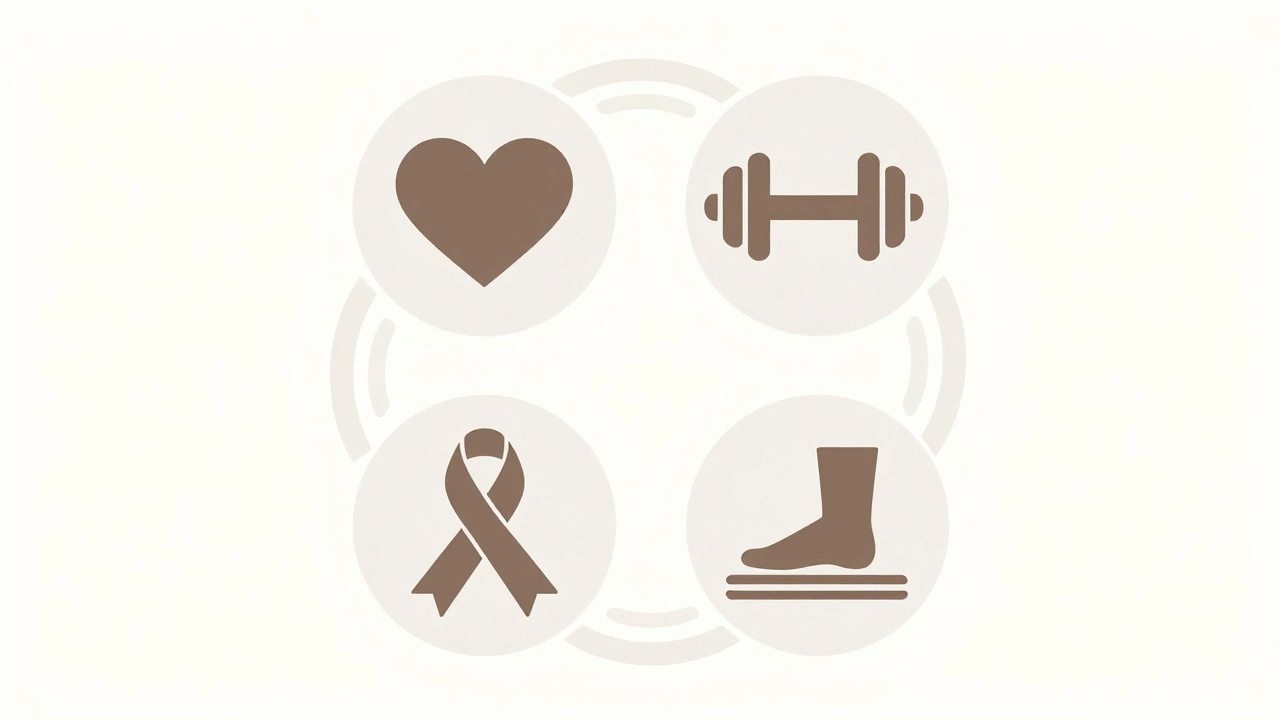
These four types aren’t separate boxes. They’re layers of a system. Strength training helps you move better during cardio. Flexibility lets you reach further and lift heavier. Balance keeps you stable when you’re tired. Cardio gives you the energy to do all of it.
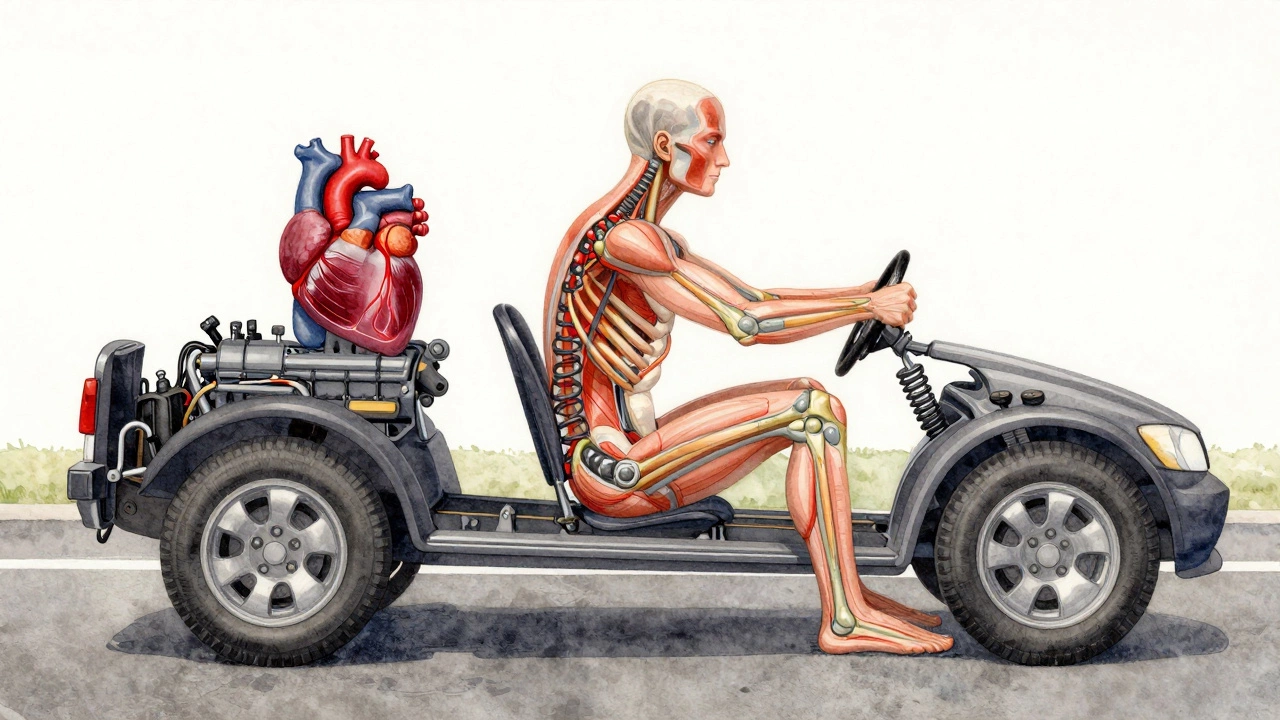
Think of your body like a car. Cardio is the engine. Strength is the frame. Flexibility is the suspension. Balance is the steering. If one part fails, the whole thing doesn’t run right.
A balanced routine doesn’t need hours. Here’s a simple weekly plan:
- Monday: 30-minute brisk walk (cardio)
- Tuesday: Bodyweight strength (squats, push-ups, planks) + 5 minutes stretching
- Wednesday: 10 minutes balance work (one-foot stands, heel-to-toe walk)
- Thursday: Rest or gentle yoga (flexibility)
- Friday: Cycling or swimming (cardio)
- Saturday: Strength training with bands or dumbbells
- Sunday: Stretch and relax
You don’t need to do all four every day. Just make sure you cover them all over the week. Missing one? You’re leaving part of your health on the table.
What Happens When You Skip One
People often focus on one type and ignore the others. You see it all the time:
- Someone who only runs ends up with tight hips and knee pain.
- Someone who lifts heavy but never stretches becomes stiff and sore.
- Someone who does yoga every day but never builds strength can’t carry their luggage up stairs.
- Someone who avoids balance work trips on flat ground.
Each type supports the others. Skip flexibility, and strength training becomes risky. Skip balance, and cardio becomes dangerous. Skip strength, and your body breaks down faster. Skip cardio, and your energy, mood, and heart suffer.
The most common mistake? Thinking you’re "doing enough" because you’re active. But activity isn’t the same as exercise. Walking the dog is activity. A balanced routine that includes all four types is exercise.
Getting Started Without Overwhelm
You don’t need a gym membership, fancy gear, or a personal trainer. Start small:
- Do 5 squats while brushing your teeth.
- Stand on one foot while waiting for your coffee to brew.
- Stretch your arms overhead for 10 seconds after sitting for an hour.
- Take the stairs instead of the elevator.
These tiny actions add up. They build habits. And habits beat motivation every time.
Track your progress not by weight or reps, but by how you feel. Can you bend down to tie your shoes without pain? Can you carry two bags of groceries? Can you stand on one foot without holding the counter? Those are real wins.
Final Thought: It’s Not About Perfection
You don’t need to be the strongest, fastest, or most flexible person in the room. You just need to move well. That’s what the four types of exercise are for-not to look a certain way, but to live without limits.
Whether you’re 20 or 70, whether you’re recovering from injury or training for a race, these four types are your foundation. Master them, and everything else becomes easier. Skip them, and even the most intense workouts won’t save you from the slow decline.
Start today. One type at a time. Your future self will thank you.
What are the four types of exercises?
The four types of exercises are cardiovascular (cardio), strength training, flexibility training, and balance training. Each plays a unique role in keeping your body strong, mobile, and injury-free. Cardio improves heart health, strength builds muscle and bone, flexibility maintains joint range, and balance prevents falls and improves coordination.
Can I just do cardio and skip the other types?
You can, but you’ll miss out on key benefits. Cardio keeps your heart healthy, but without strength training, you lose muscle and bone density over time. Without flexibility, you become stiff and prone to injury. Without balance, you increase your risk of falls, especially as you age. A full routine gives you more than fitness-it gives you longevity.
How often should I do each type of exercise?
Aim for at least 150 minutes of cardio per week, two strength sessions, daily flexibility work, and daily balance practice. You don’t need to do all four every day. Spread them out. Even 10 minutes of balance or stretching each day makes a difference. Consistency matters more than duration.
Do I need equipment for these exercises?
No. You can do all four types with no equipment. Walking and jogging are cardio. Bodyweight squats, push-ups, and planks are strength. Stretching your hamstrings or shoulders is flexibility. Standing on one foot is balance. Equipment like dumbbells or yoga mats helps, but they’re not required to get started.
Is yoga enough to cover all four types?
Most yoga styles cover flexibility and balance well, and some include strength through bodyweight poses. But traditional yoga usually doesn’t provide enough cardiovascular intensity or progressive strength training to fully replace dedicated cardio or strength sessions. For full benefits, pair yoga with brisk walking or light weight training.