
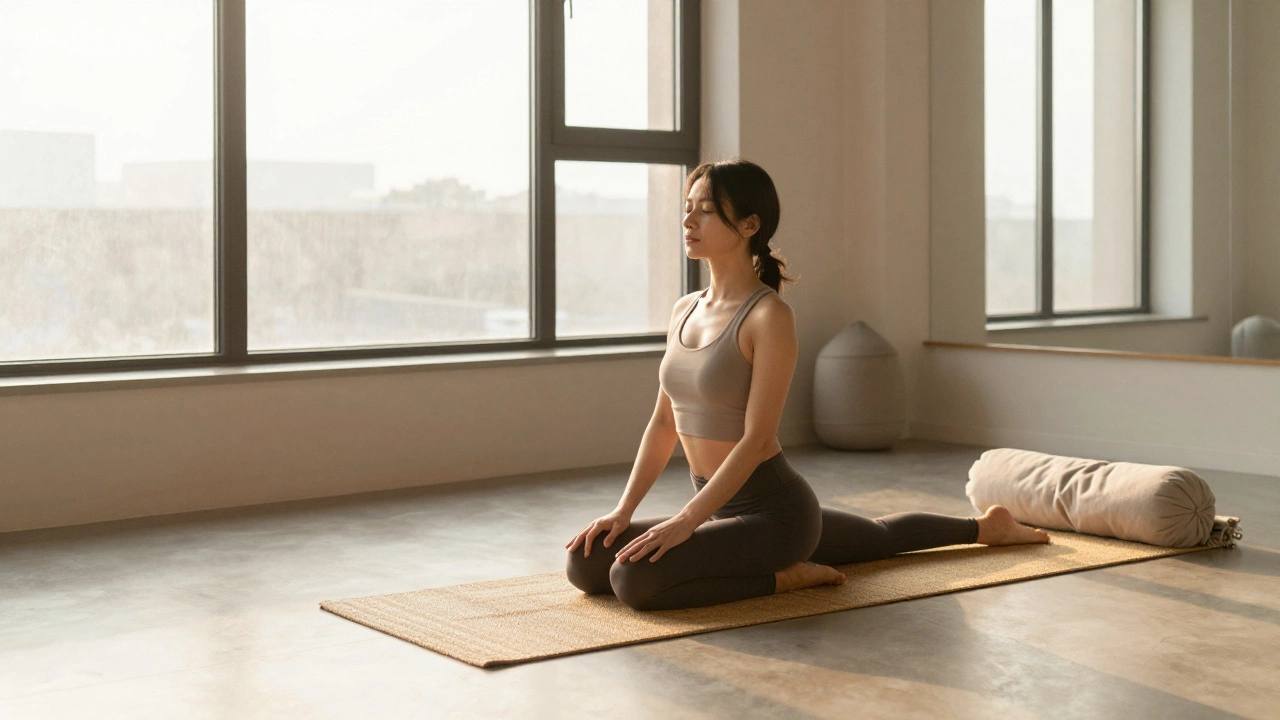
Yoga Sequence Builder
Create your personalized yoga sequence following the scientific flow: warm-up, build, peak, release. The tool will validate your sequence for safety and effectiveness based on yoga principles.
How It Works
Each phase requires specific types of poses. The tool will warn you if you try to:
- Do backbends or inversions without proper warm-up
- Jump to peak poses before building strength
- Skipped the release phase
Warm-up (5-10 min)
Select 1-3 poses
Build (15-25 min)
Select 3-5 poses
Peak (5-10 min)
Select 1-2 poses
Release (10-15 min)
Select 2-3 poses
There’s no single yoga sequence that works for everyone. But there is a logic to how poses should connect - one that keeps your body safe, your breath steady, and your mind calm. Skip the random mix-and-match. If you want yoga to feel powerful, not just stretchy, you need to understand the natural rhythm of movement.
Why Order Matters in Yoga
Yoga isn’t just a list of poses you can do in any order. Think of it like cooking: you don’t start with dessert. You build flavor, texture, and heat step by step. The same goes for your body. Starting with intense backbends before warming up your spine? That’s like jumping into a cold pool. You might survive it, but you won’t enjoy it - and you risk injury.
Traditional yoga systems like Hatha and Ashtanga developed sequences over centuries to prepare the body slowly. Each pose opens up space, activates muscles, or releases tension so the next one can be done safely. A good sequence doesn’t just move your limbs - it guides your nervous system from alert to relaxed.
The Classic Yoga Flow: Warm-Up to Cool-Down
Most effective yoga routines follow a clear arc: warm up, build, peak, release. This isn’t just tradition - it’s biomechanics.
Warm-up (5-10 minutes)
Start with gentle movement. No deep stretches yet. Try seated or standing cat-cow, neck rolls, shoulder circles, and ankle rolls. Then move into a few rounds of Sun Salutations (Surya Namaskar). These aren’t just exercises - they sync breath with motion, raise your core temperature, and wake up your spine and hips. If you skip this, you’re asking your joints to do work they’re not ready for.
Build (15-25 minutes)
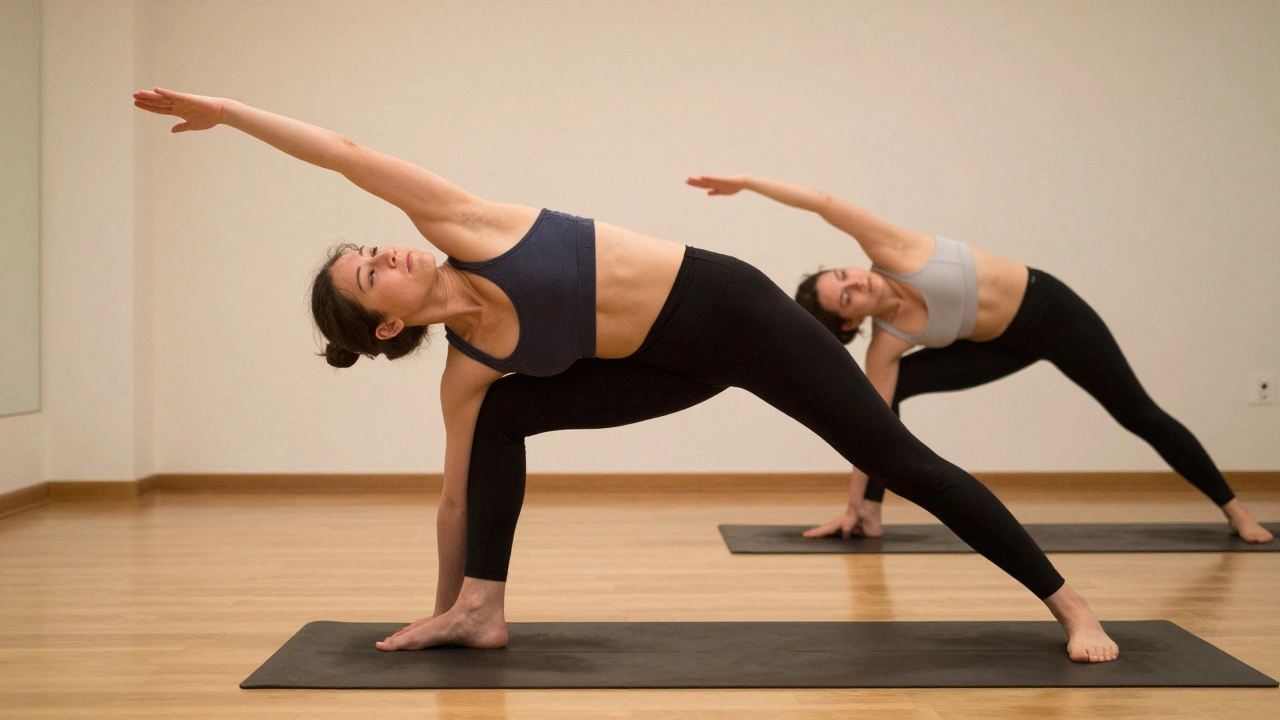
Now you’re warmed up. Time to strengthen and open. Begin with standing poses: Warrior I, Warrior II, Triangle, Extended Side Angle. These build leg strength and stability. Follow with balancing poses like Tree or Eagle - they sharpen focus and engage your core. Then move into forward bends (Paschimottanasana) and gentle twists (Ardha Matsyendrasana). Twists help detoxify organs and release spinal tension built up during standing poses.
Peak (5-10 minutes)
This is where you go deeper. Backbends like Bridge, Camel, or Wheel come after you’ve opened your chest and hips. Inversions like Legs-Up-the-Wall or Shoulder Stand follow after your spine is loose and your core is engaged. Don’t rush into Headstand or Handstand unless you’ve built strength over weeks. Even a simple supported Bridge can be your peak if you hold it with full awareness.
Release (10-15 minutes)
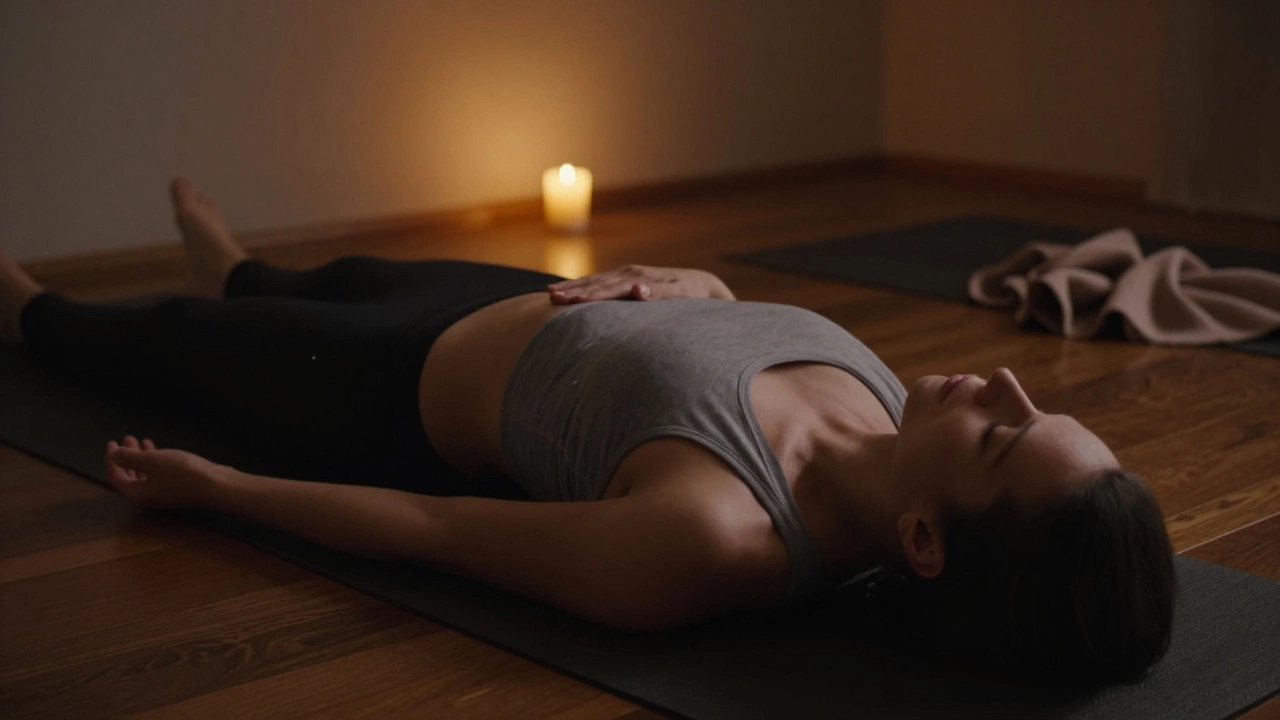
This is non-negotiable. After all the effort, your body needs to reset. Drop into seated or reclined poses: Child’s Pose, Supine Twist, Reclining Bound Angle (Supta Baddha Konasana). Then settle into Savasana - corpse pose. Stay here for at least five minutes. No checking your phone. No planning dinner. Just breathe. This is when your nervous system shifts from fight-or-flight to rest-and-digest. Without this, you’re not doing yoga - you’re doing calisthenics with a mat.
What Not to Do
Here are common mistakes people make with their yoga sequence - and why they backfire.
- Doing backbends first - Your spine is stiff. You’ll compensate with your neck or lower back, leading to strain.
- Jumping into inversions cold - Your shoulders and core need preparation. Shoulder Stand without warming up the upper back? High risk of pinched nerves.
- Skipping Savasana - You’ve trained your body, but not your mind. The real benefits of yoga - reduced cortisol, better sleep, mental clarity - happen in stillness.
- Doing the same sequence every day - Your body adapts. Rotate your peaks: one day focus on backbends, next day on twists, then on hip openers. Variety prevents plateaus and overuse.
Sample Beginner Sequence (30 Minutes)
Here’s a simple, safe routine you can do anytime, even in your pajamas.
- Seated Cat-Cow - 5 breaths
- Standing Mountain Pose - 3 breaths
- 3 Rounds of Sun Salutation A
- Warrior I (right) - 5 breaths
- Warrior I (left) - 5 breaths
- Triangle Pose (right) - 5 breaths
- Triangle Pose (left) - 5 breaths
- Forward Fold - 5 breaths
- Seated Spinal Twist (right) - 5 breaths
- Seated Spinal Twist (left) - 5 breaths
- Child’s Pose - 5 breaths
- Supine Twist - 5 breaths per side
- Savasana - 5-7 minutes
This sequence takes 30 minutes. It’s enough to feel the difference - calm, grounded, a little lighter. Do it three times a week for a month. You’ll notice better sleep, less lower back tightness, and fewer moments of mental fog.
Advanced Sequences: Beyond the Basics
If you’ve been practicing for over a year, you can start layering in more complexity. But even then, the structure stays the same: warm, build, peak, release.
Advanced sequences might include:
- Arm balances (Crow, Side Crow) after strong core work
- Deep hip openers (Pigeon, Fire Log) after standing poses
- Backbends like Wheel or King Pigeon after chest and shoulder mobility drills
- Longer inversions (Headstand, Forearm Stand) only after shoulder stability drills like Plank and Dolphin Pose
Don’t chase the flashy poses. Focus on how your body feels moving from one to the next. If you’re gasping, wobbling, or holding your breath - you’re out of sequence.
Timing and Breath: The Hidden Sequence
The order of poses matters - but so does the timing between them. Each transition should be smooth. Don’t rush from one pose to the next. Use your breath as your timer: inhale to prepare, exhale to move deeper.
For example:
- From Downward Dog to Forward Fold: exhale as you step or float forward
- From Warrior II to Triangle: inhale to lengthen, exhale to hinge
- From Bridge to Reclining Twist: exhale as you roll to one side
When your breath leads the movement, your body follows naturally. That’s the real magic of yoga - it’s not about how far you stretch, but how quietly you move.
When to Adjust the Sequence
Your sequence should change with your body - not the other way around.
- If you’re tired - skip inversions. Do more restorative poses: Legs-Up-the-Wall, Supported Bridge, Reclining Bound Angle.
- If you’re stiff - add more gentle twists and hip openers before standing poses.
- If you’re stressed - end with longer Savasana and add a few minutes of breath awareness (box breathing: 4 counts in, 4 hold, 4 out, 4 hold).
- If you’re menstruating - avoid inversions and intense backbends. Focus on gentle forward folds and rest.
Yoga adapts to you. It doesn’t demand you adapt to it.
Final Thought: It’s Not About Perfection
The "correct" sequence isn’t the one you see on Instagram. It’s the one that leaves you feeling centered, not drained. It’s the one that helps you breathe deeper, move easier, and think clearer - not just look good in a pose.
Start with the basics. Stick to the flow: warm, build, peak, release. Breathe through transitions. Honor your body’s limits. That’s all it takes to make yoga work - not just for your body, but for your mind.
Can I do yoga without following a sequence?
Yes, but you’re not really doing yoga - you’re doing stretching or exercise. Yoga is the union of movement, breath, and awareness. Without a logical flow, you lose the rhythm that calms the nervous system. Random poses won’t give you the same mental clarity or physical balance as a well-structured sequence.
Should I do yoga in the morning or evening?
Morning is ideal for energizing sequences - Sun Salutations, standing poses, and mild backbends help wake up your body. Evening is better for calming flows: forward folds, twists, and restorative poses. But the best time is the one you’ll stick to. Consistency beats timing.
How long should a yoga sequence be?
Ten minutes is enough for a quick reset. Twenty to thirty minutes gives you a full practice with warm-up, build, peak, and cool-down. One hour is ideal if you’re training seriously. But length doesn’t matter as much as quality. Five minutes of mindful Savasana is more valuable than an hour of rushed poses.
Do I need to follow traditional sequences like Ashtanga?
No. Traditional sequences are excellent templates, but they’re not rules. Modern yoga is about adaptation. Use the structure - warm, build, peak, release - and swap poses that suit your body. If Pigeon Pose hurts your knees, try Half Pigeon or a seated figure-four stretch instead. The goal is balance, not imitation.
Why is Savasana so important?
Savasana is when your body absorbs the benefits of the practice. Your heart rate slows, your muscles release, and your nervous system shifts from stress mode to recovery mode. Studies show even five minutes of stillness lowers cortisol and improves sleep. Skipping it is like running a marathon and not cooling down. You might feel tired - not restored.
Can I combine yoga with other workouts?
Absolutely. Yoga pairs well with strength training, running, or cycling - but do it after, not before. If you do yoga before lifting weights, your muscles might be too relaxed to generate power. Do yoga after to recover, stretch, and reset. It’s the perfect cooldown.