
Yoga vs Pilates Matchmaker
Which Practice Is Right for You?
Answer a few quick questions to discover whether yoga or Pilates better matches your goals and physical needs.
So you’re trying to decide between yoga and Pilates. Maybe you’ve seen people in leggings doing slow stretches on mats, or others doing controlled movements that look like slow-motion acrobatics. Both are popular. Both promise better posture, less back pain, and a calmer mind. But which one actually works better for you?
Yoga is about movement and mindfulness
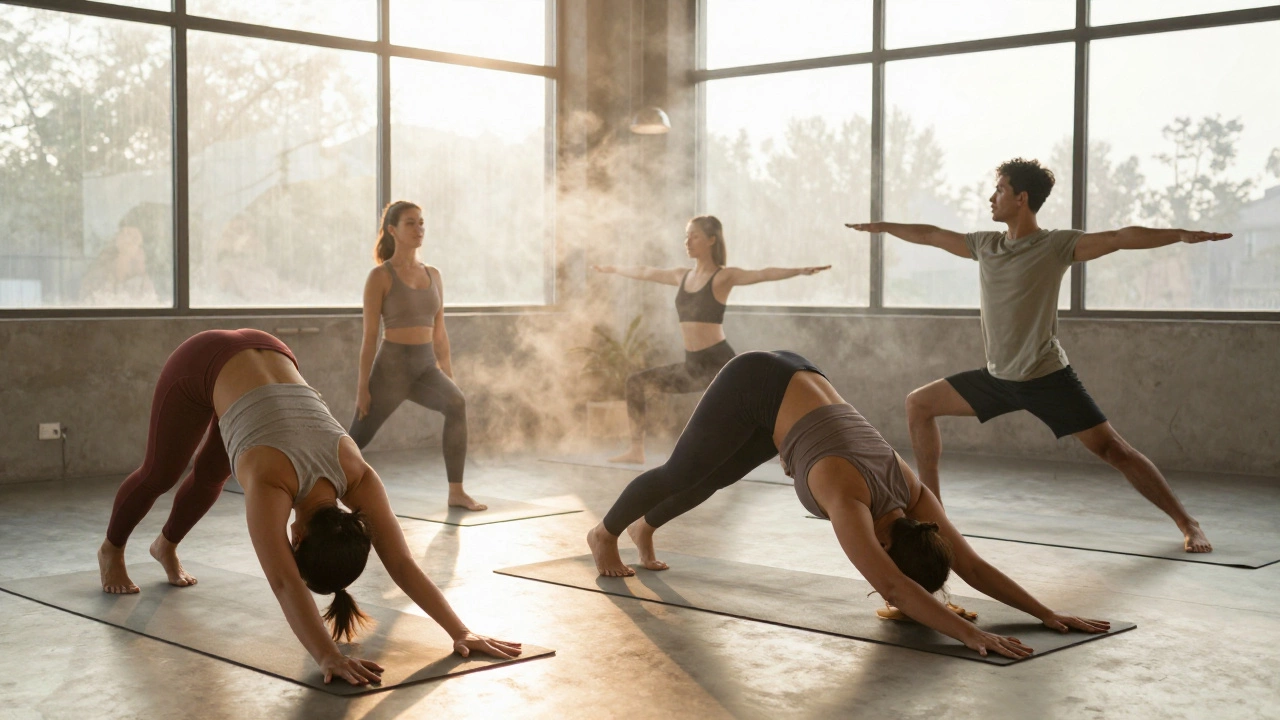
Yoga started as a spiritual practice over 5,000 years ago in India. Today, most people in the West do it for the physical benefits-flexibility, balance, and stress relief. A typical yoga class moves through a series of poses, or asanas, linked with breath. You might flow from downward dog to warrior II to child’s pose, holding each for several breaths. Classes range from gentle Hatha to intense Vinyasa or hot yoga.
What yoga does best is connect your body and mind. It teaches you to notice tension in your shoulders, how your breath changes when you’re stressed, and where you hold tightness-often in your hips or lower back. Studies from the University of California, Los Angeles found that people who practiced yoga three times a week for eight weeks showed measurable drops in cortisol, the stress hormone. That’s not just feeling calmer-you’re literally rewiring your body’s response to pressure.
Yoga also builds functional flexibility. If you sit at a desk all day, your hamstrings shorten, your chest collapses, and your neck strains forward. Yoga gently pulls those areas back into alignment. A 2023 study in the Journal of Bodywork and Movement Therapies showed that after 12 weeks of regular yoga, participants improved their hip mobility by 37% and reduced lower back pain by 54%.
Pilates is precision with purpose
Pilates was created in the 1920s by Joseph Pilates, a German physical trainer who developed it to rehabilitate injured soldiers. He called it "contrology"-control of the body through precise movement. Modern Pilates focuses on core strength, spinal alignment, and controlled breathing. You won’t find flowing sequences here. Instead, you’ll do hundreds of small, deliberate movements: the hundred, the roll-up, the single-leg stretch. Repetitions matter. Form matters more.
Where yoga stretches, Pilates strengthens. It doesn’t just make you flexible-it makes you stable. The core isn’t just your abs. It’s your deep pelvic floor, transverse abdominis, multifidus, and diaphragm. Pilates trains all of them to work together. A 2024 clinical trial from the University of Sydney tracked 120 people with chronic lower back pain. Half did Pilates, half did general stretching. After 10 weeks, the Pilates group had 61% more improvement in core endurance and 48% greater reduction in pain intensity.
Pilates also helps with posture in a very practical way. If you slouch at your computer, Pilates teaches you how to stack your ribs over your pelvis, engage your deep abs, and lift your head without jutting your chin. It’s not about looking good-it’s about moving without pain. Many physical therapists in Auckland recommend Pilates to patients recovering from injury, because it rebuilds movement patterns safely.
Flexibility: Yoga wins
If your goal is to touch your toes, twist deeper into a seated spinal twist, or finally get your heel to the floor in pigeon pose, yoga is the clear winner. Yoga poses are designed to lengthen muscles and open joints. You’ll stretch your hamstrings, hip flexors, shoulders, and spine in ways Pilates rarely targets. A 2025 meta-analysis of 37 studies concluded that yoga improves flexibility across all major muscle groups more consistently than any other mind-body practice.
Pilates does improve mobility-but it’s not its main goal. You’ll gain range of motion as a side effect of strengthening. For example, doing the swan dive in Pilates helps open your chest, but you’re not holding it for 30 seconds like you would in cobra pose in yoga. If flexibility is your top priority, yoga gives you more direct, sustained stretching.
Core strength: Pilates wins
Here’s the truth: most people think they have a strong core because they can do 20 crunches. But a real core is about control, not just visibility. Pilates was built for this. Every movement starts from the center. Even when you’re moving your arms or legs, your abs are engaged, your pelvis is neutral, and your spine stays long.
Yoga builds core strength too-plank, boat pose, and side plank all require abdominal engagement. But in yoga, the core is often a supporting player. In Pilates, it’s the star. A 2023 biomechanics study from Massey University used motion sensors to compare core activation during yoga and Pilates. The results? Pilates triggered 42% higher activation in the transverse abdominis-the deepest core muscle-than yoga did.
If you want to stop your lower back from aching when you lift groceries, improve your balance on uneven ground, or even prevent pelvic floor issues, Pilates gives you the tools. It’s the difference between knowing how to brace and just hoping you’ll stay upright.
Stress relief: They’re both good-but differently
Yoga leans into stillness. Holding a pose while focusing on your breath creates a meditative state. The rhythm of inhale-exhale becomes an anchor. Many people describe yoga as moving meditation. In New Zealand, where mental health services are stretched thin, yoga studios are often the first line of support for anxiety and mild depression.
Pilates is also calming-but in a different way. It’s the focus on precision that quiets the mind. When you’re counting breaths while doing 10 perfect roll-ups, there’s no room for racing thoughts. You’re fully present. A 2024 study in the Journal of Clinical Psychology found that both practices reduced symptoms of anxiety by about 30%, but yoga had a slight edge in reducing rumination (repetitive negative thinking).
If you need to unwind after a long day and just want to breathe deeply, yoga might feel more restorative. If you need to reset your brain by concentrating on something physical and exact, Pilates can be just as powerful.
Who should choose yoga?
- You want to improve flexibility and joint mobility
- You struggle with stress, anxiety, or sleep
- You enjoy flowing movement and rhythmic breathing
- You’re recovering from injury but need gentle movement
- You want to build body awareness without heavy resistance
Who should choose Pilates?
- Your posture is poor and you’re tired of slouching
- You have chronic lower back or neck pain
- You want to strengthen your core without bulking up
- You’re rehabbing from surgery, pregnancy, or injury
- You like structure, precision, and measurable progress
Can you do both?
Yes. And you should.
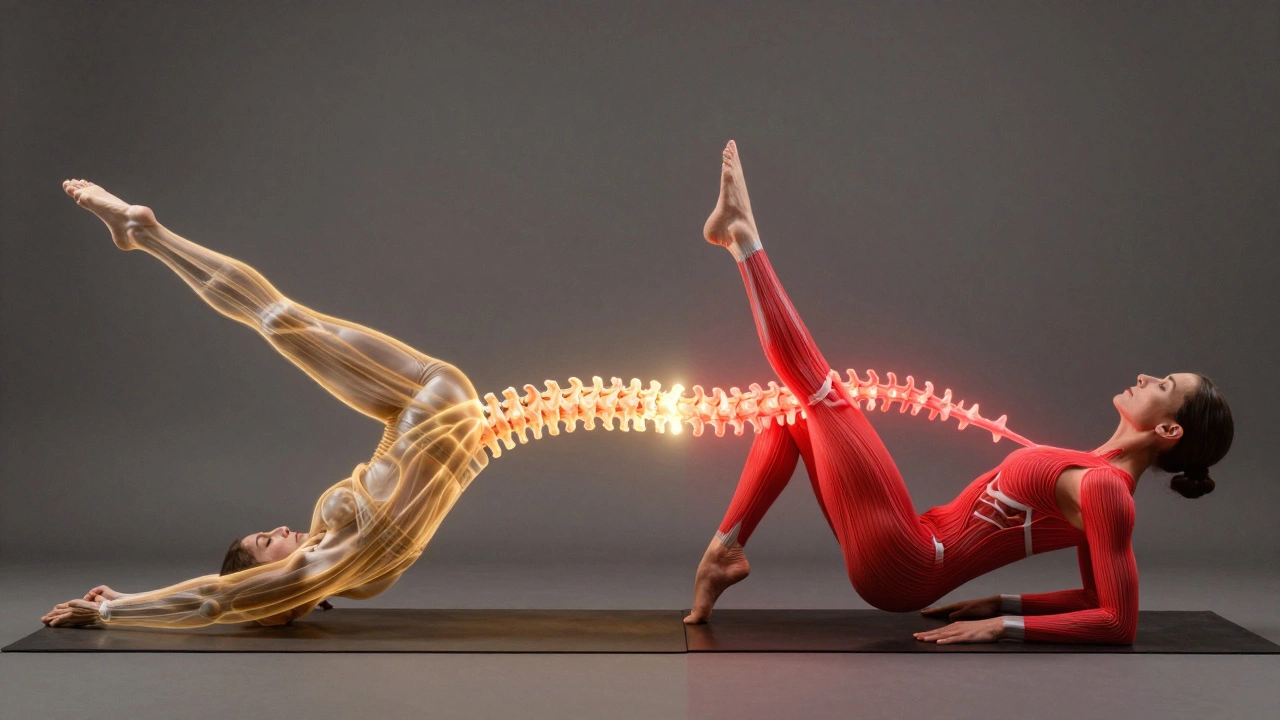
Yoga and Pilates aren’t rivals. They’re teammates. Yoga opens you up. Pilates stabilizes you. Together, they create a balanced body. Many fitness professionals in Auckland recommend a mix: two yoga sessions for flexibility and calm, one Pilates session for core strength and alignment. You don’t have to pick one. You can start with yoga to loosen up, then add Pilates to build control.
Try this: do a 30-minute yoga flow on Monday and Wednesday, and a 20-minute Pilates mat class on Friday. In six weeks, you’ll notice your spine feels longer, your breath deeper, and your movements smoother. You won’t just feel better-you’ll move better.
What to expect in your first class
Yoga: Expect to stretch, hold poses, and breathe. Mats are usually provided. Wear comfortable clothes that let you move. Don’t worry about being flexible-everyone starts somewhere.
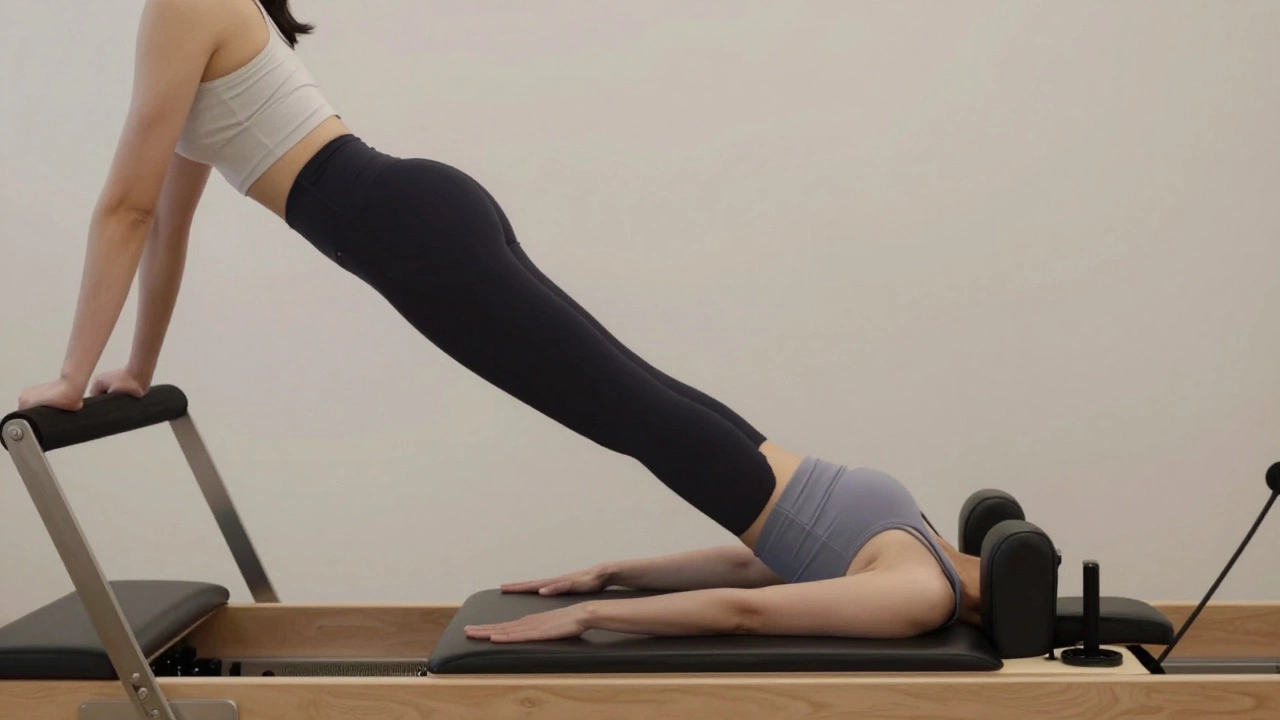
Pilates: Expect to move slowly, focus on form, and feel your muscles shake. You might use a mat, a reformer, or small props like resistance bands. It’s not easy. But you’ll leave feeling strong, not exhausted.
Both classes are beginner-friendly. Look for instructors who say "modify as needed" and who check in with students. Avoid anyone who pushes you into painful positions.
Real results, real time
After four weeks of yoga: Your shoulders feel lighter. You sleep better. You can touch your toes without bending your knees.
After four weeks of Pilates: Your lower back doesn’t ache when you stand for too long. You stand taller without thinking about it. Your stomach feels firmer-not because you’ve lost fat, but because your core is finally working.
After eight weeks of both: You move through your day with less effort. Carrying groceries doesn’t hurt. Walking uphill feels easier. You notice your posture when you’re at your desk. You breathe without realizing it.
Is Pilates better than yoga for weight loss?
Neither yoga nor Pilates is designed for burning calories quickly. A 60-minute yoga class burns about 180-250 calories. Pilates burns slightly more-around 200-300. For weight loss, you need consistent movement and a calorie deficit. Neither replaces cardio or strength training. But both help you stay active, reduce stress-related eating, and build lean muscle, which supports long-term fat loss.
Can I do yoga or Pilates if I’m older or have injuries?
Absolutely. Both are adaptable. Chair yoga and gentle Pilates are popular with seniors. Many physiotherapists use modified Pilates for people with herniated discs, osteoporosis, or joint replacements. Yoga’s low-impact nature makes it safe for arthritis. Always tell your instructor about your condition. Look for classes labeled "therapeutic," "gentle," or "senior-friendly."
Do I need special equipment for either?
For yoga, all you need is a mat. Some people use blocks or straps to help with alignment, but they’re optional. For Pilates, a mat works fine for beginners. If you’re doing reformer Pilates, you’ll need a machine-usually found in studios. At home, resistance bands and small balls can mimic some equipment. Start simple.
Which is better for back pain?
Pilates has stronger clinical backing for chronic back pain because it targets the deep stabilizing muscles. But yoga also helps-especially poses like cat-cow, child’s pose, and supported bridge. Many studies show both reduce pain, but Pilates leads in improving core endurance. For best results, combine both: yoga for mobility, Pilates for stability.
How often should I practice?
Two to three times a week is enough to see results. Consistency matters more than duration. Even 20 minutes a day can build strength or flexibility over time. If you’re new, start with one session per week of each, then add more as you feel comfortable. Listen to your body-rest if you’re sore.
Final thought: It’s not about better-it’s about what your body needs
Yoga and Pilates aren’t a competition. They’re two tools in your movement toolkit. One opens you. The other holds you together. If you’re stiff and stressed, start with yoga. If you’re weak in the middle and slouching, start with Pilates. But don’t stop there. The best version of you isn’t the one who does only one. It’s the one who moves with ease, strength, and awareness-and that’s what happens when you let both practices work together.