
HIIT & Weights Calorie Burn Calculator
Calculate your weekly calorie burn from HIIT and strength training sessions. This tool uses science-backed estimates from the article to show how both methods contribute to your total energy expenditure.
Your Weekly Calorie Burn
When you walk into a gym, you see people sprinting on treadmills, lifting heavy bars, or jumping around in circuits. The big question? HIIT or weights-which one’s better? It’s not about picking a side. It’s about figuring out what your body actually needs right now.
What Is HIIT, Really?
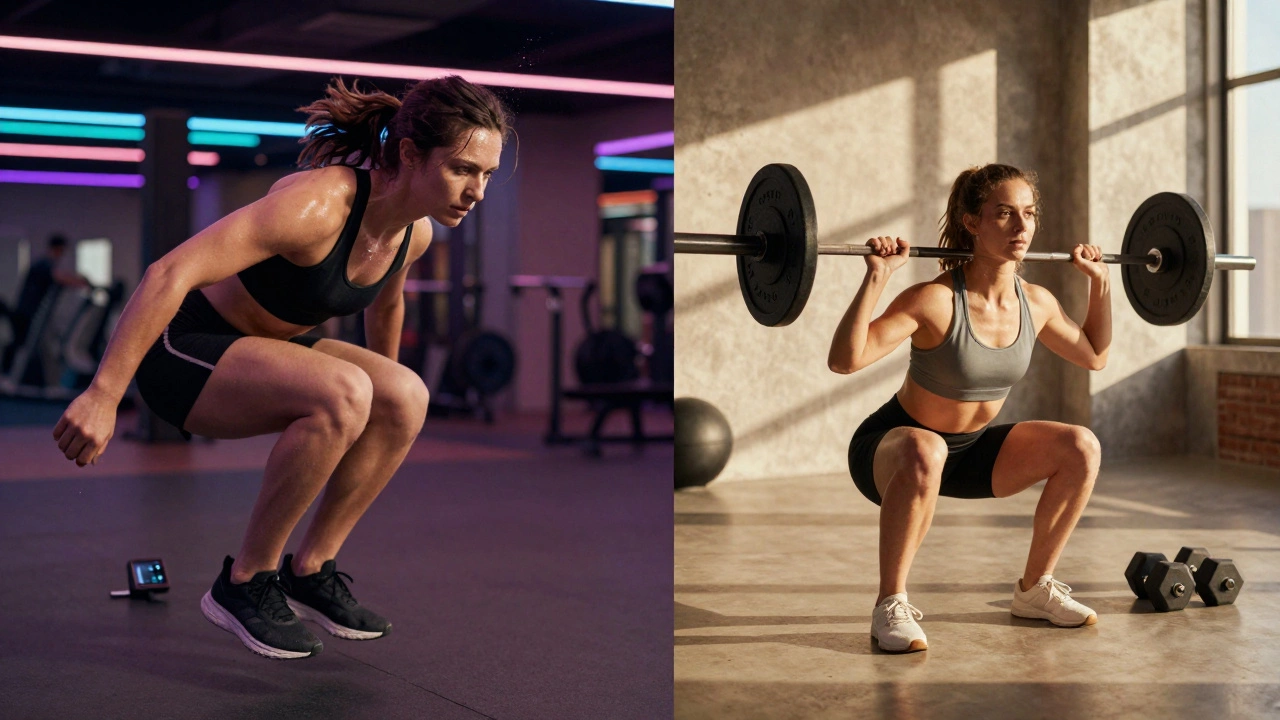
HIIT stands for High-Intensity Interval Training. It’s not just fast workouts-it’s about pushing hard for short bursts, then catching your breath. A typical session might be 20 seconds of all-out burpees, 10 seconds of rest, repeated eight times. That’s it. Just 5 minutes of real work. But here’s the kicker: your body keeps burning calories for hours after you stop. That’s called EPOC-Excess Post-exercise Oxygen Consumption. Studies show HIIT can burn up to 25-30% more calories than steady-state cardio in the same time frame.
It’s not magic, though. HIIT works best when you’re already in decent shape. If you’re new to exercise, going full blast on day one can lead to injury, burnout, or both. Most people who stick with HIIT do it 2-3 times a week, not every day. And yes, you can do it without equipment. Jumping jacks, mountain climbers, squat jumps-they all count.
What Do Weights Actually Do?
Weights-whether dumbbells, barbells, or machines-build muscle. That’s the core function. But muscle isn’t just about looking strong. It’s your body’s metabolic engine. Every pound of muscle you gain burns about 6-10 extra calories a day, even when you’re sitting on the couch. Over a year, that adds up to 2,000-3,500 extra calories burned. That’s like running 10-15 miles without lifting a finger.
Strength training also protects your joints, improves posture, and reduces injury risk. A 2023 study from the University of Auckland tracked 1,200 adults over 18 months. Those who lifted weights at least twice a week had 34% fewer joint injuries and 28% better balance scores than those who didn’t. That’s not a fluke. It’s science.
And no, you won’t get bulky unless you’re eating 3,000+ calories a day and training like a bodybuilder. Most women and many men build lean, toned muscle-not bulk-just by lifting 2-3 times a week.
Which Burns More Fat?
Here’s the truth: HIIT burns more calories during the workout. Weights burn more calories after the workout. If your goal is fat loss, you need both.
Let’s say you do 30 minutes of HIIT. You might burn 300-400 calories in that session. Great. But if you do 45 minutes of heavy compound lifts-squats, deadlifts, bench presses-you might burn 250 calories during. But afterward? Your metabolism stays turned up for 24-48 hours. That’s another 150-300 calories burned just from resting.
Research from the American College of Sports Medicine found that people who combined HIIT with strength training lost 2.5 times more body fat over 12 weeks than those who did either one alone. The combo works because HIIT clears fat from the bloodstream, and muscle burns it as fuel.
Which Builds More Muscle?
Weights win this one, hands down. HIIT might tone you up, but it won’t make your arms thicker, your glutes rounder, or your back stronger. That’s strength training’s job.
Progressive overload is the key. That means slowly lifting heavier, doing more reps, or reducing rest time. You can’t do that with burpees alone. But with dumbbells? You can go from 10-pound to 20-pound dumbbells over six weeks. That’s real muscle growth.
HIIT can help with endurance and definition, but if you want visible muscle-especially in your arms, chest, legs, and back-you need resistance. Period.
Time Crunch? HIIT Wins
If you’ve got 20 minutes and a busy day, HIIT is your best friend. You don’t need a gym. You don’t need equipment. Just space to move. A 20-minute HIIT session can match the calorie burn of a 45-minute jog. That’s why it’s popular among busy parents, shift workers, and people with long commutes.
But here’s the catch: HIIT is exhausting. Doing it every day will burn you out. Your body needs recovery. That’s where weights come in. A 30-minute weight session is less taxing on your nervous system. You can do it more often without crashing.
Which Is Safer?
Safety depends on how you do it. Poor form in HIIT? You risk shoulder injuries, lower back strain, or knee pain. Poor form in weights? You risk the same-but worse. A wrong deadlift can tear a disc. A bad squat can wreck your knees.
But weights have an advantage: you control the load. You can go slow. You can learn. You can start light. HIIT? It’s all-or-nothing. If you’re tired, you still have to sprint. That’s where injuries creep in.
For beginners, weights are safer because you can focus on technique. Once you’ve built strength and control, you can add HIIT. For experienced athletes, combining both is ideal-but always warm up. Always cool down. Always listen to your body.
What Does the Science Say?
A 2025 meta-analysis of 47 studies involving over 5,000 participants found:
- HIIT led to greater fat loss over 8-12 weeks
- Strength training led to greater muscle gain and bone density
- Combining both produced the best overall results: improved body composition, cardiovascular health, and metabolic markers
The bottom line? Neither one is “better.” They do different things. And together? They’re unstoppable.
What Should You Do?
Here’s a simple, realistic plan based on your goals:
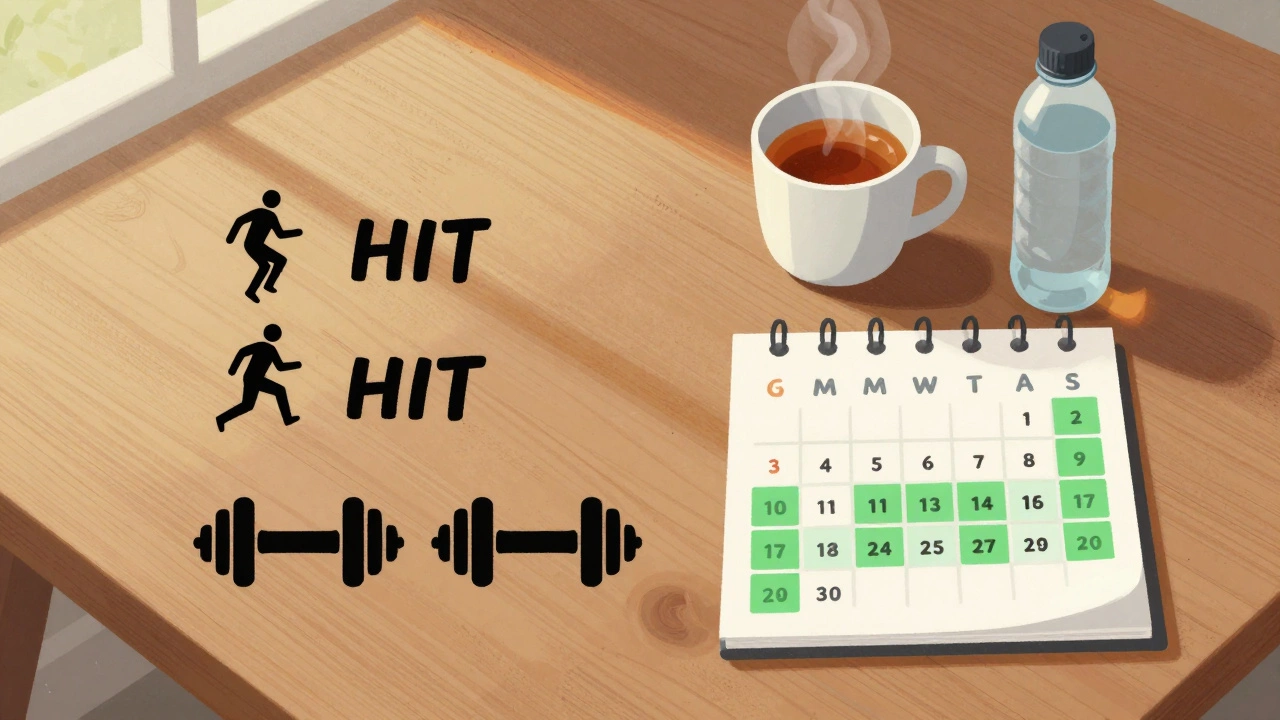
- Goal: Lose fat fast? Do 2 HIIT sessions + 2 weight sessions per week. Add walking on off days.
- Goal: Get stronger and toned? Do 3 weight sessions + 1 HIIT session. Focus on compound lifts: squats, rows, presses.
- Goal: Stay healthy and keep moving? Do 2 weight sessions + 1 HIIT session. That’s enough to stay strong and keep your heart healthy.
Don’t try to pick one. Build a mix. Your body isn’t a machine that runs on one fuel-it needs variety, challenge, and recovery.
Common Mistakes People Make
- Doing HIIT every day → burnout, injury, stalled progress
- Only lifting light weights → no muscle growth, no metabolic boost
- Skipping warm-ups because “I’m short on time” → more injuries, less gains
- Thinking weights make women “bulky” → false. Women don’t build muscle like men without hormones or extreme diets
- Believing HIIT alone will give you abs → abs are made in the kitchen, revealed by fat loss and core strength
Final Thought
HIIT and weights aren’t rivals. They’re teammates. HIIT wakes up your metabolism. Weights build the engine that keeps it running. One gives you speed. The other gives you strength. You need both if you want to feel powerful, resilient, and in control of your body.
Stop asking which is better. Start asking: What does my body need today? Then mix them. Adjust. Keep going.
Can I lose weight with just HIIT?
Yes, you can lose weight with just HIIT-it’s effective for burning calories fast. But without strength training, you’ll likely lose muscle along with fat. That slows your metabolism over time. For lasting results, pair HIIT with resistance work. You’ll lose fat, keep muscle, and stay lean longer.
Do I need to lift heavy to build muscle?
Not necessarily. You can build muscle with moderate weights if you push close to failure and increase volume over time. But lifting heavier (70-85% of your max) is more efficient for muscle growth. It signals your body to adapt faster. If you’re new, start lighter and focus on form. Progress to heavier loads as you get stronger.
How often should I do HIIT and weights?
For most people, 2-3 days of weights and 1-2 days of HIIT per week works best. Leave at least one rest day between intense sessions. If you’re recovering well, you can do 3 weight days and 2 HIIT days. But never do HIIT two days in a row without a rest day in between. Your nervous system needs recovery.
Is HIIT bad for your heart?
No, HIIT is actually great for heart health-it improves cardiovascular endurance, lowers blood pressure, and reduces resting heart rate. But if you have a heart condition, uncontrolled high blood pressure, or haven’t exercised in years, start with low-intensity cardio first. Get clearance from your doctor before doing high-intensity intervals.
Can I do weights and HIIT on the same day?
Yes, but don’t do them back-to-back at max intensity. If you lift in the morning, do a light 10-minute HIIT session in the evening-think jump rope or brisk incline walking. Or vice versa. Pushing both hard on the same day increases injury risk and recovery time. Space them out or keep one session moderate.