

Strength Training Rest Calculator
Calculate Your Optimal Rest Time
Enter the number of reps per set (e.g., 8 for 8 reps)
Recommended Rest Time
Ever finished a set of squats, collapsed on the bench, and wondered if you’re wasting time waiting-or worse, rushing too soon? The clock ticks. Your muscles burn. Your coach yells, "You got this!" But how long should you really rest between sets? It’s not a one-size-fits-all answer. Get it wrong, and you’re either not growing stronger or risking injury. Get it right, and you unlock better lifts, faster progress, and less burnout.
Why Rest Time Matters More Than You Think
Rest isn’t downtime. It’s part of the workout. Your body doesn’t build muscle while you’re lifting. It builds muscle while you’re recovering. If you jump into the next set too soon, you won’t have enough energy to lift heavy or maintain form. Too long, and you lose momentum, your heart rate drops too much, and the training effect fades.
Studies show that rest intervals directly impact strength gains, muscle growth, and endurance. A 2016 meta-analysis in the Journal of Strength and Conditioning Research found that longer rest periods (2-5 minutes) led to significantly greater strength increases in compound lifts compared to shorter rest (under 90 seconds). That’s not a guess-it’s data from real lifters doing real training.
Rest time controls how your body adapts. Short rest? You’re training endurance and metabolic stress. Long rest? You’re training pure strength and power. Pick the wrong one, and you’re training for the wrong goal.
Rest Times Based on Your Goal
Your rest time should match your goal. Here’s what science and experience say works best:
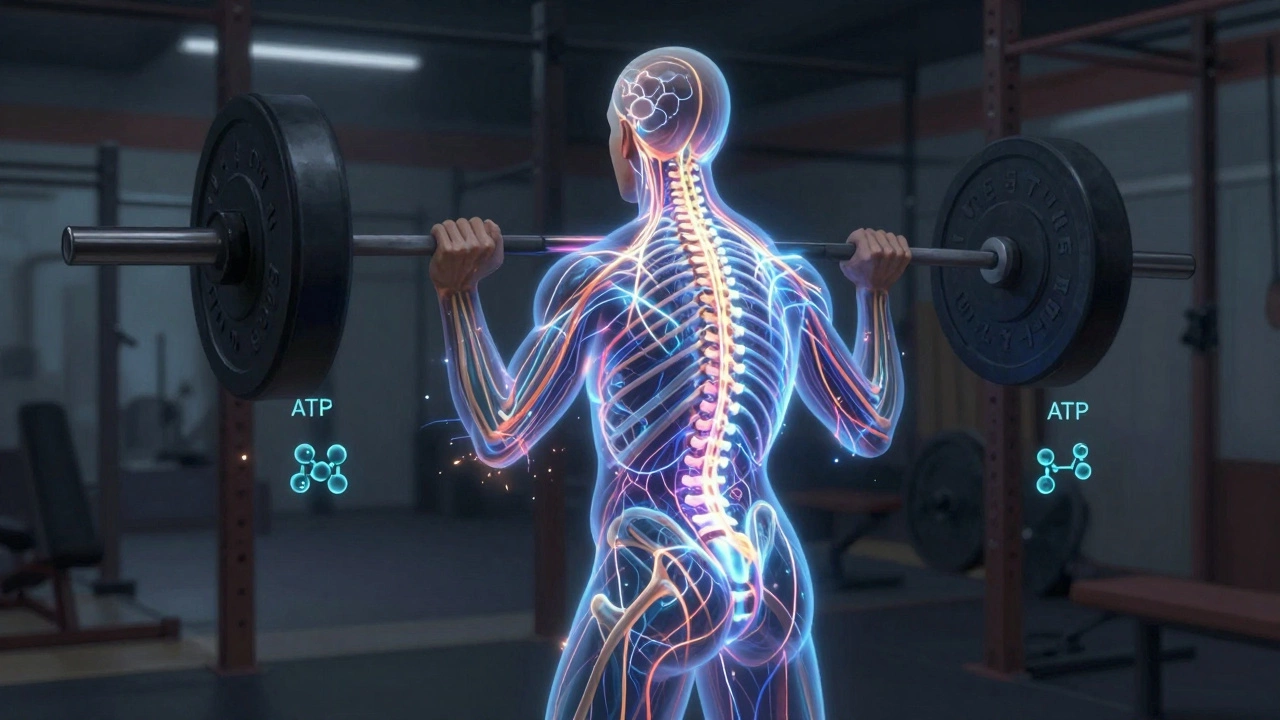
- For Max Strength (1-5 reps per set): Rest 3 to 5 minutes. Lifting near your one-rep max demands full recovery of your nervous system and ATP stores. If you’re doing 5 sets of 3 reps at 90% of your max, you need time to reset. Skimp here, and your 5th set feels like a struggle-even if your muscles aren’t tired. Your central nervous system is the bottleneck.
- For Muscle Growth (6-12 reps per set): Rest 60 to 90 seconds. This sweet spot creates enough metabolic stress to trigger hypertrophy without fully recovering. You’ll feel the burn, your muscles will swell, and growth signals fire. Too short? You can’t lift heavy enough. Too long? You lose the pump and the metabolic trigger.
- For Endurance (13+ reps per set): Rest 30 to 60 seconds. You’re building stamina, not strength. Shorter rests keep your heart rate up and train your muscles to clear lactic acid faster. Great for circuits, kettlebell work, or bodyweight finishers.
Let’s say you’re doing barbell rows. If you’re lifting 80% of your max for 5 reps, rest 4 minutes. If you’re doing 10 reps at 65%, rest 75 seconds. Don’t guess-align your rest with your rep range.
Compound vs. Isolation: Different Rules
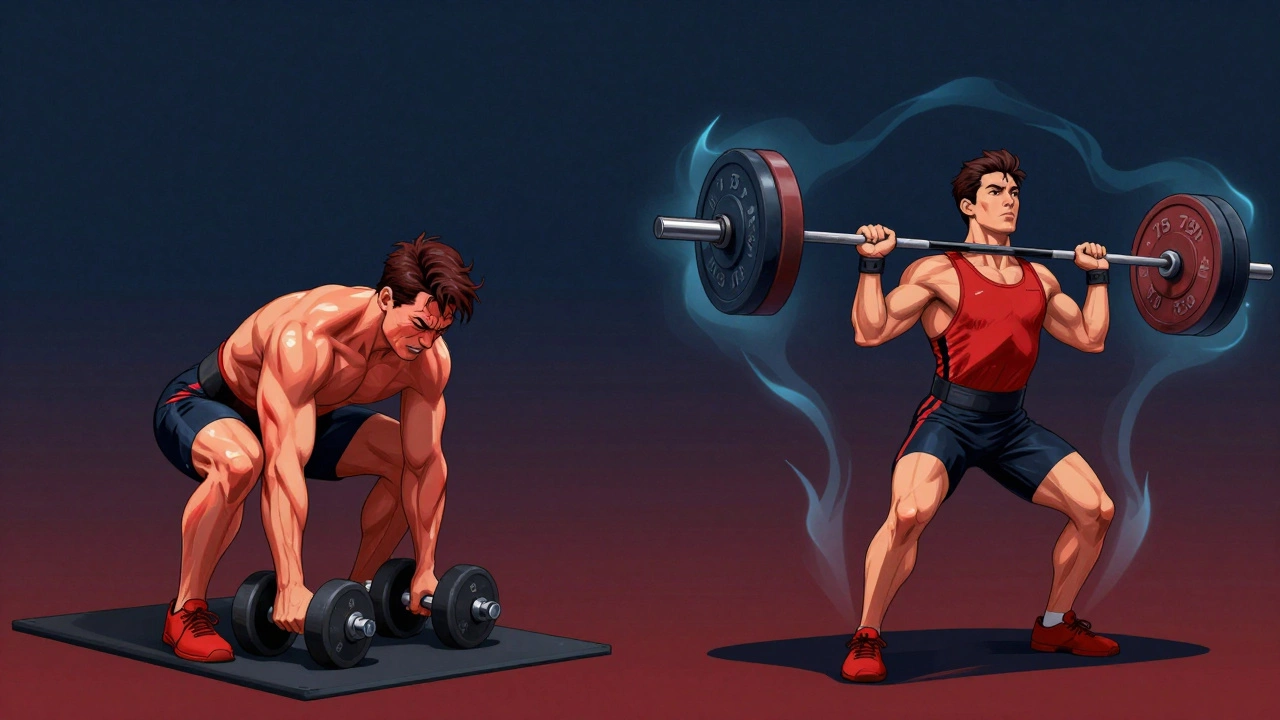
Not all exercises are equal. Compound lifts-squats, deadlifts, bench press, overhead press-use multiple large muscle groups and demand more energy. They tax your nervous system harder. Isolation moves-bicep curls, leg extensions, lateral raises-use smaller muscles and don’t drain you as much.
So here’s the rule: Rest longer for big lifts, shorter for small ones.
After a heavy set of deadlifts, you might need 4 minutes just to catch your breath and reset your grip. After a set of dumbbell flyes? 45 seconds is plenty. Many people make the mistake of resting the same time for everything. That’s why their big lifts stall-they’re not recovering enough. Meanwhile, their isolation work gets too much rest and loses effectiveness.
How to Know If You’re Resting Enough
You don’t need a stopwatch to know if you’re ready. Your body gives you signals:
- Your breathing is back to normal-not gasping, not shallow.
- Your heart rate has dropped noticeably.
- You feel mentally ready to go again, not sluggish or distracted.
- Your muscles aren’t trembling or weak when you stand up to lift.
If you’re still panting after 2 minutes, you need more time. If you’re bored and your legs are cold after 5 minutes, you’re resting too long. Listen to your body, not just the clock.
Pro tip: Use your breathing as a guide. Take 3 slow, deep breaths after each set. If you can talk in full sentences without huffing, you’re probably ready. If you’re still wheezing, wait.
What About Supersets and Drop Sets?
Supersets (back-to-back exercises with no rest) and drop sets (reducing weight without resting) are great tools-but they’re not for every workout. They’re designed to increase volume and metabolic stress, not strength.
Use them for hypertrophy days, finishers, or when time is tight. But don’t use them on your heavy compound days. If you’re doing 5x5 squats, don’t superset them with calf raises. You’ll tank your performance. Save the supersets for accessory work.
Drop sets work well for isolation moves. After your last heavy set of bicep curls, drop the weight 30% and do 10 more reps with no rest. That’s a solid pump builder. But again-don’t do this on your main lifts unless you’re specifically training for endurance or muscle burn.
Age, Experience, and Recovery Capacity
Rest needs change over time. A 20-year-old lifter might bounce back in 90 seconds after a heavy squat set. A 45-year-old might need 4 minutes. That’s not weakness-it’s biology.
As you age, your recovery slows. Your nervous system takes longer to reset. Your mitochondria (your cells’ energy factories) don’t regenerate as fast. Don’t compare your rest times to someone half your age. Adjust based on how you feel, not what you see on Instagram.
Beginners often rest too long because they’re unsure. Advanced lifters rest too little because they’re trying to push harder. The sweet spot? Rest enough to perform your next set with proper form and intensity. That’s the goal-not to suffer, but to improve.
Practical Tips for Real-Life Rest Times
Here’s how to make this work without overthinking it:
- Use a timer on your phone. Set it for 90 seconds for hypertrophy, 3 minutes for strength. Let it beep. No guessing.
- Plan your rest during warm-up sets. While you’re doing lighter sets, you’re already recovering from the heavy ones.
- Use rest time wisely. Stretch, hydrate, check your form in the mirror. Don’t scroll TikTok. Stay engaged.
- Track your performance. If your weights drop consistently on later sets, you’re resting too little. If you’re lifting the same weight every set but feel bored, you might be resting too long.
- On leg days, rest longer. Legs use more muscle mass. You’ll need more recovery.
One real example: A client in Auckland, 38, was stuck at 160kg on deadlifts for 6 months. She was resting 60 seconds between sets. We bumped it to 4 minutes. In 8 weeks, she hit 180kg. Not because she trained harder-because she recovered better.
When to Break the Rules
There are exceptions. If you’re doing a metabolic conditioning circuit, you might rest only 20 seconds between exercises. If you’re preparing for a powerlifting meet, you might rest 5 minutes even on warm-ups. If you’re recovering from an injury, you might need even longer.
But these are exceptions. For 90% of people, the guidelines above are your best bet. Don’t overcomplicate it. Match your rest to your goal, your lift, and your body.
Final Takeaway
Rest isn’t lazy. It’s strategic. The most effective lifters aren’t the ones who grind through every set. They’re the ones who know when to stop, breathe, and come back stronger. Whether you’re chasing max strength, muscle size, or endurance, your rest time is just as important as your reps and weight.
Start tomorrow: Pick one lift. Set a timer. Rest 3 minutes. See how much heavier you can lift on your next set. You might be surprised.
How long should I rest between sets for muscle growth?
For muscle growth, rest 60 to 90 seconds between sets. This gives you enough recovery to lift heavy enough to stimulate growth while keeping metabolic stress high. Rest less than 60 seconds, and you won’t lift with enough intensity. Rest more than 90 seconds, and you lose the pump that helps trigger hypertrophy.
Is it okay to rest 2 minutes between sets?
Yes, especially if you’re lifting heavy (5 reps or fewer) or doing compound lifts like squats or deadlifts. Two minutes is a solid middle ground for strength training. Many lifters find 2 minutes gives them enough recovery without losing focus. If you’re still tired after 2 minutes, go to 3.
Should I rest longer on leg day?
Yes. Legs use more muscle mass, so they demand more energy and recovery. After heavy squats or Romanian deadlifts, rest 3 to 5 minutes. You’ll feel the difference in your performance and how much weight you can handle on later sets.
Can I rest too long between sets?
Yes. Resting more than 5 minutes on hypertrophy sets can reduce metabolic stress and make your workout feel more like a strength session than a muscle-building one. You’ll still get stronger, but you’ll miss out on the muscle pump and fatigue that drives growth. Keep it under 90 seconds for 8-12 rep ranges.
Do I need to rest between warm-up sets?
Not much. Warm-up sets are meant to prepare your body, not fatigue it. Rest 30 to 60 seconds between warm-ups. Use that time to stretch, hydrate, or mentally prepare. Don’t sit down. Stay loose. Your real rest should come between your working sets.