

How often should you see a personal trainer? It’s not a one-size-fits-all answer. Some people need weekly sessions. Others do fine with monthly check-ins. And some don’t need a PT at all after a few sessions. The truth? It depends on your goals, your consistency, and where you are in your fitness journey.
Starting Out: Weekly Sessions Make Sense
If you’ve never lifted a weight, struggled to do a single push-up, or have no idea how to use a treadmill without looking confused - start with weekly sessions. A personal trainer isn’t just there to show you how to do a squat. They’re there to teach you movement patterns, fix your form before it turns into an injury, and build your confidence. Most beginners hit a wall around week three. That’s when motivation drops, confusion sets in, and bad habits creep in. Weekly sessions keep you on track. You get feedback. You learn. You adjust. And you start seeing results faster.
Research from the American Council on Exercise shows that people who train with a PT at least once a week for the first 8-12 weeks are 3x more likely to stick with their program long-term. That’s not because they’re lazy - it’s because they’re learning. And learning takes repetition.
After the First 3 Months: Cut Back to Every 2-4 Weeks
Once you’ve got the basics down - you know how to deadlift without rounding your back, you can do a proper plank without collapsing, and you don’t need someone to tell you to breathe during a set - you don’t need weekly check-ins anymore. This is where most people overpay. You’re not a beginner anymore. You’re a learner.
At this stage, every 2-4 weeks is enough. Your trainer checks your progress, tweaks your program, and spots any form drift. Maybe you’ve plateaued on your bench press. Maybe your hamstrings are tight from sitting too much. They adjust your volume, swap out exercises, or suggest mobility drills. You do the heavy lifting (literally) between sessions. That’s the point. The trainer becomes a coach, not a babysitter.
Think of it like going to the dentist. You don’t need a cleaning every week. But you still go every 6 months. Same idea.
Advanced Lifters: Monthly or As Needed
If you’ve been training for over a year and you’re lifting heavy, hitting personal records, or training for a competition - you still benefit from a PT, but less often. Monthly sessions work well here. Why? Because your body adapts slowly. Your program doesn’t need constant tweaking. You know your limits. You know your strengths.
What you need now is a fresh set of eyes. Maybe you’ve been doing the same routine for 6 months and your gains have stalled. Maybe your shoulder is acting up. Maybe you’re not recovering well. A trainer can spot patterns you’ve blind to. They might suggest deload weeks, change your rep schemes, or introduce periodization. This isn’t about learning. It’s about optimizing.
Pro athletes don’t have coaches in the gym every day. They have them for strategy, film review, and fine-tuning. You’re no different.
What If You’re Just Trying to Stay Active?
Not everyone wants to get shredded or deadlift twice their body weight. Some people just want to feel strong, move better, and not get hurt when they play with their kids or go hiking. For them, seeing a PT once every 6-8 weeks is plenty. One session to review form, one to introduce a new movement (like a kettlebell swing or a single-leg Romanian deadlift), and then you’re off on your own. You might do 3-4 workouts a week on your own, using apps or YouTube videos. That’s fine. The PT’s job here is to prevent injury and keep your movement quality high.
Studies from the University of Auckland’s Human Movement Lab show that people who get a form check every 2 months reduce their risk of overuse injuries by 40% compared to those who never see a trainer. That’s not a small number. It’s a game-changer for lifelong fitness.

Signs You Need More Sessions
Here’s when you should bump up your sessions:
- You’re not sure if you’re doing exercises right - and you’re too embarrassed to ask
- You’ve hit a plateau and can’t figure out why
- You keep getting the same injury (knee pain, lower back ache, shoulder tightness)
- Your motivation crashes every few weeks
- You’re trying to recover from an injury and need rehab guidance
If any of these sound familiar, you don’t need less help. You need more.
Signs You Can Cut Back
And here’s when you can safely reduce frequency:
- You can do a full workout without needing a demo
- You know how to adjust weights and reps based on how you feel
- You’ve got a solid routine you stick to
- You’re tracking progress - reps, weights, how you feel
- You’ve been injury-free for 6+ months
If you can answer yes to these, you’re ready to take ownership. That’s the goal, right? To become your own best trainer.
What About Online Coaching?
Online coaching is great - if you’re disciplined. But it’s not a replacement for in-person feedback. You can send a video of your squat, but the trainer can’t see your foot positioning, your hip tilt, or your breathing pattern in real time. That’s why many smart people use a hybrid approach: one in-person session every 4 weeks, and then weekly check-ins via video. You get the precision of live feedback, plus the flexibility of remote support.
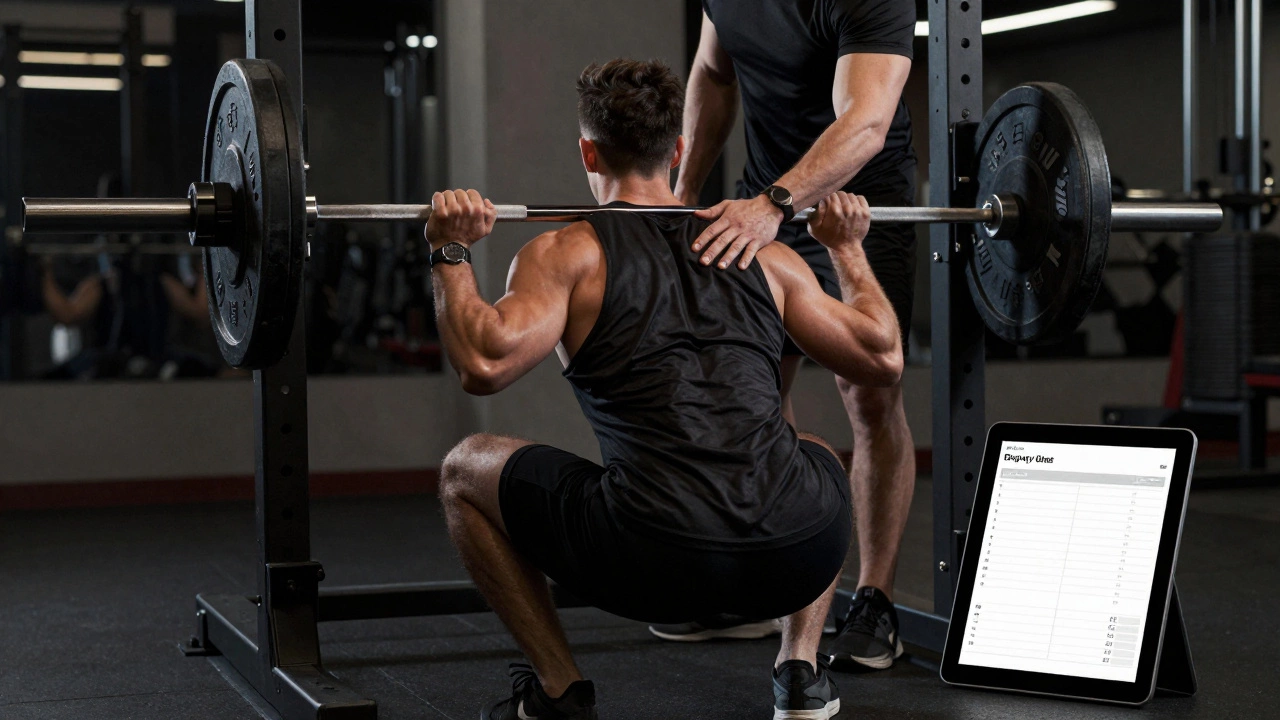
Cost vs. Value
Let’s be real - personal training isn’t cheap. In Auckland, sessions range from $60 to $120 an hour. But here’s the math: if you pay $80 a session and see your trainer every 2 weeks, that’s $160 a month. If you skip sessions and get injured? A single physio visit can cost $150. A missed week of work? That’s $500. A 3-month rehab program? $2,000. Investing $160 a month in prevention beats paying $2,000 later every time.
Think of it as insurance. You don’t hope for a car accident. You hope you never need it. But you still get coverage.
Final Rule of Thumb
Here’s the simplest way to decide:
- First 3 months: Once a week
- Months 4-12: Every 2-4 weeks
- Year 2+: Monthly or as needed
And if you’re not sure? Book one session. See how it feels. Then decide. You don’t need a long-term commitment. You need clarity.
What If You Can’t Afford a PT?
Then don’t give up. Use free resources. Watch videos from certified trainers (look for those with CSCS or ACE credentials). Record yourself doing exercises and compare them to the demo. Join a local walking group or community fitness class. Your body doesn’t care if you paid $100 or $0 - it only cares if you show up consistently.
But if you’re serious about progress - and avoiding injury - a PT is one of the best investments you’ll ever make. Not because they make you sweat. Because they make you smarter.
How often should a beginner see a personal trainer?
Beginners should see a personal trainer once a week for the first 8-12 weeks. This helps build proper form, establish routine, and prevent injuries. After that, frequency can be reduced based on progress.
Can I just use online videos instead of hiring a PT?
Online videos can help, but they can’t correct your form in real time. Poor form leads to injuries. A PT spots subtle mistakes - like a hip shift during a squat or a collapsed arch during a lunge - that videos won’t catch. A hybrid approach (monthly in-person + weekly video check-ins) works best.
Is it worth seeing a PT if I’m not trying to lose weight?
Absolutely. Strength, mobility, and injury prevention matter whether you’re aiming to lose weight, build muscle, or just stay active. A PT helps you move better, which improves daily life - carrying groceries, playing with kids, hiking, or even just sitting without back pain.
How do I know if my PT is any good?
Look for certifications from ACE, NASM, or CSCS. Ask if they’ve worked with clients similar to you. A good PT asks about your goals, sleep, stress, and recovery - not just your squat weight. They should explain why they’re changing your program, not just hand you a new list.
Should I see a PT if I’m recovering from an injury?
Yes - but only if they’re trained in rehabilitation. Not all PTs are. Look for someone with experience in post-injury programming. They should work with your physiotherapist (if you have one) and avoid pushing you too hard too soon. Recovery is about precision, not intensity.