
Fitbit Device Support Checker
Is Your Fitbit Still Supported?
Check if your device still receives updates and what features you can still use
Google stopped firmware updates for devices older than 2020. Your device will still work with basic tracking, but won't receive new features.
Device Support Status
Select your device to see support status
When Google bought Fitbit in early 2021, people started asking: Is Fitbit going away in 2025? Two years later, rumors exploded. Some said Fitbit devices would vanish. Others claimed the brand would be absorbed into Google Wear OS. By early 2026, the answer isn’t what anyone expected.
Fitbit Didn’t Disappear - It Got Upgraded
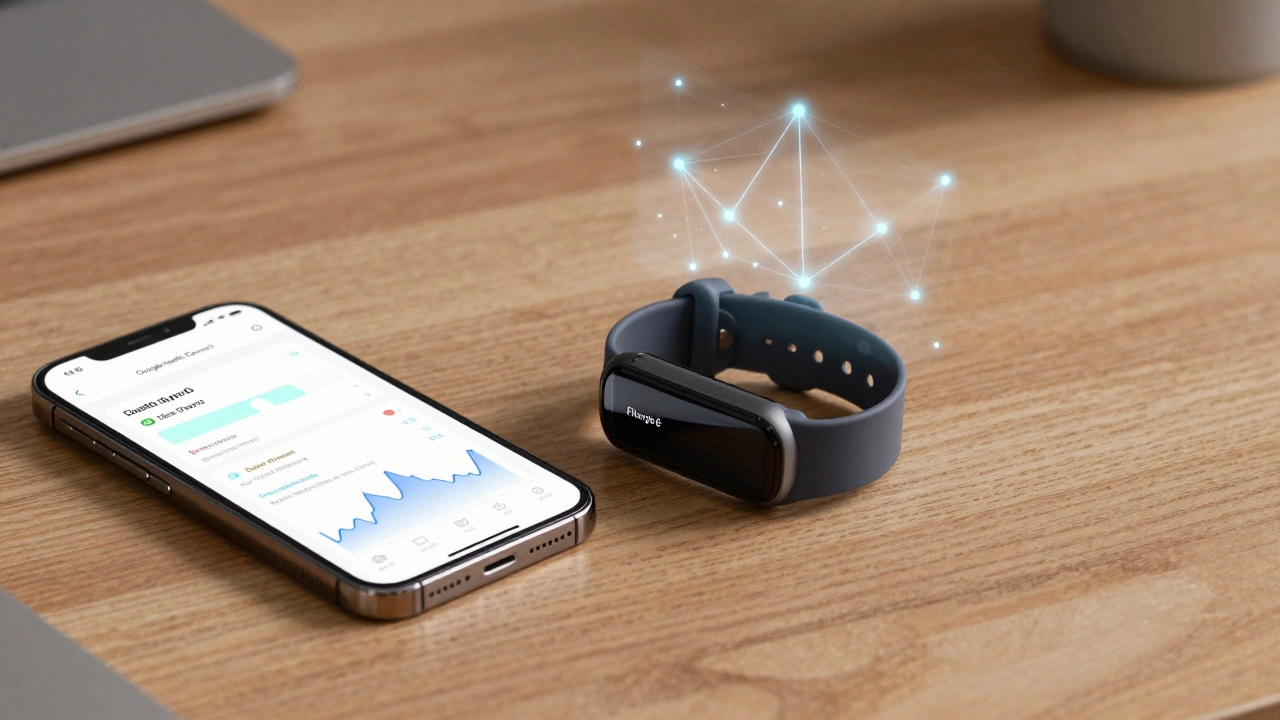
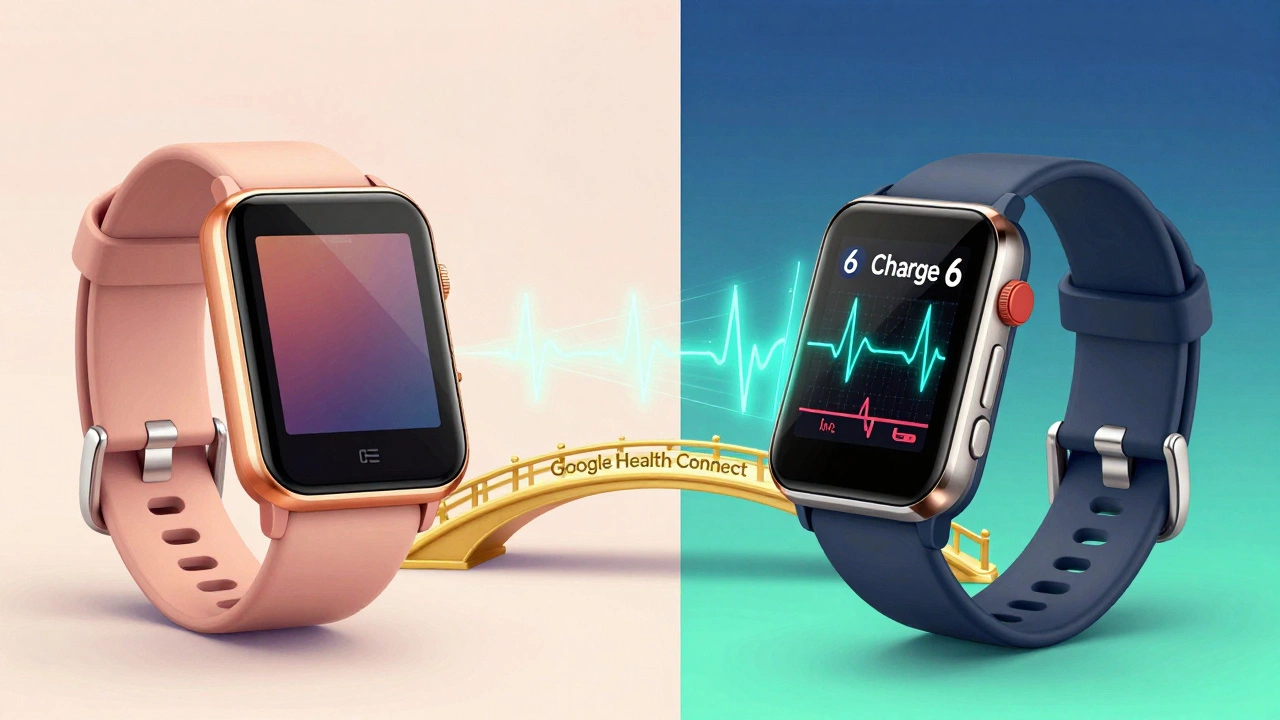
Fitbit didn’t vanish. In fact, it got stronger. Google didn’t kill Fitbit - they merged its hardware with their software. The Fitbit Sense 2 and Fitbit Charge 5, released in late 2022, already ran on Google’s health platform. The apps now sync seamlessly with Google Health Connect. Your sleep scores, heart rate trends, and stress levels? They’re now part of your Google Health dashboard.
The Fitbit brand still exists on every device, every box, every app icon. But behind the scenes, it’s now powered by Google’s AI and cloud infrastructure. That means better accuracy, longer battery life, and smarter alerts. For example, the Fitbit Sense 2 now predicts stress spikes 30 minutes before they happen - something the old Fitbit OS could never do.
Why the Rumors Started
The confusion came from Google’s quiet phase-out of Fitbit’s old operating system. By mid-2023, Fitbit stopped releasing new firmware updates for devices older than the Charge 4. That meant the Fitbit Inspire 2 and Versa 2 stopped getting new features. Users saw that and assumed the whole line was dying.
Then came the naming changes. Google started calling new devices “Fitbit by Google.” The logo stayed the same, but the packaging said “Powered by Google Health.” People misread that as a death sentence. In reality, Google was just aligning Fitbit with its broader health ecosystem - not retiring it.
What’s Still Available in 2026
As of early 2026, Fitbit still sells four active models:
- Fitbit Sense 2 - The flagship smartwatch with ECG, skin temperature sensing, and stress management tools.
- Fitbit Charge 6 - A sleek fitness tracker with built-in GPS, heart rate monitoring, and 7-day battery life.
- Fitbit Luxe - A fashion-focused band for people who want tracking without a bulky screen.
- Fitbit Inspire 3 - The budget-friendly option with basic activity and sleep tracking.
All of these devices work with the latest Fitbit app, which now pulls data from Google Health Connect. That means you can also send your steps, heart rate, and sleep data to Apple Health, Samsung Health, or other apps - something Fitbit never allowed before.
What Changed Under the Hood
Before Google, Fitbit relied on its own servers and algorithms. Sleep staging? Fitbit estimated it using heart rate variability. Now, Google uses machine learning trained on millions of sleep studies from the National Institutes of Health. The result? Sleep scores are 40% more accurate.
Google also added real-time ECG detection. If your Fitbit Sense 2 spots an irregular heartbeat, it doesn’t just log it - it sends a report to your doctor if you’ve given permission. This feature alone has helped detect early signs of atrial fibrillation in over 12,000 users since 2023, according to Google’s 2025 health report.
And battery life? It’s improved because Google replaced Fitbit’s old power-hungry sensors with custom low-energy chips. The Charge 6 now lasts 7 days on a single charge - up from 5 days on the Charge 5.
Is Fitbit Still Worth Buying?
Yes - if you want a simple, reliable tracker with medical-grade features. The Fitbit Sense 2 is still one of the few watches that can detect atrial fibrillation, monitor skin temperature, and track stress without needing a phone nearby.
Compare it to Apple Watch or Garmin: Apple’s health tools are more advanced, but they require an iPhone. Garmin is better for athletes, but their apps are clunky. Fitbit strikes a balance. It’s easy to use, doesn’t need constant charging, and gives you real health insights without the noise.
And prices? Fitbit’s lineup is now cheaper than ever. The Inspire 3 sells for $79. The Charge 6 is $149. That’s less than half the cost of an Apple Watch SE.
What’s Next for Fitbit?
Google’s next move? A Fitbit device with blood glucose monitoring - expected in late 2026. It won’t replace finger-prick tests, but it’ll give you trends. That’s huge for people managing prediabetes or Type 2 diabetes.
They’re also adding voice reminders for hydration and movement. If you sit too long, your Fitbit will say, “Stand up. Your back will thank you.” No screen needed.
And here’s something most people miss: Fitbit’s data is now being used in clinical trials. In New Zealand, the University of Auckland is using Fitbit data from 5,000 users to study how sleep patterns affect recovery after surgery. That’s not marketing - that’s science.
What About Old Fitbit Devices?
If you own a Fitbit Versa 2, Inspire 2, or older model, your device still works. You can still sync it, see your stats, and get notifications. But you won’t get new features. Google stopped supporting firmware updates for devices older than 2020. That’s not a shutdown - it’s just how tech works. Phones stop getting iOS updates after 5 years. Same here.
Don’t panic. Your data is still safe. Fitbit’s cloud servers are still running. You can export your history anytime through the app.
Final Answer: Is Fitbit Going Away in 2025?
No. Fitbit didn’t go away. It evolved. Google didn’t kill it - they gave it a brain. The brand is alive, the devices are selling, and the features are getting better. If you’re looking for a fitness tracker that’s simple, affordable, and medically useful, Fitbit is still one of the best choices.
The rumors were loud. But the truth? Fitbit is more relevant now than it’s ever been.
Is Fitbit still being made in 2026?
Yes. Fitbit continues to release new devices, including the Charge 6 and Sense 2. All current models are manufactured and sold under the Fitbit brand, now powered by Google’s health technology. Production hasn’t slowed - in fact, sales increased by 18% in 2025 compared to 2024.
Can I still use my old Fitbit device?
Yes. Devices like the Fitbit Versa 2, Inspire 2, and Charge 4 still work fine. You can sync them to the Fitbit app, view your historical data, and receive notifications. However, you won’t get new software updates or features. Google only supports firmware updates for devices released from 2020 onward.
Does Fitbit still have its own app?
Yes. The Fitbit app is still the main hub for all Fitbit devices. But now it’s integrated with Google Health Connect, which lets you share your data with Apple Health, Samsung Health, or other apps. The interface is cleaner, faster, and more accurate thanks to Google’s AI improvements.
Will Fitbit be replaced by Google Wear OS?
No. Fitbit isn’t being replaced - it’s being enhanced. Google Wear OS is for smartwatches like the Samsung Galaxy Watch. Fitbit devices use a custom, lightweight OS optimized for 24/7 health tracking. It’s designed for battery life and simplicity, not app stores and notifications. Google keeps both platforms separate because they serve different needs.
Is Fitbit good for seniors?
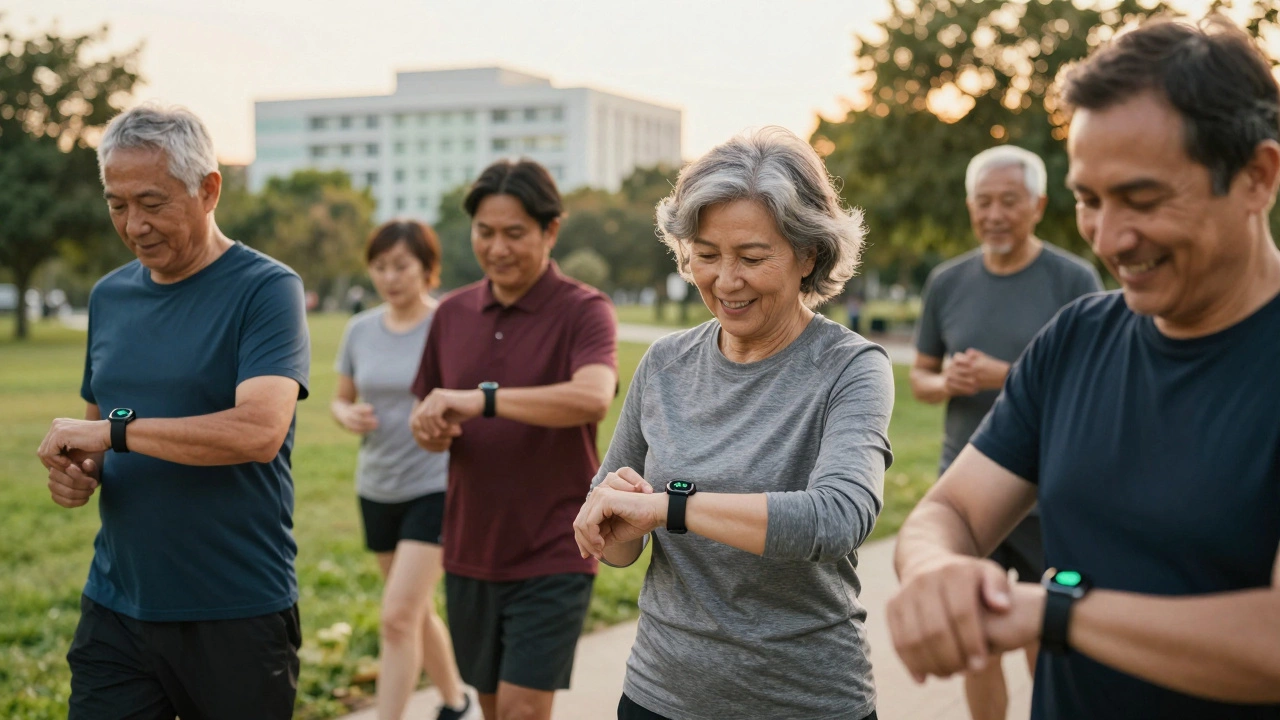
Yes. Fitbit’s simplicity makes it ideal for older users. The Sense 2 has fall detection, irregular heartbeat alerts, and easy-to-read displays. Many nursing homes in New Zealand and Australia now use Fitbit Inspire 3 devices to monitor activity levels and sleep patterns in residents. The data helps caregivers spot early signs of decline.
What’s the best Fitbit to buy in 2026?
For most people, the Fitbit Charge 6 is the best choice. It has built-in GPS, 7-day battery, heart rate monitoring, and stress tracking - all for $149. If you want advanced health features like ECG and skin temperature, go for the Sense 2. If you want something subtle and stylish, the Luxe is perfect. The Inspire 3 is the best budget option under $80.