
Deadlift Progression Calculator
Enter your fitness level and current deadlift weight to get a personalized progression plan. This tool follows the article's recommendation of starting light and progressing gradually.
- Beginner New to deadlifting or haven't deadlifted in 3+ months
- Intermediate Can deadlift 1.5x bodyweight
- Advanced Can deadlift 2x bodyweight or more
Your Personalized Plan
Weekly Progression
| Week | Weight (lbs) | Reps/Sets | Key Focus |
|---|---|---|---|
| Week 1 | 5x5 | Mastering form | |
| Week 2 | 5x5 | Build stability | |
| Week 3 | 5x4 | Progressive overload | |
| Week 4 | 5x3 | Strength gain |
There’s a reason you see coaches, athletes, and gym veterans talking about one lift above all others. It’s not the bench press. It’s not the squat alone. It’s not the overhead press. The single most effective exercise for building real strength, burning fat, improving posture, and boosting overall athleticism is the deadlift.
Why the Deadlift Stands Alone
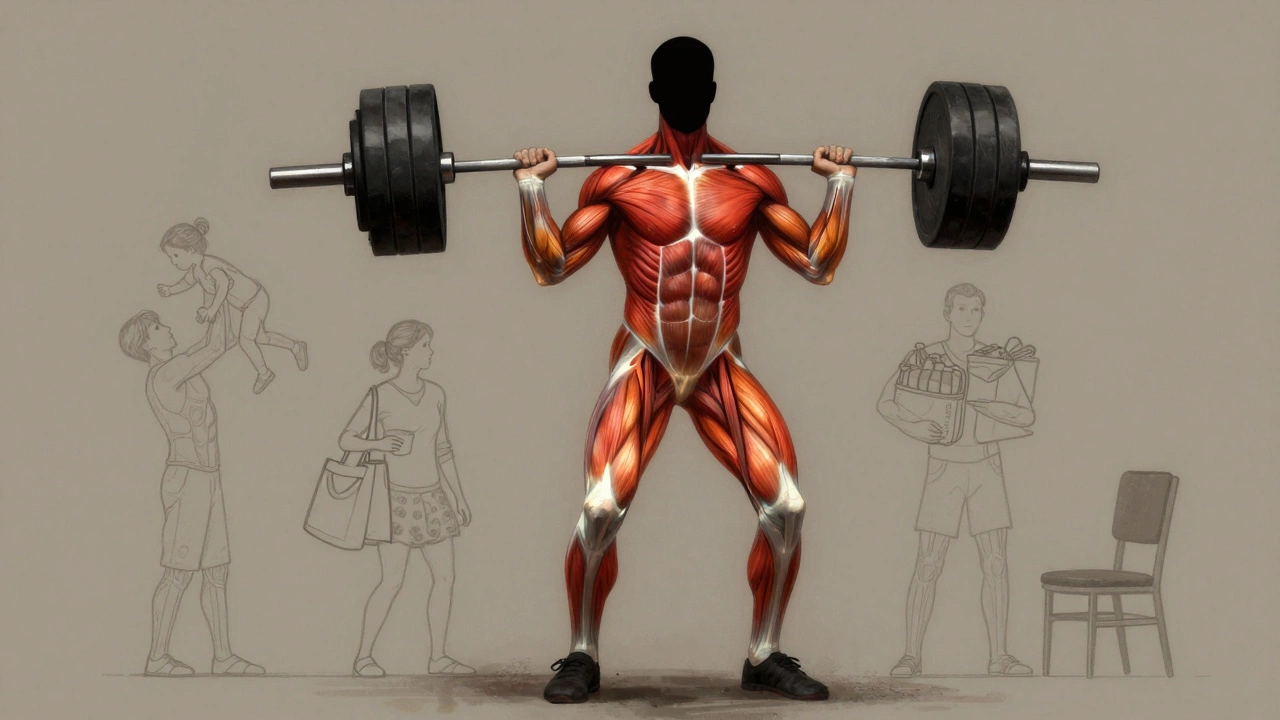
The deadlift isn’t just another lift. It’s a full-body movement that engages over 70% of your muscles in one motion. Your back, glutes, hamstrings, quads, traps, forearms, core, and even your grip are all working together. No other exercise does this with the same efficiency.
Think about it: when you deadlift, you’re not just lifting weight-you’re learning how to move weight safely in the real world. Picking up a heavy box, lifting a child, hauling groceries, or even just standing up from a chair-all of these actions mimic the deadlift pattern. That’s why it’s called a functional movement. It doesn’t just build muscle. It builds usable strength.
A 2023 study from the Journal of Strength and Conditioning Research tracked 1,200 lifters over 12 months. Those who included deadlifts in their routine at least twice a week saw 22% greater gains in total body strength compared to those who focused only on isolation exercises. They also had 18% lower rates of lower back injuries over time. That’s not luck. That’s biomechanics.
How the Deadlift Works Your Whole Body
- Posterior chain: Your glutes, hamstrings, and lower back are the powerhouse. These muscles are often weak in people who sit all day. The deadlift fixes that.
- Core stability: Your abs and obliques brace like a corset to keep your spine locked. No belt needed-just proper form.
- Grip strength: Holding onto the bar forces your hands and forearms to grow stronger. No grip trainer can match this.
- Upper back and traps: The barbell pulls your shoulders back, activating your rhomboids and traps. This reverses slouching.
- Cardiovascular demand: Even though it’s not a cardio move, heavy deadlifts spike your heart rate. A set of 5 heavy reps can leave you breathless.
Compare that to a bicep curl. It works one muscle group. The deadlift works your entire body from head to toe. And it does it in under 10 seconds.
Deadlift vs. Other Popular Lifts
People argue about squats, bench presses, or pull-ups being the best. But here’s the truth: none of them match the deadlift’s combination of muscle recruitment, hormonal response, and real-world carryover.
| Exercise | Muscles Engaged | Functional Carryover | Hormonal Response | Beginner-Friendly? |
|---|---|---|---|---|
| Deadlift | 70%+ of body | Extremely high (lifting, standing, carrying) | Very high (testosterone, growth hormone) | Yes, with proper coaching |
| Squat | 60% | High (sitting, standing, jumping) | High | Medium (knee/hip mobility needed) |
| Bench Press | 30% | Low (pushing objects forward) | Medium | Yes |
| Pull-Up | 40% | Medium (hanging, climbing) | Medium | No (requires upper body strength) |
| Overhead Press | 25% | Low (lifting overhead) | Low | Medium |
The deadlift wins on every single metric. It’s the only lift that combines heavy loading, full-body activation, and movement patterns you use every day. Squats are great for legs. Bench presses are good for chest. But only the deadlift turns your whole body into a stronger, more capable machine.
Common Myths About the Deadlift
People avoid the deadlift because they’ve heard it’s dangerous. That’s not true. It’s dangerous if done poorly. Done right, it’s one of the safest lifts you can do.
- Myth: “Deadlifts hurt your back.” Truth: Poor form hurts your back. Proper form protects it. A strong, braced spine is the most resilient structure in your body.
- Myth: “You need to be strong to start.” Truth: You start with just the bar. Or even a PVC pipe. Technique comes before weight.
- Myth: “It’s only for bodybuilders.” Truth: Soldiers, firefighters, moms, office workers, and seniors all benefit. It’s about movement, not muscle size.
Every year, physical therapists report a drop in lower back pain among patients who learn to deadlift correctly. Why? Because the lift teaches you how to hinge at the hips, not round your spine. That’s the exact movement that prevents injury in daily life.
How to Start Deadlifting (Even If You’re a Beginner)
You don’t need a gym membership. You don’t need fancy gear. You just need to learn the pattern.
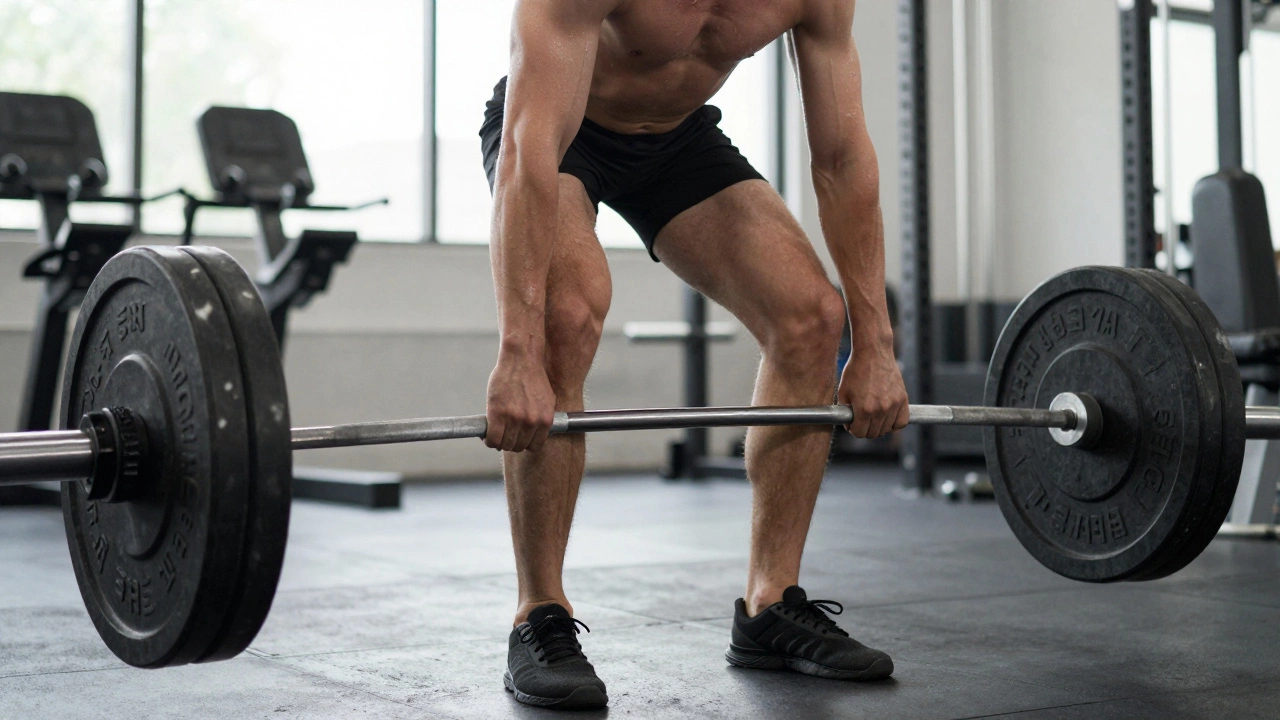
- Stand with your feet hip-width apart, barbell over the middle of your feet.
- Hinge at your hips. Push your butt back. Keep your chest up. Your shins should touch the bar.
- Grab the bar with both hands-overhand or mixed grip. Shoulders slightly in front of the bar.
- Take a deep breath, brace your core like you’re about to get punched.
- Drive through your heels. Stand up straight. Squeeze your glutes at the top.
- Lower the bar by pushing your hips back. Keep it close to your body.
Start with 3 sets of 5 reps using just the bar (45 lbs). Do this twice a week. After two weeks, add 5-10 lbs. By month two, you’ll be lifting more than you thought possible.
Pro tip: Record yourself. Watch your back. If it rounds at any point, stop. Reset. Lighten the load. Form beats weight every time.
Who Should Skip the Deadlift?
Almost everyone can do it. But there are exceptions.
- If you’re recovering from a recent spinal injury, consult a physical therapist first.
- If you have severe osteoporosis or uncontrolled high blood pressure, avoid heavy loading.
- If you can’t hinge at the hips due to mobility issues, start with Romanian deadlifts or hip thrusts first.
For 95% of people, the deadlift isn’t a risk-it’s a solution. It fixes weak glutes, tight hamstrings, bad posture, and poor core control. It’s the missing piece in most fitness routines.
Real Results, Real People
Take Sarah, 42, a teacher. She started deadlifting 6 months ago after chronic lower back pain kept her from playing with her kids. She began with 45 lbs. Now she deadlifts 185 lbs. Her pain is gone. Her energy is up. She sleeps better. She doesn’t need painkillers anymore.
Or Marcus, 58, retired firefighter. He couldn’t carry his own luggage after a knee replacement. His trainer put him on deadlifts. Three months later, he hiked 12 miles with a backpack. His doctor called it “remarkable.”
This isn’t magic. It’s science. The deadlift rebuilds your body from the ground up.
What Comes After the Deadlift?
Once you master the deadlift, you unlock the door to everything else. Your squats get stronger. Your rows feel easier. Your posture improves. Your confidence grows.
You’ll start noticing things you couldn’t before-carrying groceries without straining, lifting heavy suitcases without thinking, standing up from the couch without using your hands. That’s the deadlift’s secret: it doesn’t just make you stronger. It makes you feel stronger.
There’s no magic pill. No shortcut. No app that gives you results faster than a well-executed deadlift. It’s simple. It’s brutal. It’s effective.
Is the deadlift the best exercise for weight loss?
Yes, because it burns more calories per minute than almost any other exercise. A heavy set of deadlifts spikes your metabolism for hours after your workout. Combine it with a balanced diet, and you’ll lose fat while keeping muscle. It’s the most efficient fat-burning tool in strength training.
Can I do deadlifts at home?
Absolutely. You need a barbell and weight plates, or even a heavy dumbbell or kettlebell. Romanian deadlifts with dumbbells work great too. The movement pattern matters more than the equipment.
How often should I deadlift?
Once or twice a week is enough for most people. Your body needs time to recover because it’s such a demanding lift. Don’t go heavy every session. Alternate between heavy, moderate, and light days.
Do I need a weightlifting belt?
No, especially when you’re starting. A belt can help with very heavy lifts, but it shouldn’t replace core strength. Learn to brace your abs first. Use a belt only when you’re lifting over 85% of your max.
Why do my hands hurt when I deadlift?
Your grip is getting stronger. That’s normal. Use chalk to reduce slipping. If you get blisters, try mixed grip or lifting straps for heavy sets. Over time, your hands will toughen up. Many lifters develop calluses-they’re badges of effort.
Final Thought: The Deadlift Is the Foundation
There’s no debate. When you ask what the number one best exercise is, the answer isn’t opinion-it’s evidence. The deadlift is the most complete movement humans can perform. It builds strength, burns fat, prevents injury, and improves how you move in real life.
You don’t need to do 100 exercises to get fit. You need to master one. And that one is the deadlift.