

Fitness Balance Calculator
Assess Your Fitness Balance
Track how well your current routine covers the three pillars of fitness. Select your workouts below to see where you might need to add variety.
There’s no single workout that’s "best" for fitness. That’s the truth most fitness influencers won’t tell you. If you’re scrolling through social media looking for the one magic routine that’ll transform your body, burn fat, and build muscle overnight-you’re wasting time. Real fitness doesn’t work like that. It’s not about finding the perfect class or the trendiest program. It’s about building a sustainable, balanced movement habit that fits your life, your body, and your goals.
What Even Is "Fitness" Anyway?
Before we talk about workouts, let’s clear up what "fitness" means. It’s not just about looking lean or lifting heavy. True fitness is made up of five key pieces: cardiovascular endurance, muscular strength, muscular endurance, flexibility, and body composition. Skip any one of them, and you’re leaving part of your health on the table.
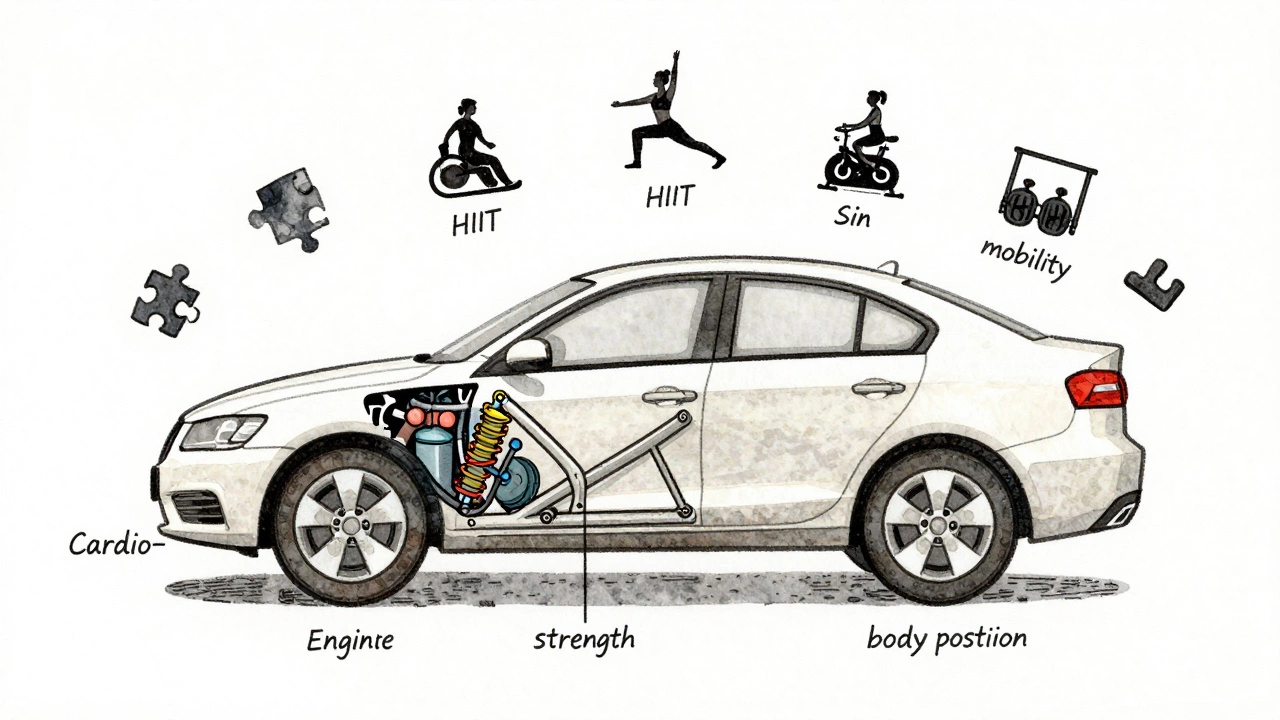
Think of it like building a car. You need an engine (cardio), strong frame (strength), durable parts (endurance), good suspension (flexibility), and the right weight (body composition). You wouldn’t build a car with only an engine and call it perfect. So why do people think one workout can do it all?
The Myth of the "Best" Workout
Every month, a new fitness trend hits Instagram like it’s the answer to everything. HIIT. CrossFit. Pilates. Zumba. Barre. Bootcamp. Each one promises results faster than the last. But here’s the thing: none of them are inherently better than the others. What matters is what you stick with.
A 2023 study from the University of Auckland tracked 1,200 people over 12 months who tried different fitness classes. The group that stuck with the same routine-no matter what it was-lost more body fat and gained more strength than those who switched every few weeks. Consistency beats intensity every time.
That means if you hate running but love dancing, dancing is your best workout. If you find yoga boring but enjoy lifting weights, then weights are your best option. Your favorite workout is the one you’ll keep doing.
What Actually Works? The Balanced Approach
There’s a simple formula that works for almost everyone: cardio, strength, and mobility-in that order, spread across the week.
- Cardio (2-3 times a week): This keeps your heart healthy, burns calories, and boosts stamina. It doesn’t have to be running. Brisk walking, cycling, swimming, stair climbing, or even dancing counts. Aim for 30 minutes at a pace where you can talk but not sing.
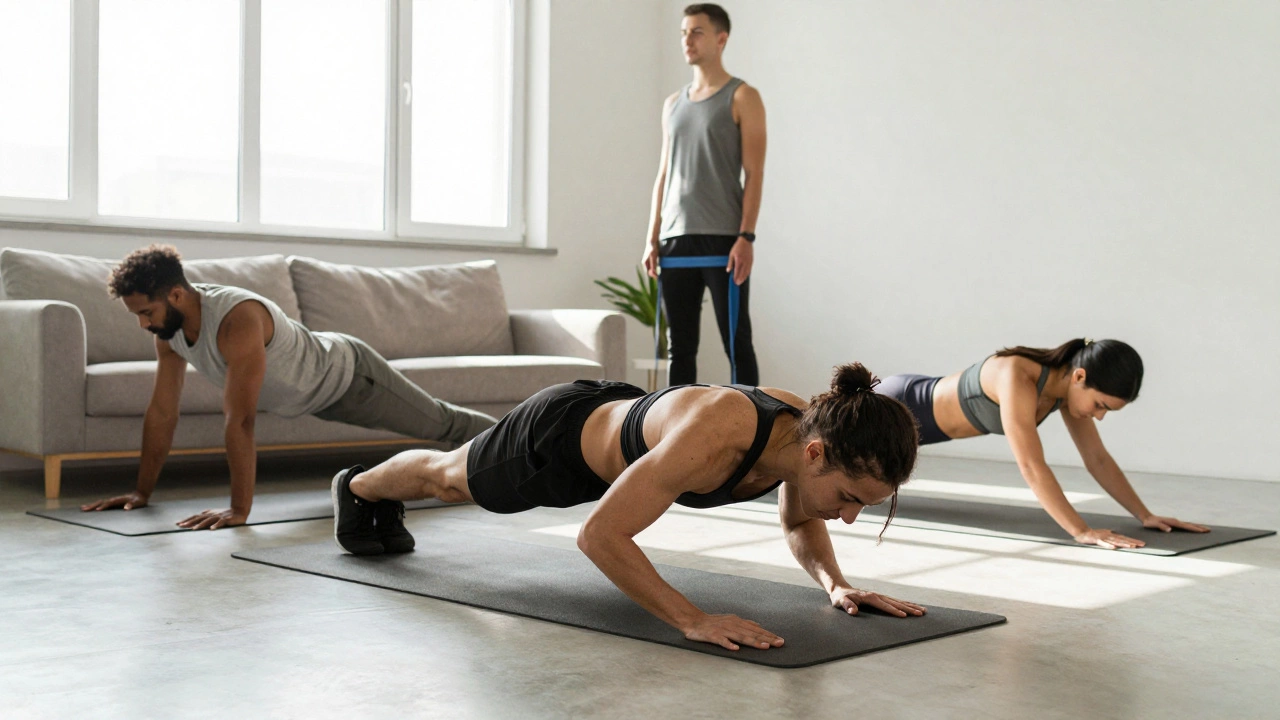
- Strength (2-3 times a week): This builds muscle, protects your joints, and keeps your metabolism firing. You don’t need a gym. Bodyweight squats, push-ups, lunges, resistance bands, or dumbbells at home work just fine. Focus on major muscle groups: legs, back, chest, shoulders, and core.
- Mobility (daily, even 10 minutes): This keeps you moving without pain. Stretching, yoga, or even foam rolling helps. Tight hips? Stiff shoulders? Mobility fixes that before it becomes an injury.
That’s it. No fancy equipment. No expensive memberships. Just three pillars, done regularly.
Comparing Popular Fitness Classes
Let’s break down what common fitness classes actually deliver. Not all are created equal-and some are overhyped.
| Class Type | Cardio | Strength | Mobility | Best For | Drawbacks |
|---|---|---|---|---|---|
| HIIT | High | Medium | Low | Time-crunched people | High injury risk if form is poor |
| Strength Training (Gym) | Low | High | Low | Built muscle, improve metabolism | Requires equipment, can feel intimidating |
| Yoga | Low | Medium | High | Stress relief, flexibility | Not enough cardio for weight loss |
| Spin/Cycling | High | Low | Low | Cardio lovers, low-impact option | Can strain knees if bike fit is off |
| Bootcamp | High | High | Low | People who like group energy | Overtraining risk if done daily |
| Functional Fitness (CrossFit-style) | High | High | Medium | Those who love variety and challenge | High injury risk without proper coaching |
Notice anything? No class nails all three pillars. That’s why mixing things up matters.
What Should You Actually Do?
Here’s a simple weekly plan that works for most people:
- Monday: 30-minute brisk walk or bike ride (cardio)
- Tuesday: Bodyweight strength (squats, push-ups, planks, rows with bands) - 20 minutes
- Wednesday: Yoga or stretching session - 15 minutes
- Thursday: Swim, dance, or hike - fun cardio
- Friday: Dumbbell or resistance band strength - 25 minutes
- Saturday: Mobility work + light walk - 20 minutes
- Sunday: Rest or gentle walk
You don’t need to go to a class. But if you do, pick one that covers at least two of the three pillars. A good bootcamp? Great. A pure yoga class? Add a short strength routine at home. A spin class? Do bodyweight exercises on your off days.
Common Mistakes People Make
- Chasing trends: Trying every new class because it looks cool. You’ll burn out fast.
- Ignoring recovery: Doing intense workouts every day. Your body needs rest to get stronger.
- Only doing cardio: You’ll lose muscle, slow your metabolism, and plateau.
- Only doing strength: Your heart and lungs get left behind. That’s not fitness-it’s just lifting.
- Comparing yourself: The person next to you in class might be a former athlete. Your progress is yours alone.
The most fit people I know don’t have perfect bodies. They move every day. They listen to their bodies. They don’t skip recovery. And they never stop learning how to move better.
How to Know You’re on the Right Path
Forget the scale. Forget the mirror. Ask yourself these three questions:
- Do I feel stronger than I did three months ago?
- Can I do daily tasks-carrying groceries, climbing stairs, playing with kids-without getting winded?
- Do I look forward to moving, or do I dread it?
If you answered yes to all three, you’re doing better than 80% of people who pay for gym memberships.
Final Thought: Fitness Is a Habit, Not a Goal
You don’t need to find the "best" workout. You need to find the one you’ll do for the next 10 years. That’s the real secret. The best workout isn’t the one that looks the hardest or gets the most likes. It’s the one you show up for, even when you’re tired, even when it’s raining, even when you don’t feel like it.
Start simple. Move often. Mix it up. Rest when you need to. And remember-fitness isn’t about becoming someone else. It’s about becoming more of yourself.
Is one type of workout better than others for weight loss?
No single workout burns fat better than others. Weight loss comes down to consistent movement and eating habits. Cardio burns more calories during the session, but strength training builds muscle, which raises your resting metabolism. The best approach is a mix of both, done regularly. People who lose weight successfully stick with a routine they enjoy-not the one that promises the fastest results.
Can I get fit without going to a gym?
Absolutely. You don’t need equipment or a gym membership to build fitness. Bodyweight exercises like squats, push-ups, lunges, and planks build strength. Walking, cycling, or dancing gives you cardio. Stretching or yoga improves mobility. Many people in Auckland use parks, trails, and home spaces to stay fit. All you need is space to move and consistency.
How often should I change my workout routine?
Don’t change it just because it feels boring. Wait until you stop making progress-usually after 6-8 weeks. Then tweak one thing: add weight, increase reps, shorten rest time, or try a new movement. Changing too often keeps you from building real strength or endurance. Stick with something long enough to see results before switching.
Are fitness classes worth the cost?
Only if they keep you showing up. A $30 class that makes you excited to move is worth it. A $50 class you skip because it’s too intense or boring? Not worth it. Many free alternatives exist-YouTube videos, local park groups, or home workouts. Pay for value, not price tags. The goal isn’t to spend money-it’s to build a habit that lasts.
What’s the best workout for someone over 40?
Strength training becomes even more important after 40. Muscle loss accelerates with age, which affects balance, metabolism, and joint health. Combine light to moderate strength work (2-3 times a week) with daily walking and mobility exercises. Avoid high-impact routines if you have joint pain. Focus on control, not speed. Consistency matters more than intensity at this stage.
If you’ve been stuck trying to find the "perfect" workout, stop looking. Start moving. Your body doesn’t care about trends. It just wants you to show up-and keep showing up.