
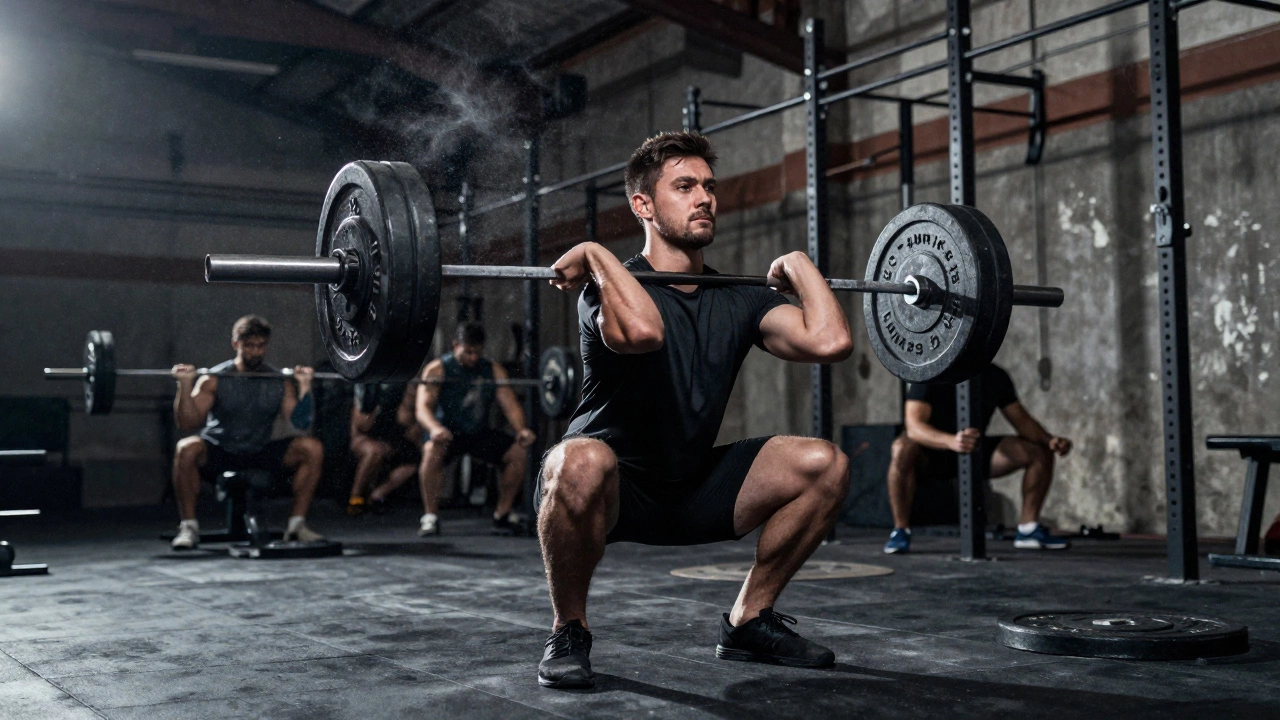
Big 5 Strength Workout Planner
Build your perfect strength training week by assigning the Big 5 exercises to different workout days. Click exercises to add them to your plan.
Available Exercises:
Your Plan Summary
You walk into the gym. The air smells like iron and sweat. In one corner, someone is doing bicep curls on a machine that looks like it was designed by a committee. In the center, another person is loading heavy plates onto a barbell, chalk dust flying as they prepare for a barbell squat. Who is actually building real strength? The answer isn't just about who lifts heavier; it's about who lifts smarter.
If you want functional power, muscle growth, and metabolic efficiency, you don't need twenty different machines. You need the Big 5 strength exercises. These aren't just random popular moves; they are the foundational pillars of human movement. They recruit multiple joints, engage nearly every major muscle group, and allow you to lift more weight than any isolation exercise ever could. Ignoring them is like trying to build a house without a foundation.
The Philosophy Behind the Big 5
Why do these five specific movements matter so much? It comes down to biomechanics and efficiency. Most people fall into the trap of "bro-split" training-chest on Monday, back on Tuesday, arms on Wednesday. While this feels productive, it often leads to imbalances and slower progress. The Big 5 are all compound exercises, meaning they involve two or more joints working together.
When you perform a compound movement, your nervous system has to coordinate dozens of muscles simultaneously. This triggers a massive hormonal response, releasing testosterone and growth hormone, which aids in muscle repair and growth across your entire body. Furthermore, these movements mimic real-life actions. Squatting is how we sit and stand. Hinging (deadlifting) is how we pick up objects. Pushing and pulling are essential for interacting with our environment. By mastering these patterns, you aren't just building a physique; you're building a resilient, capable body.
1. The Barbell Back Squat: King of Legs
Barbell Squat is often called the king of exercises, and for good reason. It targets the quadriceps, glutes, hamstrings, and core. But it also demands stability from your ankles, knees, hips, and spine. When done correctly, it builds lower-body strength that translates to sprinting, jumping, and carrying heavy loads.
To execute a proper squat, you place the barbell on your upper traps (high bar) or rear delts (low bar). Your feet should be shoulder-width apart, toes slightly pointed out. As you descend, you push your hips back and bend your knees, keeping your chest up and core tight. Go down until your hip crease breaks parallel with your knees, then drive through your heels to return to standing.
- Key Muscles: Quadriceps, Gluteus Maximus, Hamstrings, Erector Spinae.
- Common Mistake: Letting the knees cave inward (valgus collapse). Keep them tracking over your toes.
- Pro Tip: If you lack ankle mobility, try placing small weights under your heels to help you hit depth comfortably.
2. The Deadlift: The Ultimate Pull
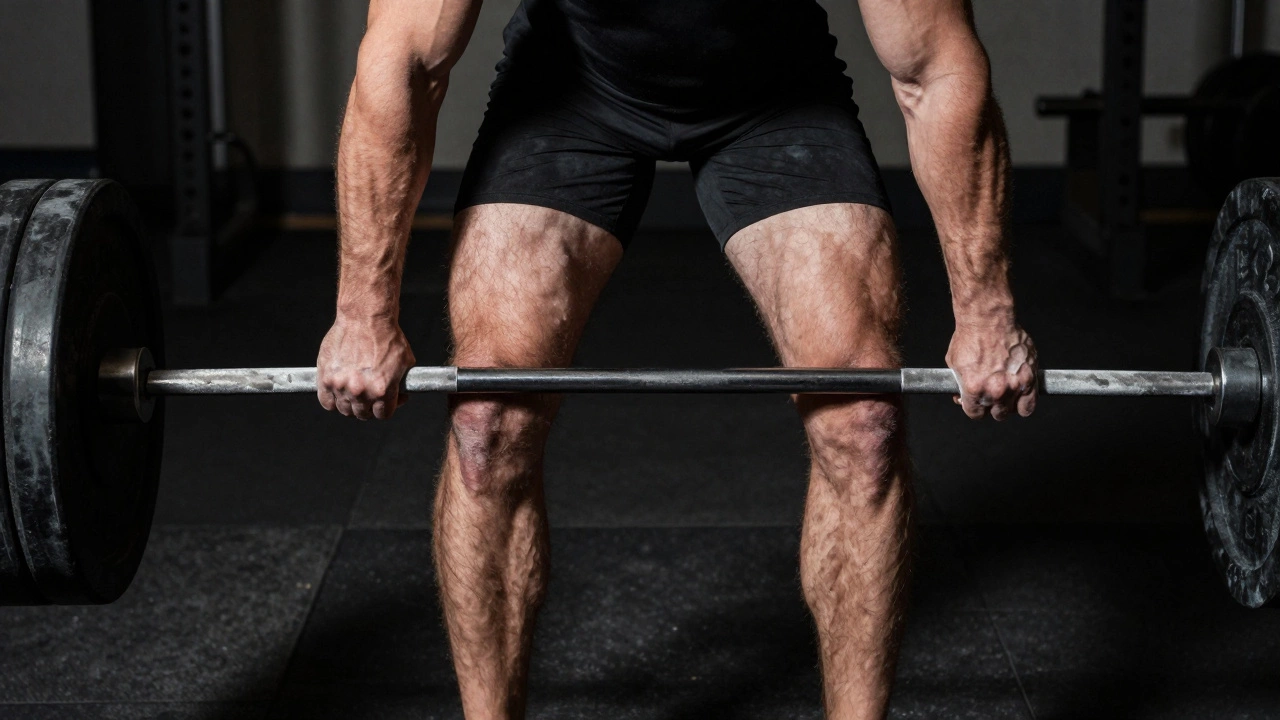
If the squat is the king, the Deadlift is the queen. It is the purest expression of raw strength. Unlike the squat, which starts with the weight on your body, the deadlift starts with the weight on the floor. It teaches you how to hinge at the hips-a critical movement pattern for protecting your lower back during daily activities.
Stand with your feet hip-width apart, shins touching the barbell. Hinge at the hips to grip the bar just outside your legs. Keep your back flat, chest proud, and shoulders slightly in front of the bar. Drive through your feet, extending your hips and knees simultaneously until you are standing tall. The lockout is crucial; squeeze your glutes hard at the top.
- Key Muscles: Posterior Chain (Hamstrings, Glutes, Lower Back), Trapezius, Forearms.
- Common Mistake: Rounding the lower back (flexion). Maintain a neutral spine throughout the lift.
- Pro Tip: Use straps if your grip fails before your legs or back do. The goal is to train the posterior chain, not just your forearms.
3. The Bench Press: Upper Body Push
The Bench Press is the standard measure of upper-body pushing strength. It primarily targets the pectorals (chest), anterior deltoids (front shoulders), and triceps. While some argue it's less functional than overhead pressing, it remains a staple for building mass and strength in the upper body.
Lie on a flat bench with your eyes directly under the bar. Grip the bar slightly wider than shoulder-width. Unrack the bar and hold it over your chest. Lower the bar slowly to your mid-chest, flaring your elbows at about a 45-degree angle-not straight out to the sides. Press the bar back up explosively, focusing on driving through your feet and retracting your scapula (shoulder blades) to create a stable platform.
- Key Muscles: Pectoralis Major, Anterior Deltoids, Triceps Brachii.
- Common Mistake: Bouncing the bar off the chest. Control the descent; touch lightly and reverse immediately.
- Pro Tip: Plant your feet firmly on the ground. Leg drive contributes significantly to your total lift capacity.
4. The Overhead Press: Vertical Power
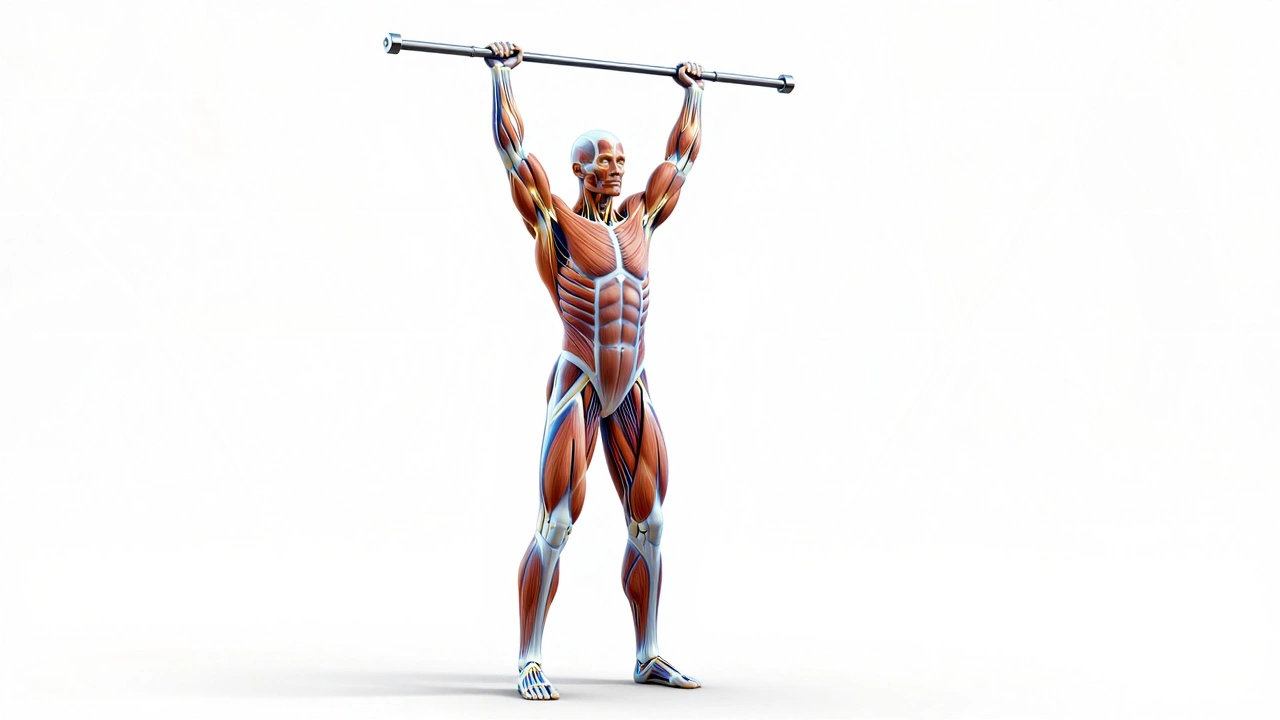
Also known as the military press or strict press, the Overhead Press builds serious shoulder strength and core stability. Unlike the bench press, where you have support, the overhead press requires you to stabilize the weight above your head while standing. This engages the core far more intensely, making it a full-body exercise in disguise.
Start with the barbell resting on your front delts or collarbone, similar to the bottom position of a clean. Step your feet back to a comfortable stance. Brace your core tightly, squeeze your glutes, and press the bar vertically overhead. Your head will need to move slightly forward to clear the bar, but keep your neck neutral. Lock out your arms fully at the top, with your ears aligned between your biceps.
- Key Muscles: Deltoids (Anterior and Lateral), Triceps, Core, Upper Traps.
- Common Mistake: Arching the lower back excessively. Use a tight core and slight knee bend to maintain posture.
- Pro Tip: If shoulder mobility is an issue, consider using a neutral grip (dumbbells) or a landmine press variation.
5. The Bent-Over Row: Back Thickness
To balance the pushing movements (bench and overhead press), you need a strong pulling movement. The Bent-Over Row is the classic choice for building a thick, powerful back. It targets the latissimus dorsi (lats), rhomboids, middle traps, and rear deloids. It also serves as excellent counterbalance training for your spine, preventing the hunched posture common among desk workers.
Hinge at the hips until your torso is nearly parallel to the floor. Keep your back flat and knees slightly bent. Grip the barbell with an overhand grip, hands shoulder-width apart. Pull the bar towards your lower ribcage, leading with your elbows. Squeeze your shoulder blades together at the top of the movement. Lower the bar with control, feeling the stretch in your lats.
- Key Muscles: Latissimus Dorsi, Rhomboids, Trapezius, Rear Deltoids, Biceps.
- Common Mistake: Using momentum to jerk the weight up. Move slowly and focus on muscle contraction.
- Pro Tip: Try a mixed grip (one hand over, one under) to improve grip strength, or use an underhand grip to involve more biceps.
Structuring Your Workout Around the Big 5
Knowing the exercises is only half the battle. How you program them determines your results. You cannot go heavy on all five exercises every single day. Recovery is part of the process. A classic approach is the Full Body Split, performed three times a week (e.g., Monday, Wednesday, Friday).
On each session, you might perform:
- Squat: 3 sets of 5 reps
- Bench Press: 3 sets of 5 reps
- Bent-Over Row: 3 sets of 8 reps
Then rotate the other two movements on subsequent days. For example, Tuesday could include Deadlifts and Overhead Press. This ensures you hit each movement frequently enough to stimulate growth but allows sufficient rest for recovery. Progressive overload is key-aim to add a small amount of weight or an extra rep each week.
| Exercise | Primary Movement Pattern | Main Muscle Groups | Skill Level Required |
|---|---|---|---|
| Barbell Squat | Knee-Dominant Hinge | Quads, Glutes, Core | High (Technique Critical) |
| Deadlift | Hip-Dominant Hinge | Posterior Chain, Grip | Medium-High |
| Bench Press | Horizontal Push | Chest, Front Shoulders, Triceps | Medium |
| Overhead Press | Vertical Push | Shoulders, Triceps, Core | Medium-High |
| Bent-Over Row | Horizontal Pull | Back, Rear Shoulders, Biceps | Low-Medium |
Common Pitfalls and How to Avoid Them
Even experienced lifters make mistakes. One of the biggest is ego lifting. Adding too much weight too soon compromises form and invites injury. Start light. Master the movement pattern before adding load. Another common error is neglecting warm-ups. Jumping straight into a heavy squat cold is a recipe for disaster. Spend 5-10 minutes doing dynamic stretches and lighter sets to prepare your joints and nervous system.
Also, don't ignore accessory work entirely. While the Big 5 are the main course, smaller exercises like lunges, pull-ups, and lateral raises can help address weak points and prevent injuries. Think of the Big 5 as the skeleton of your routine, and accessory work as the flesh that fills it out.
Can I do all 5 exercises in one workout?
It is possible, but not recommended for most people. Doing all five heavy compound movements in one session is extremely taxing on the central nervous system and can lead to poor form due to fatigue. It is better to split them up over two or three days per week to ensure quality performance and adequate recovery.
Do I need a spotter for these exercises?
For the bench press and squats, having a spotter is highly recommended when lifting near your maximum capacity. For deadlifts and overhead presses, a spotter is less common but still helpful for safety cues. If you don't have a partner, consider using safety bars in the squat rack and limit plates on the bench.
How long should I rest between sets?
For strength-focused sets (1-5 reps), rest for 2-5 minutes to allow your ATP-CP energy system to replenish. For hypertrophy-focused sets (8-12 reps), 60-90 seconds is usually sufficient. Listening to your body is key; if you feel ready sooner, go ahead, but don't rush if you feel fatigued.
Are dumbbells a good alternative to barbells?
Yes, dumbbells are an excellent alternative, especially for beginners or those with joint issues. They allow for a more natural range of motion and can help correct muscle imbalances between left and right sides. However, barbells generally allow for heavier loading, which is beneficial for maximal strength gains.
How often should I change my routine?
You don't need to change the exercises themselves frequently. Consistency is key. However, you should vary the intensity, volume, or rep ranges every 4-8 weeks to avoid plateaus. This concept, known as periodization, helps keep your body adapting and progressing.