

Personal Training Rate Calculator
Step 1: Financial Goals & Expenses
Step 2: Availability & Strategy
Recommended Pricing
Minimum Viable Price per Session
Effective Hourly Wage Needed
Psychological Pricing Suggestion
Walking into your first client session with confidence is great. Walking out knowing you got paid fairly? That’s the real win. If you are wondering how much to charge for a 30-minute personal training session, you are not just picking a number out of thin air. You are balancing your expertise, your location, and the value you deliver against what the market will bear.
In 2026, the fitness industry has shifted. Clients expect premium experiences, whether they are meeting you at a high-end commercial gym or in their living room via Zoom. A flat rate doesn’t cut it anymore. You need a pricing strategy that reflects your brand. Let’s break down exactly how to calculate your rate so you stop undercharging and start building a sustainable business.
The Global Price Range: What Are Others Charging?
Before setting your own price, look at the landscape. Rates vary wildly depending on where you live and who you serve. In major metropolitan areas like New York, London, or Auckland, prices skew higher due to the cost of living and rent. In smaller towns, clients may be more price-sensitive.
For a standard 60-minute session, average rates in North America range from $50 to $150. In the UK and Australia, you might see £40 to £80 or AUD $70 to $120. When you split that down to a 30-minute personal training session, the math changes slightly because short sessions often command a premium per minute. They are convenient, but they require intense focus and rapid program adjustments.
| Trainer Level | Rate Per 30 Min (USD) | Rate Per 30 Min (GBP) | Rate Per 30 Min (AUD) |
|---|---|---|---|
| Entry-Level / Student | $25 - $40 | £20 - £35 | AUD $40 - $60 |
| Mid-Level (2-5 Years Exp) | $45 - $75 | £40 - £65 | AUD $70 - $110 |
| Expert / Specialist | $80 - $120+ | £70 - £100+ | AUD $120 - $180+ |
These numbers are starting points. If you are a certified strength coach with a niche in post-rehabilitation, you are not competing with the generalist trainer next door. Your value proposition is different, and your price should reflect that specialization.
Calculate Your Minimum Viable Rate
Many trainers make the mistake of pricing based on what competitors charge. This is dangerous. Instead, price based on what you need to survive and thrive. Use this simple formula to find your floor-the absolute lowest you can charge without losing money.
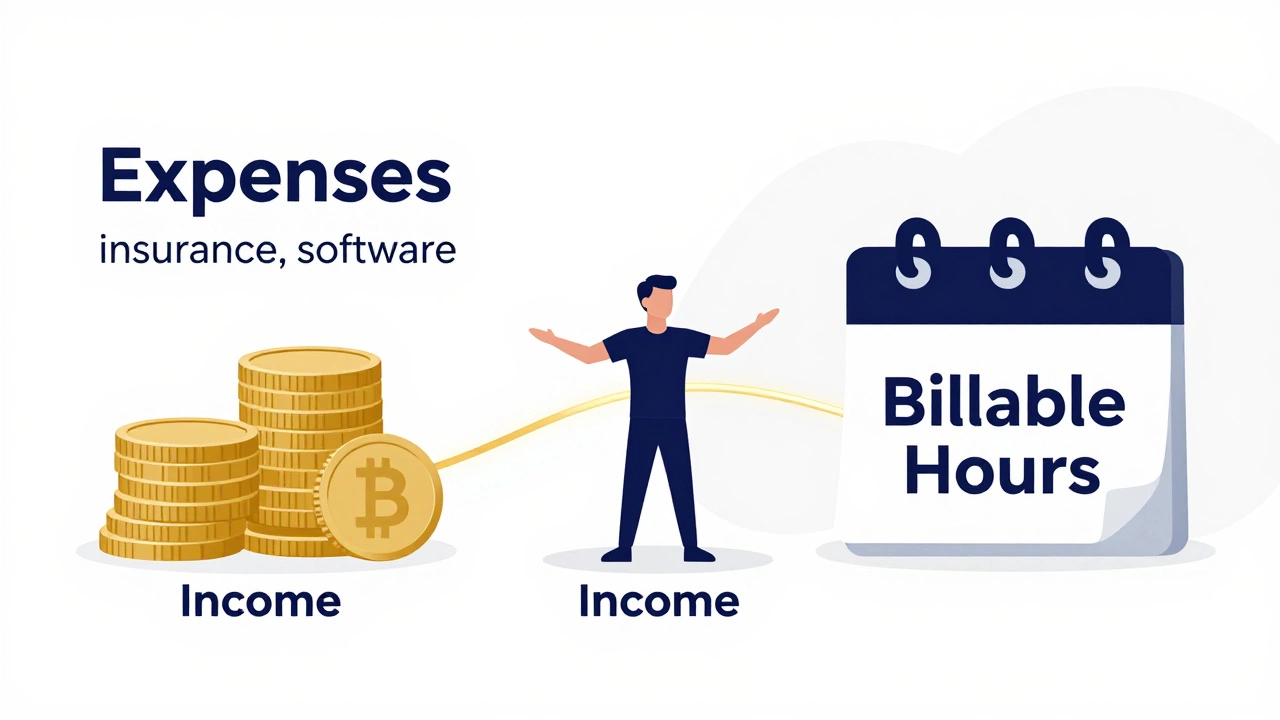
Step 1: Calculate Your Monthly Expenses. Include insurance, certification renewals, software subscriptions (like Trainerize or TrueCoach), marketing costs, and your portion of gym rental fees if applicable. Let’s say your total monthly overhead is $500.
Step 2: Determine Your Desired Income. If you want to take home $4,000 a month, add that to your expenses. Total required revenue = $4,500.
Step 3: Estimate Billable Hours. You cannot train clients 24/7. Account for admin time, travel, meal prep, and rest. A realistic full-time schedule might yield 20 billable hours per week. Over four weeks, that’s 80 hours.
Step 4: Do the Math. $4,500 divided by 80 hours equals $56.25 per hour. Since a 30-minute session is half an hour, your minimum charge must be roughly $28.15. However, this assumes 100% occupancy. If you only fill 70% of your slots, you need to raise that base rate to compensate for empty time.
This calculation ensures you are not working for free. It gives you a hard bottom line. Anything above this is profit and growth capital.
The Value of Short Sessions: Why 30 Minutes Costs More Per Minute
You might think charging half the price of an hour-long session makes sense. Think again. A express personal training session requires higher intensity and faster decision-making. There is no warm-up fluff; every second counts.
Consider the logistics. If you drive to a client’s house for a 30-minute session, you still spend 20 minutes driving there and 20 minutes back. Your effective hourly wage drops significantly if you charge a straight discount. Many trainers charge a "short session surcharge." For example, if your hourly rate is $100, a 30-minute session might cost $60, not $50. This protects your time and acknowledges the premium convenience factor for busy executives or parents.
Additionally, short sessions are often used for maintenance or specific skill work rather than comprehensive programming. The cognitive load on you, the trainer, is high because you must assess, correct, and motivate in a compressed timeframe. Price accordingly.
Factors That Justify Higher Prices
Not all trainers are created equal. Several factors allow you to move up the pricing ladder immediately.
- Niche Specialization: Are you helping athletes prepare for marathons? Working with seniors on balance? Niche experts charge more because they solve specific, painful problems. General fitness is a commodity; specialized results are a luxury.
- Location Premium: Training in a luxury hotel gym or a high-end private studio allows for higher rates than a crowded public park. The environment adds perceived value.
- Online vs. In-Person: Virtual training removes travel time and venue costs. While some argue online should be cheaper, many top trainers charge the same or more because they offer global reach and flexible scheduling. The key is offering superior digital tools, like real-time form correction via dual cameras.
- Package Deals: Single sessions are risky for cash flow. Encourage clients to buy packs of 5, 10, or 20 sessions. Offer a 10-15% discount for bulk purchases. This secures income upfront and reduces client churn.
Psychological Pricing Strategies
How you present the price matters as much as the number itself. Avoid round numbers if you want to appear precise. $49 feels significantly cheaper than $50, even though the difference is negligible. This is known as left-digit effect.
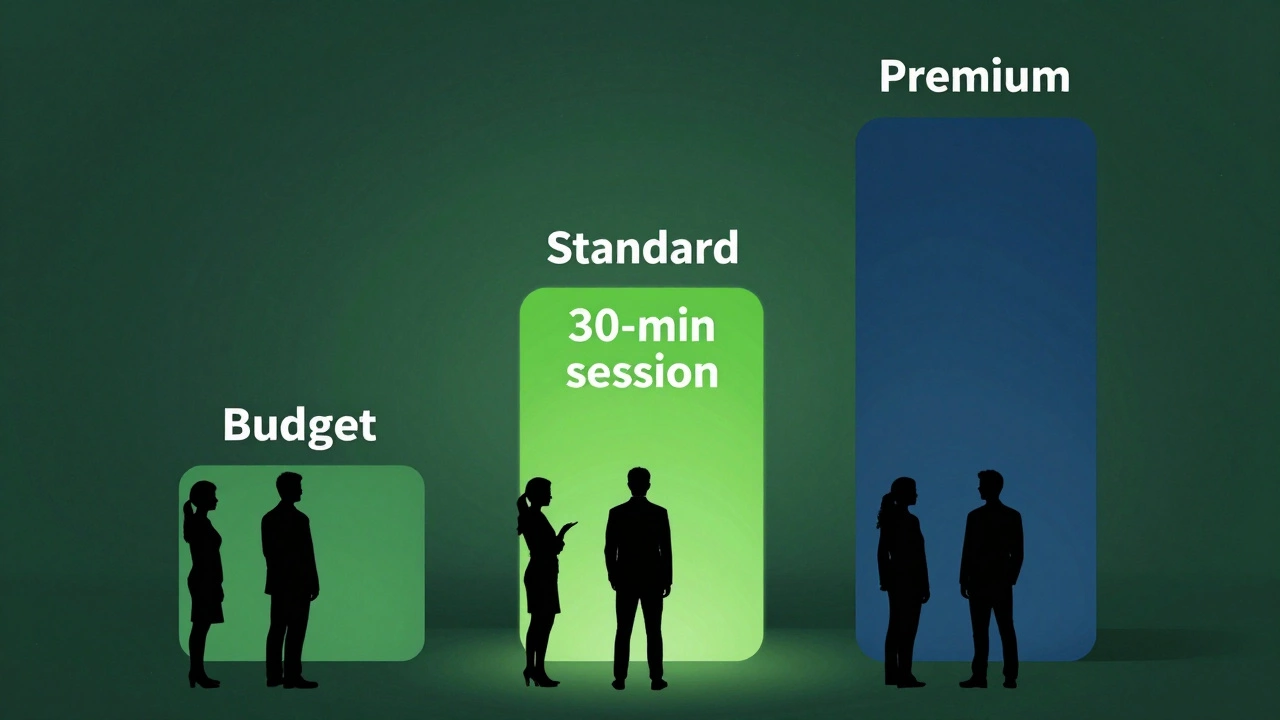
Also, consider tiered pricing. Offer three options: 1. Budget Tier: Group sessions or longer intervals between meetings. 2. Standard Tier: One-on-one 30-minute sessions weekly. 3. Premium Tier: Daily check-ins, custom nutrition plans, and unlimited messaging support alongside the 30-minute session.
Most clients will choose the middle option. By anchoring your price with a high-end package, the standard 30-minute session looks like a reasonable compromise. This technique, called decoy pricing, increases conversion rates without lowering your actual fees.
Common Mistakes to Avoid
Raising your prices can feel scary, but keeping them too low attracts the wrong clients. Low-paying clients are often the most demanding, least compliant, and quickest to cancel. They drain your energy and limit your ability to grow.
Another mistake is changing prices abruptly. If you decide to raise your rates, give existing clients 30 days' notice. Honor their current rate for that period, then transition them to the new price. New clients always pay the current market rate. This respects loyalty while allowing you to capture higher value from fresh leads.
Finally, never apologize for your price. Confidence sells. If a client balks at the cost, ask questions. "Is budget the main concern, or are you unsure about the value?" Often, clients just need reassurance that the investment will yield results. Explain your process, share success stories, and stand firm on your worth.
Setting Up Your Payment System
In 2026, chasing payments is outdated. Use automated billing platforms like Stripe, PayPal, or specialized fitness software like Mindbody or Glofox. Set up auto-debit for package balances. Require payment before the session starts. This eliminates awkward conversations and ensures you get paid on time.
Offer multiple payment methods. Some clients prefer credit cards for rewards points; others use Apple Pay or bank transfers. Frictionless payment processes reduce drop-off rates during sign-up.
Should I charge more for online 30-minute sessions?
It depends on your positioning. Online sessions save you travel time and venue costs, which could justify a slight discount. However, if you provide premium digital support, such as detailed video analysis and daily check-ins, you can charge the same as in-person rates. Many successful trainers keep prices identical to maintain brand consistency and avoid devaluing their service.
How do I handle clients who ask for discounts?
Avoid direct discounts unless it's part of a structured promotion. Instead, offer value-adds. For example, instead of lowering the price, include a free nutrition guide or a extra 15-minute consultation. This preserves your rate integrity while making the client feel special. If budget is truly tight, suggest group sessions or less frequent meetings rather than reducing the per-session fee.
Is it better to sell single sessions or packages?
Packages are far superior for business stability. They guarantee future income and increase client commitment. People who prepay are more likely to show up. Aim to convert at least 80% of your clients into package buyers. Offer incentives like a free session after completing a 10-pack to encourage retention.
What if my local market can't afford my calculated rate?
If your minimum viable rate exceeds local purchasing power, you have two choices: expand your client base online to reach wealthier markets, or adjust your business model. Consider offering small group training (2-4 people) where each person pays a lower individual rate, but your total hourly earnings remain high. This scales your income without requiring every client to pay premium solo rates.
How often should I raise my prices?
Review your pricing annually or whenever you gain significant new credentials or experience. A 10-15% increase once a year is normal and expected by clients. Communicate these changes proactively. Regular small increases are easier to digest than one massive jump every few years.