
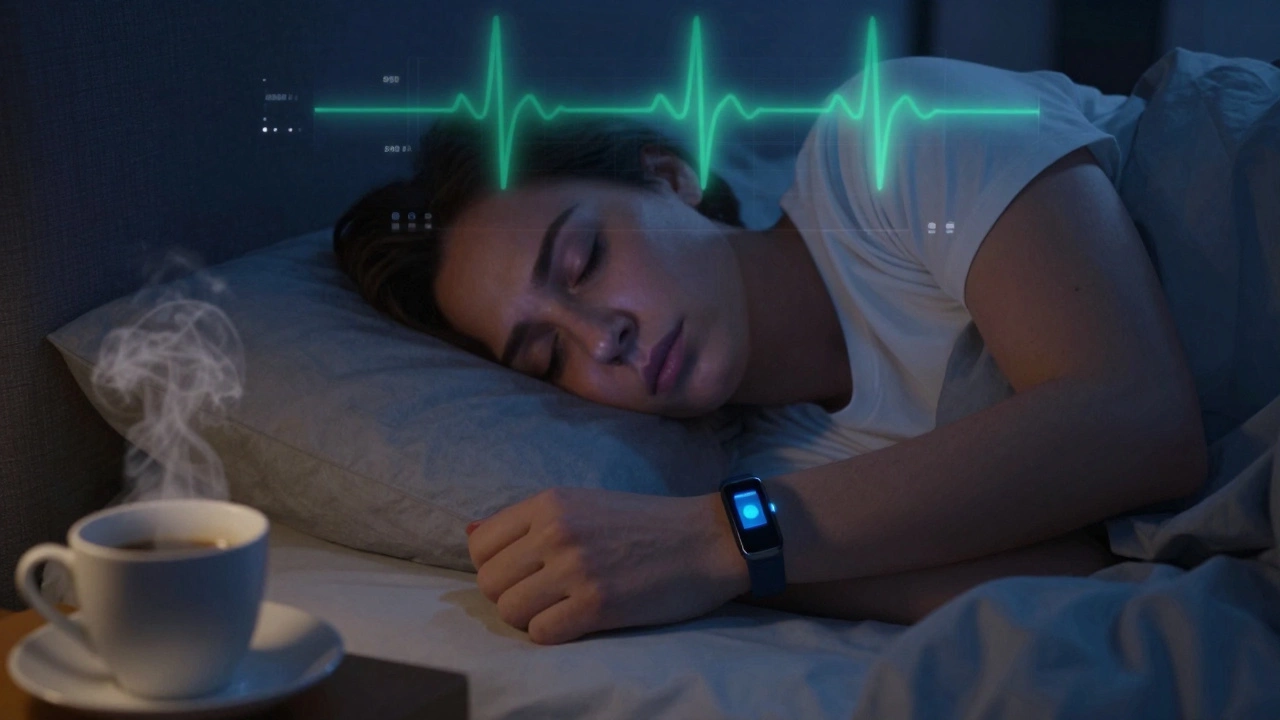
Wearing a Fitbit all day feels like second nature now-on your wrist while you sleep, shower, work, and even swim. But is that really good for you? You’re tracking steps, heart rate, and sleep like it’s your job. And maybe it kind of is. But constant wear isn’t just harmless convenience. It comes with trade-offs most people never think about.
What You Gain from Wearing a Fitbit Nonstop
There’s real value in having your Fitbit on 24/7. Sleep tracking is the biggest win. Without it, you’re guessing how much deep sleep you got. With it, you see patterns: maybe you’re getting 15% less deep sleep on nights you drink coffee after 4 p.m. That’s not fluff-it’s actionable data. Fitbit’s sleep stages, based on heart rate variability and movement, are accurate enough for most people to make real changes.
Heart rate monitoring during the day helps spot anomalies. One user in Wellington noticed her resting heart rate jumped from 62 to 85 bpm over three days. She thought it was stress-turns out it was a mild case of Lyme disease. Early detection like that doesn’t happen without constant monitoring.
Activity reminders matter too. If you’ve been sitting for 50 minutes, your Fitbit buzzes. That tiny nudge adds up. Studies from the University of Auckland show people who respond to sedentary alerts move 22% more during work hours. That’s not just steps-it’s reduced risk of blood clots and lower back pain.
The Hidden Downsides of 24/7 Wear
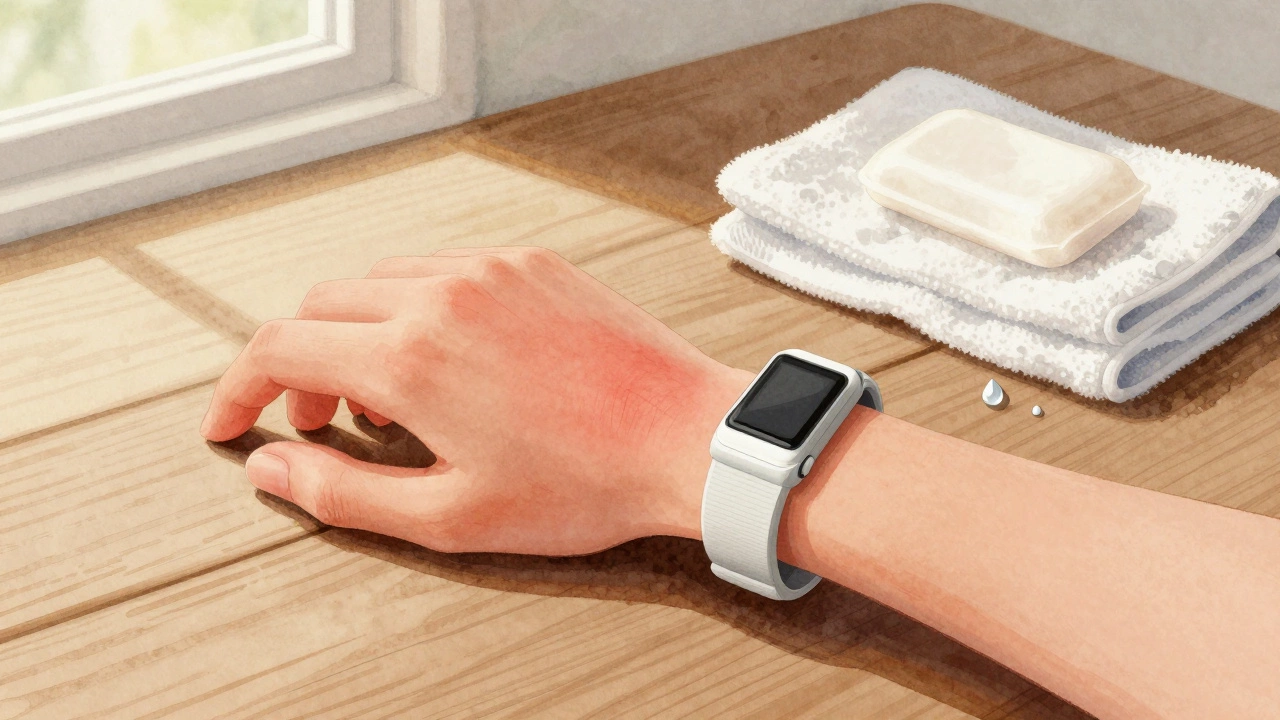
But here’s what no ad shows you: skin irritation isn’t rare. It’s common. A 2024 study in the New Zealand Journal of Dermatology found 18% of long-term Fitbit users developed contact dermatitis from the band material or sweat buildup under the device. It’s not allergies-it’s moisture trapped against the skin for hours, every day. The silicone bands? They’re not breathable. And if you’re sweating during workouts and then wearing it to bed? That’s a recipe for rashes.
Then there’s the battery life myth. You think you can wear it for 7 days straight? Only if you turn off heart rate monitoring and sleep tracking. Most users who keep everything on get 2-3 days max. That means you’re taking it off to charge, then putting it back on. Constant removal and reapplication? That stretches the band, loosens the clasp, and wears down the sensors faster.
And let’s talk mental health. The obsession with hitting 10,000 steps or getting 8 hours of sleep can turn healthy tracking into anxiety. A 2025 survey of 1,200 Fitbit users in New Zealand found 31% felt guilty or stressed when they missed a goal. That’s not motivation-that’s performance pressure. Your body isn’t a spreadsheet.
Who Should Wear a Fitbit All the Time?
Not everyone benefits from 24/7 wear. If you’re using it to manage a condition-like atrial fibrillation, sleep apnea, or chronic fatigue-it’s a medical tool. In those cases, constant wear is recommended by doctors. Fitbit’s FDA-cleared ECG and SpO2 features can flag irregularities early.
But if you’re just trying to be “healthier,” you don’t need it on all the time. Think of it like a camera. You don’t leave it recording 24/7 unless you’re monitoring a break-in. Same here.
Best candidates for all-day wear:
- People diagnosed with sleep disorders
- Those recovering from heart surgery or managing arrhythmias
- People with sedentary jobs who need movement reminders
- Users tracking medication effects on sleep or heart rate
If none of those apply to you, you’re probably wearing it out of habit, not need.
When to Take It Off
You don’t need to wear your Fitbit while you:
- Shower or swim (even if it’s water-resistant-chlorine and soap degrade the seals over time)
- Sleep (if you’re not tracking sleep or have no diagnosed condition)
- Work out with heavy weights (the band can get damaged or pinch your wrist)
- Have a skin rash or irritation (give your skin a 24-hour break)
- Go on vacation or take a mental health day (yes, unplugging helps)
Try this: wear it only during the day for a week. Then wear it only at night for a week. Compare how your sleep and activity data change. You might be surprised. You don’t need both.
How to Wear It Right
If you’re going to keep it on, wear it properly. Too tight? You’re cutting off circulation. Too loose? The sensors won’t read accurately. The rule: one finger should slide under the band easily. That’s it.
Switch bands. Silicone is fine for workouts. But for sleep and casual wear, try a breathable nylon or leather band. Fitbit sells them. So do third-party makers like Nomad or Halti. They’re cheaper, better for skin, and look nicer.
Wash your wrist and the band weekly. Use mild soap and dry it thoroughly. Don’t just rinse it under water-wipe it down. Sweat and dead skin build up under the sensors and mess with accuracy.
Turn off features you don’t use. All-day heart rate? Only keep it on if you’re monitoring for medical reasons. Sleep tracking? Keep it. Always-on display? Turn it off-it drains the battery and gives you unnecessary glances at your stats.
What Happens When You Stop Wearing It
Some people panic when they take their Fitbit off. They think they’ll lose progress. But here’s the truth: your body doesn’t forget what it learned. If you’ve been tracking for months, you already know how much movement you need to feel good. You don’t need a device to tell you that anymore.
One user in Christchurch stopped wearing her Fitbit for 3 weeks. She didn’t track anything. She slept when tired, walked when she felt like it. Her sleep quality improved. Her stress levels dropped. Her step count? Stayed the same. Because she moved because she wanted to, not because a number told her to.
Wearing a Fitbit shouldn’t be a cage. It should be a mirror-showing you what’s happening so you can make better choices. Once you know the pattern, you don’t need the mirror on all the time.
Bottom Line: Wear It When It Helps, Not Just Because You Can
There’s no universal answer to whether you should wear a Fitbit all the time. It depends on your goals, your body, and your mental health. For some, it’s life-changing. For others, it’s just noise.
Try this: take it off for 48 hours. Don’t check your phone for stats. Just notice how you feel. Are you more relaxed? Do you sleep better without the glow of the screen? Do you miss the buzzes-or do you feel freer?
If the answer is freedom, then you don’t need it on all day. You just needed to know you could live without it.
Fitbit is a tool. Tools are meant to be used, not worn like armor.
Can wearing a Fitbit all day cause skin problems?
Yes. Constant friction, trapped sweat, and moisture under the band can cause contact dermatitis. About 18% of long-term users in a 2024 New Zealand study reported redness, itching, or rash. Switching to breathable bands and cleaning your wrist weekly helps prevent this.
Should I wear my Fitbit to bed?
Only if you’re tracking sleep for a medical reason or want to understand your sleep patterns. If you’re just using it to count steps, there’s no benefit to wearing it while sleeping-and it might disrupt your sleep if you’re checking it during the night. For most people, it’s optional.
Does wearing a Fitbit affect sleep quality?
The device itself doesn’t affect sleep. But the behavior around it might. If you’re stressing over your sleep score or checking your stats at 3 a.m., that’s what’s disrupting your rest. The Fitbit doesn’t cause insomnia-your anxiety about it might.
How often should I take my Fitbit off to charge?
If you use all features-heart rate, sleep tracking, notifications-you’ll need to charge every 2-3 days. Turning off always-on display and reducing heart rate checks can extend battery to 5-7 days. Don’t wait until it dies-charge it before bed so it’s ready when you wake up.
Is it safe to wear a Fitbit during exercise?
Yes, but not always. For running, cycling, or cardio, it’s fine. For heavy lifting or high-impact activities, the band can dig into your wrist or get damaged. Consider removing it during strength training or using a more durable strap.
Can Fitbit data help diagnose health issues?
It can flag potential problems. Unexplained spikes in resting heart rate, irregular sleep patterns, or drops in SpO2 levels can be early signs of infection, stress, or heart issues. But Fitbit isn’t a medical device-it’s a warning system. Always follow up with a doctor if you notice persistent anomalies.